Southern Ecuador · Private bird photography tour · 14 days / 13 nights
Fourteen days of private bird photography from Guayaquil through the south of Ecuador: the Jocotoco reserves of Buenaventura, Jorupe and Tapichalaca, the Spangled Coquette of Yantzaza, the Blue-throated Hillstar of Cerro de Arcos and Cajas National Park, with an English-speaking guide.

At a glance
A private birding tour with your own English-speaking licensed guide and vehicle: just you and your companions. Every day links the eBird hotspots of the places you visit, so you can see what has been recorded there before you travel. The itinerary is a sample: it may change with the weather, the birds and the opening of each reserve.
| Departure and return | Guayaquil; other places on request |
|---|---|
| Departure time | Early departure from your hotel in Guayaquil; optional early pick-up at the Guayaquil airport |
| Highlights | Jocotoco Antpitta, Spangled Coquette, Blue-throated Hillstar, Tumbesian endemics |
| Fitness level | Fair condition |
| Group | Private: just you and your companions |
| Price | From US$4,650 per person |
Day by day
Day 1
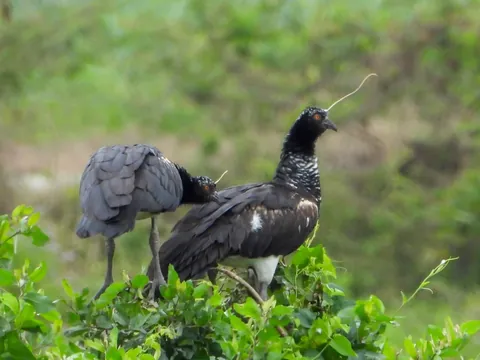
Morning. Pick-up at your hotel in Guayaquil and drive to the Manglares Churute Ecological Reserve, about an hour from Guayaquil: a Ramsar wetland of mangroves and the El Canclón lagoon, where the Horned Screamer is the emblematic bird.
Afternoon. Lunch and a visit to «La Lagartera». In the evening, a drive of about two hours to Umbrellabird Lodge.
Key species: Horned Screamer, Limpkin, Peruvian Meadowlark, Magnificent Frigatebird, Roseate Spoonbill, Royal Flycatcher, Black-bellied Whistling-Duck, Fulvous Whistling-Duck, Rufescent Tiger-Heron, White Ibis, White-cheeked Pintail.
Day 2
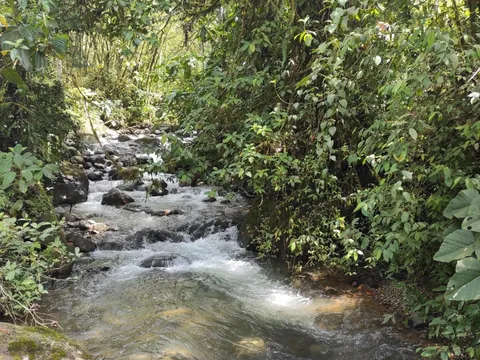
Full day. Breakfast and a whole day at the Buenaventura Reserve of Fundación Jocotoco, in the cloud forest of El Oro: about half of the world’s El Oro Parakeets live inside the reserve, and Long-wattled Umbrellabirds display at a lek near the lodge from October to June.
Afternoon. Lunch and more birding in the reserve.
Key species: Long-wattled Umbrellabird, Rufous-headed Chachalaca, Chestnut-backed Antbird, El Oro Parakeet, El Oro Tapaculo.
Day 3
Morning. A last round of birding at Buenaventura.
Afternoon. On to Urraca Lodge, with lunch on the way and a birding stop at El Empalme.
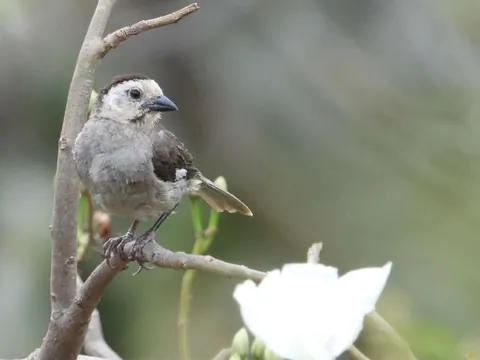
Key species: Long-wattled Umbrellabird, Rufous-headed Chachalaca, Chestnut-backed Antbird, El Oro Parakeet, El Oro Tapaculo, White-headed Brushfinch, Ash-breasted Sierra-Finch, Short-tailed Woodstar.
Day 4
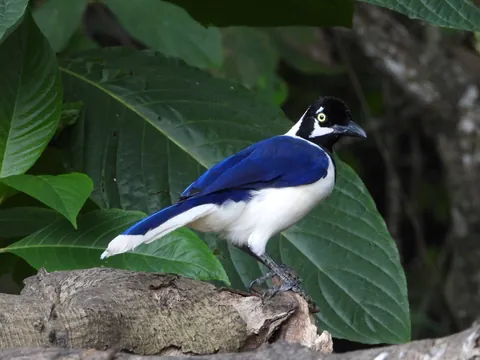
Full day. A whole day at the Jorupe Reserve of Fundación Jocotoco, about 1,450 hectares of Tumbesian dry forest with giant ceiba trees, home to regional endemics such as the White-tailed Jay and the Henna-hooded Foliage-gleaner.
Afternoon. Lunch and more birding in the reserve.
Key species: Amazilia Hummingbird, Whooping Motmot, Henna-hooded Foliage-gleaner, White-tailed Jay, Ecuadorian Piculet, White-edged Oriole.
Day 5
Morning. Early check-out and a drive of about an hour to the small Utuana Reserve, a patch of montane forest high in the Andes of Loja.
Afternoon. On to the town of Vilcabamba.
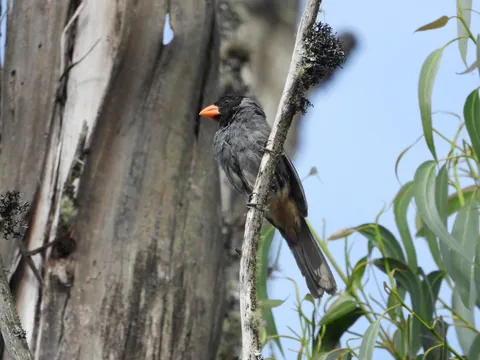
Key species: Rainbow Starfrontlet, Purple-throated Sunangel, Line-cheeked Spinetail, Black-crested Tit-Tyrant, Black-cowled Saltator.
Day 6
Full day. Birding along the gravel road that climbs Cerro Toledo to the stunted elfin forest at about 3,100 m, on the edge of Podocarpus National Park, created in 1982 and covering about 146,000 hectares of the Andes of Loja and Zamora.
Afternoon. On to Casa Simpson Lodge, the lodge of the Tapichalaca Reserve.
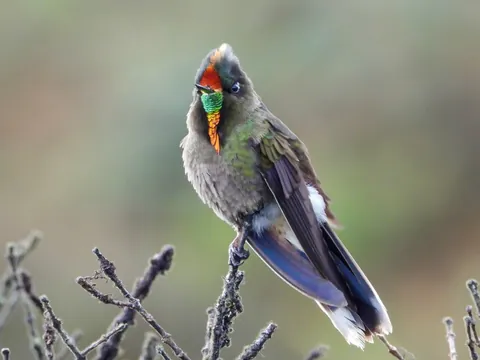
Key species: Neblina Metaltail, Rainbow-bearded Thornbill, Loja Tapaculo, Black-headed Hemispingus, Masked Mountain-Tanager.
Day 7
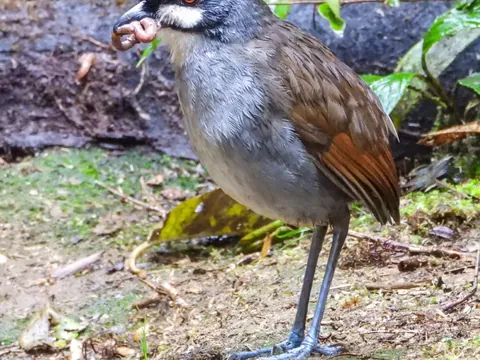
Full day. A whole day at the Tapichalaca Reserve: here, on 20 November 1997, Robert Ridgely found the Jocotoco Antpitta, a bird new to science, and the Jocotoco Foundation and this reserve were created the following year to protect it.
Afternoon. Lunch and more birding in the reserve.
Key species: Jocotoco Antpitta, Amethyst-throated Sunangel, Rufous-capped Thornbill, Bearded Guan, Chusquea Tapaculo.
Day 8
Morning. A second morning at Tapichalaca for more time with the Jocotoco Antpitta and the hummingbirds.
Afternoon. Lunch and transfer to the Copalinga Reserve.
Key species: Jocotoco Antpitta, Amethyst-throated Sunangel, Rufous-capped Thornbill, Bearded Guan, Chusquea Tapaculo.
Day 9
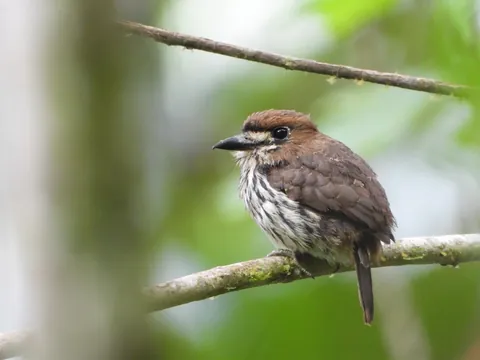
Full day. A whole day at the Copalinga Reserve, at about 1,000 m beside Podocarpus National Park near Zamora, where more than 400 bird species have been recorded.
Afternoon. Lunch and more birding in the reserve.
Key species: Great Tinamou, Coppery-chested Jacamar, Amazonian Umbrellabird, White-breasted Parakeet, Lanceolated Monklet.
Day 10
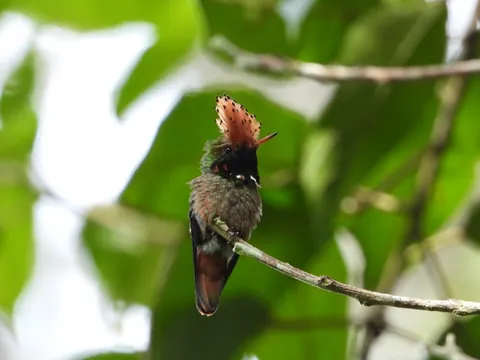
Morning. Check-out and a morning around Yantzaza to photograph the Spangled Coquette, one of the smallest and most striking hummingbirds of Ecuador, and other species.
Afternoon. After lunch, on to the town of Saraguro.
Key species: Spangled Coquette, Paradise Tanager, Little Woodstar, Amethyst Woodstar, Turquoise Tanager.
Day 11
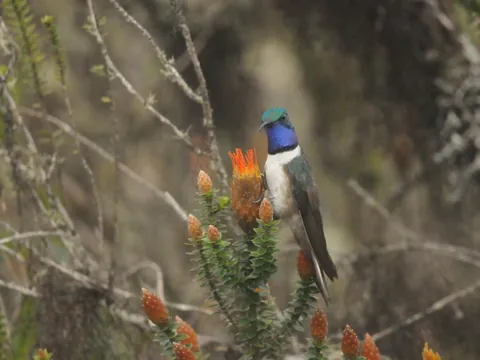
Morning. A morning at the Cerro de Arcos Reserve, created by Jocotoco for the Blue-throated Hillstar: the hummingbird was found here in 2017, described in 2018, and is known from this single mountain.
Afternoon. Lunch and more time in the reserve.
Key species: Blue-throated Hillstar, Viridian Metaltail, Green-tailed Trainbearer, Red-rumped Bush-Tyrant, Pale-headed Brushfinch.
Day 12
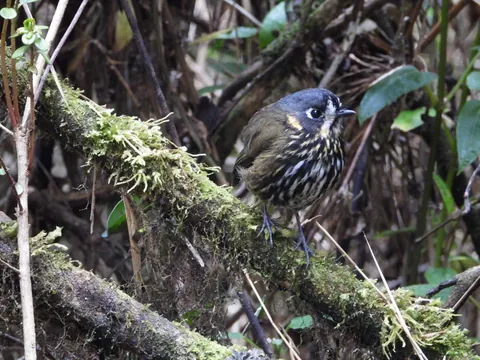
Full day. Birding on Cerro Acanama, near the town of Saraguro.
Afternoon. Lunch and more birding in this area.
Key species: Crescent-faced Antpitta, Chestnut-bellied Cotinga, Mountain Caracara, Andean Pygmy-Owl, Red-faced Parrot.
Day 13
Morning. Check-out and a drive to the Yunguilla Reserve, created in 1998 when the Pale-headed Brushfinch was rediscovered after some 30 years without records; thanks to the reserve its population has grown to about 200 birds.
Afternoon. Lunch and on to the city of Cuenca.
Key species: Pale-headed Brushfinch.
Day 14
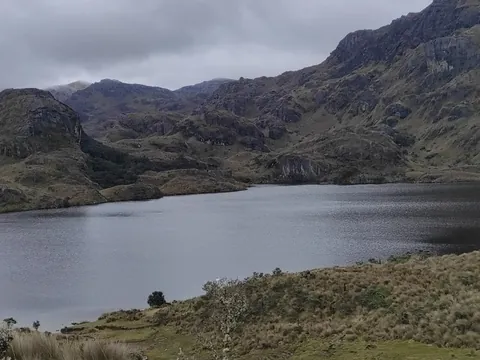
Morning. Check-out and an early departure to Cajas National Park, about 28,500 hectares of páramo between 3,100 and 4,450 m, with hundreds of lagoons and some of the last Polylepis forests of Ecuador.
Afternoon. Lunch and drive down to Guayaquil, where the tour ends.
Key species: Violet-throated Metaltail, Blue-mantled Thornbill, Tit-like Dacnis, Giant Conebill.
The itinerary may change with the weather, the birds and the opening of each reserve; your guide always looks for the best option of the day. Available extension: the Ayampe area on the coast, for the Esmeraldas Woodstar, one of the rarest hummingbirds of Ecuador. Ask us when you request your quote.
Where you go birding
The south of Ecuador packs mangroves near Guayaquil, the Tumbesian dry forest of Loja, the cloud forest of Tapichalaca, the foothills of Podocarpus National Park around Zamora and the páramo of Cajas. Several reserves on this route belong to Fundación Jocotoco, created in 1998 after the discovery of the Jocotoco Antpitta, and protect birds found almost nowhere else: the El Oro Parakeet at Buenaventura, the Pale-headed Brushfinch at Yunguilla and the Blue-throated Hillstar at Cerro de Arcos.
Where you stay
The nights are spent in the lodges of the reserves, so the first light of the day finds you where the birds are, and in small hotels in the towns along the way:
Our birding professional guides
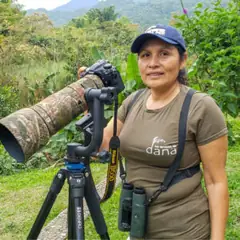 Julia PatiñoBirding guide
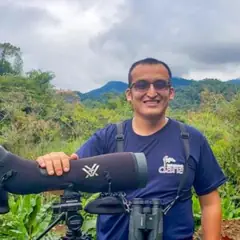 Nelson ApoloBirding guide
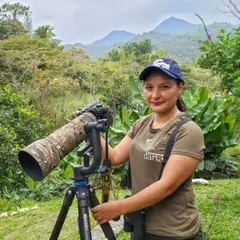 Natalia EscobarBirding guide
 Anthony DíazBirding guide
 Antony DuránBirding guide
 David LaraBirding guide
“Special thanks to Julia for her phenomenal guiding and viewing of so many incredible species that only a local guide would know.” — cyclegirl, on Tripadvisor
Before you go
Compare
| Tour | Route | Highlights | Price per person |
|---|---|---|---|
| 12 days | Mindo and the Chocó Andino · Antisana · East slope | Private tour on your dates | From US$4,600 |
| 12 days · group 2027 | Chocó Andino · Antisana · Guango · Río Quijos · San Isidro | Small group, max. 6 photographers, 2027 | From US$4,200 |
| 14 days · you are here | Guayaquil · Jocotoco reserves · Yantzaza · Cerro de Arcos · Cajas | Jocotoco Antpitta, Spangled Coquette, Blue-throated Hillstar | From US$4,650 |
Shorter photography tours from our lodge in Mindo Cloud Forest, from 3 to 7 days: see the Chocó Andino photography tours. Want your own dates and targets? See our tailor-made bird photography tours. See all our bird photography tours.
Price
| 14 days / 13 nights | From US$4,650 per person |
|---|
The price per person depends on the size of your group and your dates: larger groups get a lower price per person. We send you the exact quote within 24 hours.
Questions
In Guayaquil, with an early departure from your hotel; we can also pick you up at the Guayaquil airport. The tour ends back in Guayaquil.
Birding is good all year round. In any season the first hours after dawn are the most active, so most outings start early.
Yes. Every Galápagos cruise booked with us includes complimentary nights at our lodge in Mindo Cloud Forest.
Yes: tell us your dates, your group and your target species, and we adapt the days or create a custom program.
That’s why you choose Dana Tours
Tell us your dates and how many people are traveling. We confirm the guide and the lodges and send you the final price within 24 hours.
Or write to us at [email protected]