Scheduled group departure 2027 · 12 days / 11 nights
A scheduled 12-day bird photography tour for a maximum of six photographers: the feeders and hides of the Chocó Andino from our own lodge in Mindo Cloud Forest, the Andean Condor at Antisana, and the lodges of the eastern slope of the Andes.

At a glance
Ecuador has one of the highest densities of bird species in the world, and the short drives between reserves leave more time for photography. Feeders with flowers for hummingbirds, banana stations with good backgrounds for toucans, tanagers and the Andean Cock-of-the-rock, and, at Paz de las Aves, antpittas that come out of the forest when called. The itinerary may change with the weather and the activity at the feeders.
| Start and end | Quito |
|---|---|
| Dates | 2027, scheduled group departure |
| Highlights | Hummingbirds, toucans, Andean Cock-of-the-rock, antpittas at Paz de las Aves, Andean Condor |
| Pace | Easy |
| Physical difficulty | Easy |
| Focus | Bird photography |
| Group | Maximum 6 photographers |
| Price | From US$4,200 per person |
Day by day
Day 1
We meet you on arrival at Quito’s international airport (UIO) and take you to our hotel in the airport area. Dinner is not included. If needed, we can arrange extra nights and guiding in Quito.
Day 2
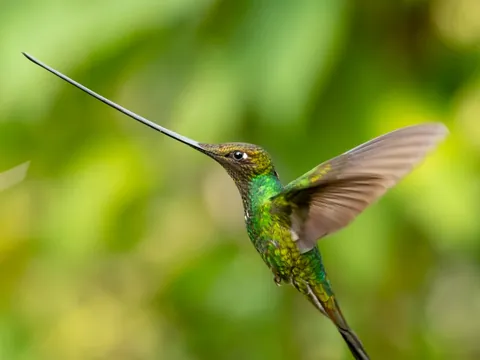
Full day. Check-out at 6:00 am and on to Zuro Loma for a day at its feeders, with a local breakfast and lunch at the reserve. Zuro Loma is a family-owned reserve at 3,100 m in the Chocó Andino Biosphere Reserve, created to protect the high montane cloud forest as an alternative to cattle ranching; the family is replanting native plants preferred by the critically endangered Black-breasted Puffleg.
Evening. On to Mindo Cloud Forest.
Key species: Sword-billed Hummingbird, Chestnut-naped Antpitta, Sapphire-vented Puffleg, Ocellated Tapaculo, Red-crested Cotinga, Andean Guan, Scarlet-bellied Mountain-Tanager.
Day 3
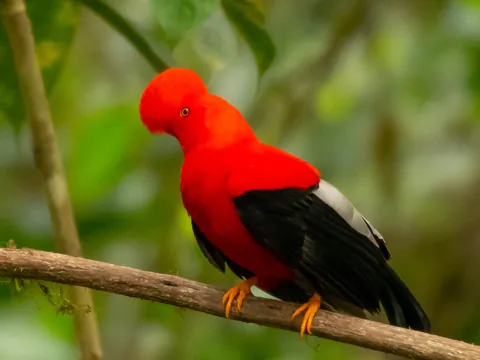
Morning. Departure at 5:20 am with a breakfast box, about 40 minutes to Refugio Paz de las Aves, a 30-hectare private reserve at about 1,400 m between Nanegalito and Mindo. Brothers Ángel and Rodrigo Paz taught several shy antpittas to come out of the forest when called by name, and the Andean Cock-of-the-rock displays at its lek at first light.
Breakfast and lunch. A traditional breakfast of bolón de verde with Ecuadorian coffee, more photography at the hummingbird and banana feeders, and lunch at the reserve.
Afternoon. A second Cock-of-the-rock lek, best in the afternoon.
Key species: Andean Cock-of-the-rock, Giant Antpitta, Moustached Antpitta, Yellow-breasted Antpitta, Chestnut-crowned Antpitta, Ochre-breasted Antpitta.
Day 4
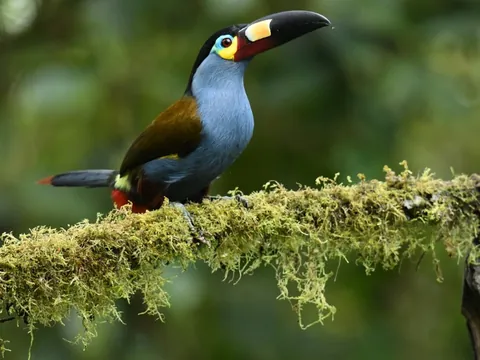
Morning. Departure at 5:20 am, about 35 minutes to Birdwatchers House in the Santa Rosa sector: several feeders, a moth feeder with white sheets and lights, a hide for the toucans and pools for reflection photos. Breakfast there.
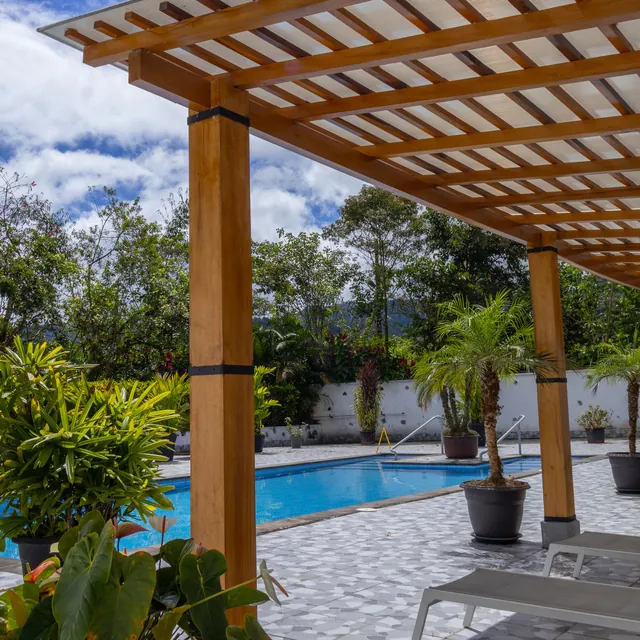
Midday. Back at our lodge before noon: time for the pool, the terrace and the gardens, then lunch.
Afternoon. About 25 minutes to the Milpe Bird Sanctuary of the Mindo Cloudforest Foundation, inside the Los Bancos–Milpe Important Bird Area defined by BirdLife International.
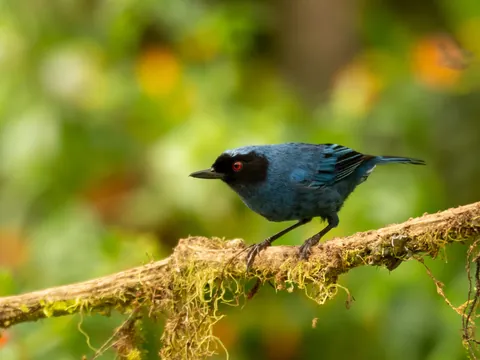
Key species: Plate-billed Mountain-Toucan, Blue-capped Tanager, Hoary Puffleg, Blue-necked Tanager, Bay-headed Tanager, Red-headed Barbet, Chocó Toucan, Golden-headed Quetzal, Crimson-rumped Toucanet, Club-winged Manakin, Green Thorntail.
Day 5
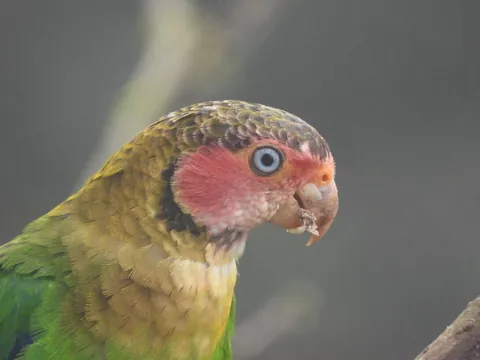
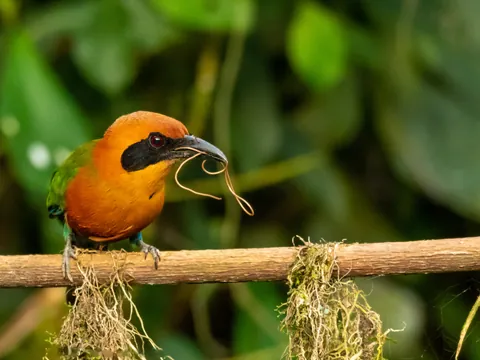
Full day. Departure around 4:30 am and about two hours to the Amagusa Reserve, 130 hectares of recovering forest on the Mashpi Road inside the Mashpi–Pachijal Important Bird Area: the last foothill forest connected to the lower western forests of Ecuador, and a great place for Chocó endemics at its feeders. Breakfast and lunch at the reserve.
Key species: Indigo Flowerpiercer, Golden-collared Honeycreeper, Black Solitaire, Orange-breasted Fruiteater, Lyre-tailed Nightjar, White-tipped Sicklebill, Chocó Vireo, Glistening-green Tanager, Black-chinned Mountain-Tanager, Flame-faced Tanager, Velvet-purple Coronet, Violet-tailed Sylph, Toucan Barbet.
Day 6
Early morning. A moth feeder only 20 minutes from our lodge, then back for breakfast.
Morning. Punto Ornitológico in Mindo for hummingbirds and other species, with chances of the Sunbittern and the Ringed Kingfisher.
Afternoon. The San Tadeo feeder, about 10 minutes from Mindo, for a last session in the Chocó Andino.
Key species: Masked Trogon, Squirrel Cuckoo, Rufous Motmot, Red-headed Barbet, Crimson-rumped Toucanet, Strong-billed Woodcreeper, Black-capped Tanager, Buff-throated Saltator, Black-winged Saltator.
Day 7
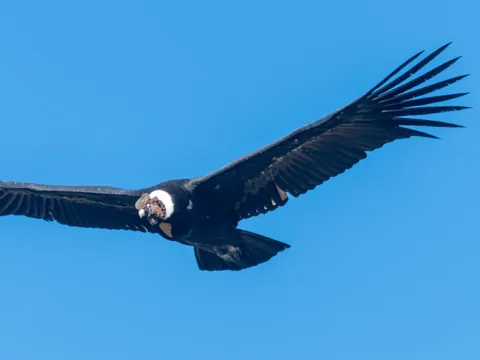
Morning. Early check-out at 4:00 am and on to Antisana National Park, southeast of Quito: high-Andean grasslands above 4,000 m under the snow-capped Antisana volcano, a national park since 2021 and home to the most important population of Andean Condors in Ecuador, one of the best places to see the Andean Condor and the Ecuadorian Hillstar.
Afternoon. Lunch at the Tambo Cóndor restaurant and on to Guango Lodge.
Key species: Andean Condor, Ecuadorian Hillstar, Great Horned Owl, Variable Hawk, Giant Hummingbird, Shining Sunbeam.
Day 8
Morning. Photography at the Guango Reserve.
Afternoon. Lunch at the lodge and on to Río Quijos Ecolodge.
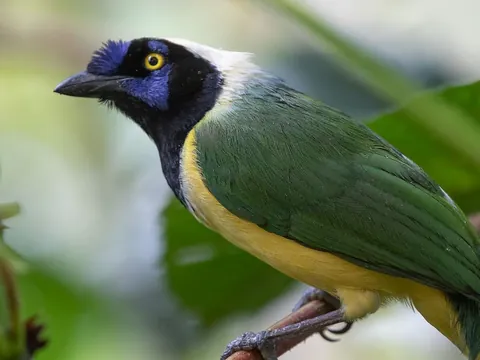
Key species: Inca Jay, Turquoise Jay, Gray-browed Brushfinch, Slaty Brushfinch, Pale-naped Brushfinch, Tourmaline Sunangel, Long-tailed Sylph, Collared Inca, White-bellied Woodstar, Chestnut-breasted Coronet.
Day 9
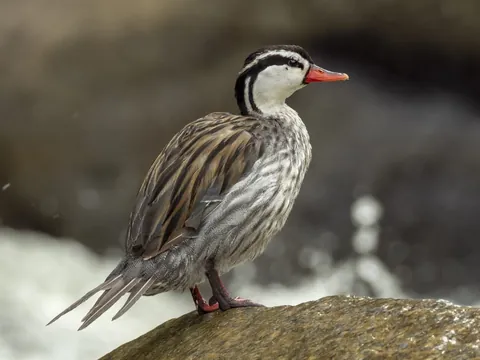
Morning. Photography at the feeders and along the river of Río Quijos Ecolodge, in the Chaco area, where the Torrent Duck can be seen.
Afternoon. Lunch at the lodge and on to San Isidro Lodge.
Key species: Torrent Duck, Fasciated Tiger-Heron, Golden-eared Tanager, Scarlet-rumped Cacique, Russet-backed Oropendola.
Day 10
Full day. Photography at the San Isidro Reserve, with its moth feeder and other set-ups.
Afternoon. After lunch, the La Brisa hummingbird feeders nearby, with good backgrounds.
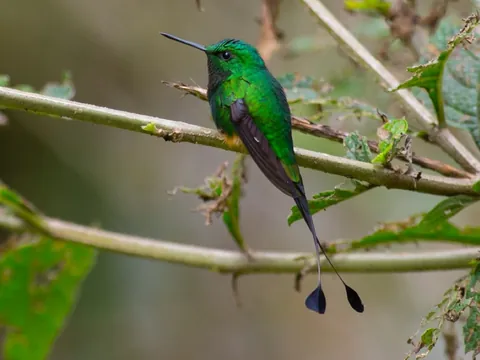
Key species: Masked Trogon, Blackburnian Warbler, Canada Warbler, Summer Tanager, Cinnamon Flycatcher, Gorgeted Woodstar, Booted Racket-tail (the orange-legged form), Bronzy Inca, Violet-fronted Brilliant.
Day 11
Morning. About 45 minutes to the feeders of the Wayra Reserve.
Afternoon. Lunch at San Isidro Lodge and transfer back to our hotel in the Quito airport area.
Key species: Black-throated Mango, Golden-tailed Sapphire, Silver-beaked Tanager, Blue-gray Tanager, Spotted Tanager, Blue-necked Tanager, Paradise Tanager, Red-crested Finch.
Day 12
The tour ends after breakfast, with a transfer from the hotel to Quito’s airport.
The itinerary may change with the weather, the birds and the opening of each reserve; your guide always looks for the best option of the day.
Where you go birding
Northwest Ecuador is part of the Chocó bioregion, famous for its endemic birds. In 2018 UNESCO declared the Chocó Andino de Pichincha, around 286,000 hectares northwest of Quito, a Biosphere Reserve. Mindo is its best-known birding hotspot: more than 500 species have been recorded around the town, and its Christmas Bird Count topped the world list for several years in a row, with more than 400 species counted in a day.
East of Quito the Andes drop to the Amazon through temperate and subtropical forest: Guango at about 2,700 m, San Isidro at around 2,000 m and Wildsumaco at about 1,400 m, beside Sumaco National Park. Each step down brings different birds, from Torrent Ducks in the rivers to the Wire-crested Thorntail of the foothills.
Where you stay
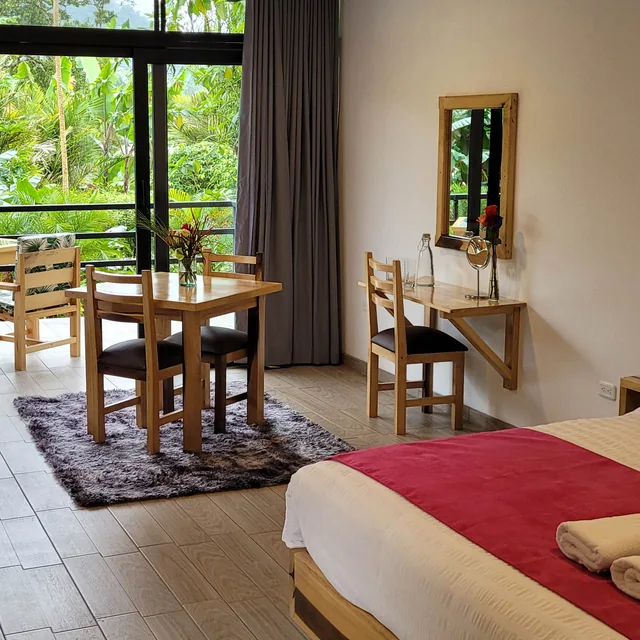
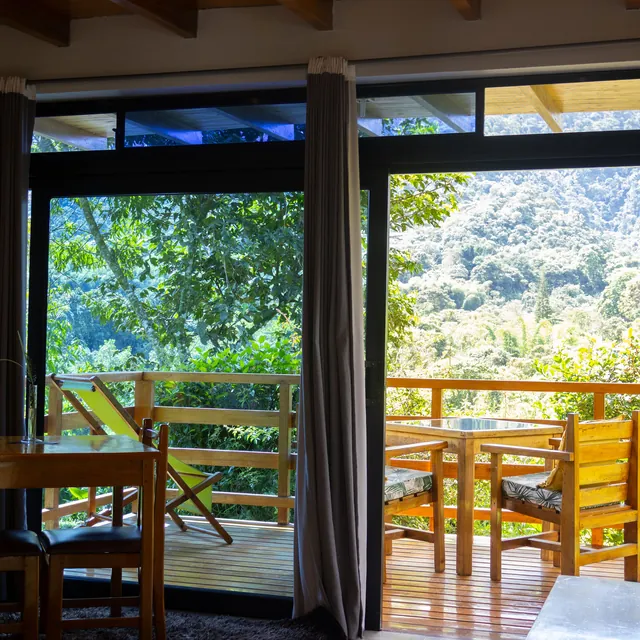
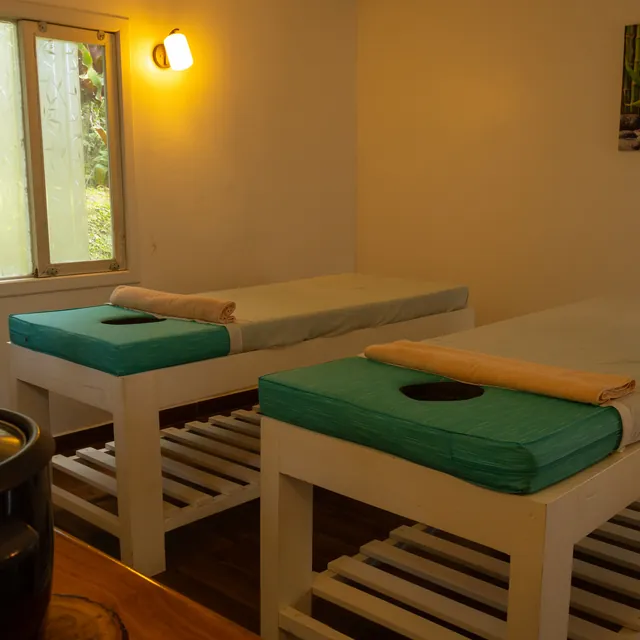
We built and run Las Terrazas de Dana, a boutique lodge and spa in Mindo Cloud Forest, two hours from Quito, rated among the best in Mindo on Tripadvisor and Booking.com.
After a first night in the Quito airport area, five nights are at our own lodge, Las Terrazas de Dana Boutique Lodge & Spa. Then Guango Lodge, Río Quijos Ecolodge and San Isidro Lodge on the eastern slope. All rooms have private bathrooms, hot water and 110 V electricity; we own Las Terrazas de Dana and work as partners of the other lodges.
Trip considerations
Relaxed. Early departures at 5–6 am, with a flexible breakfast box depending on the photography. In the afternoon, back at the lodge, there is time to rest or edit your photos. Distances are short, except on day 7 (early check-out and about three hours to Antisana) and day 11, from San Isidro Lodge to Quito.
Easy. Most feeders are a short walk away. At Paz de las Aves you walk a little on steep, slippery trails to photograph the antpittas; elsewhere, short trails are optional.
Usually pleasant, mostly 13–24 °C (55–75 °F). Zuro Loma, Guango and Antisana can be cold, so bring warm clothes. Rain is likely, especially in the afternoons and evenings: bring good rain protection for your equipment.
Bird photography works all year. The driest months are usually June to August and the wettest March and April. Rainy-season tours are often very productive: mornings are frequently dry and the clouds soften the midday light.
Most of the time is spent at the feeders and at the moth feeders, where birds come to eat the insects attracted by the lights at night. There is also time to photograph birds along roads and trails.
A 300 mm lens on a full-frame camera is ideal for hummingbirds, but a longer lens is better for most other birds: a 500 mm with a 1.4x or a 600 mm, or a 300 mm with 1.4x and 2x teleconverters. A shorter lens is useful for landscapes in the high Andes.
Our birding professional guides
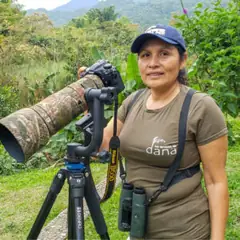 Julia PatiñoBirding guide
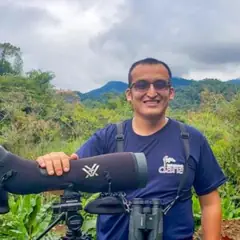 Nelson ApoloBirding guide
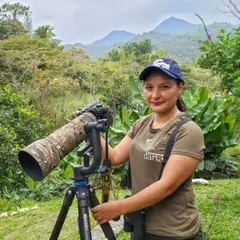 Natalia EscobarBirding guide
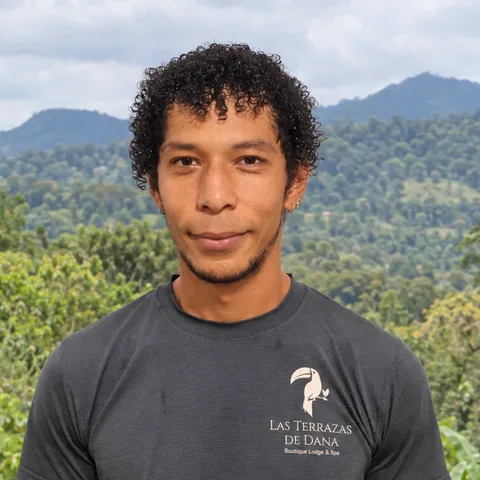 Anthony DíazBirding guide
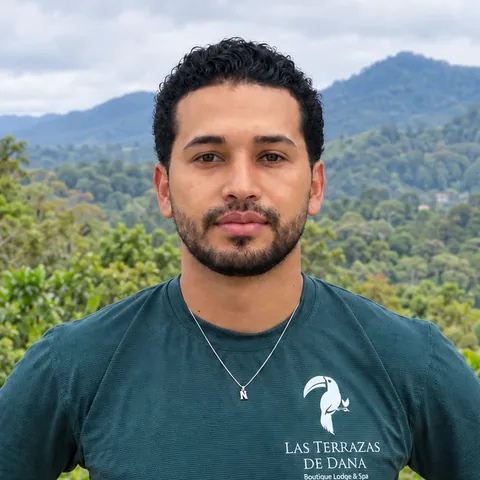 Antony DuránBirding guide
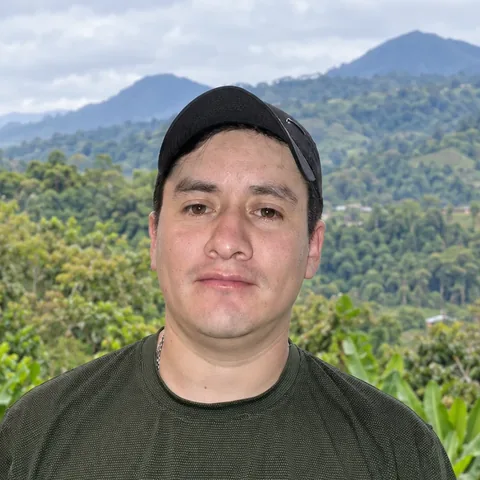 David LaraBirding guide
“Special thanks to Julia for her phenomenal guiding and viewing of so many incredible species that only a local guide would know.” — cyclegirl, on Tripadvisor
Before you go
Compare
| Tour | Route | Highlights | Price per person |
|---|---|---|---|
| 12 days | Mindo and the Chocó Andino · Antisana · East slope | Private tour on your dates | From US$4,600 |
| 12 days · group 2027 · you are here | Chocó Andino · Antisana · Guango · Río Quijos · San Isidro | Small group, max. 6 photographers, 2027 | From US$4,200 |
| 14 days | Guayaquil · Jocotoco reserves · Yantzaza · Cerro de Arcos · Cajas | Jocotoco Antpitta, Spangled Coquette, Blue-throated Hillstar | From US$4,650 |
Shorter photography tours from our lodge in Mindo Cloud Forest, from 3 to 7 days: see the Chocó Andino photography tours. Want your own dates and targets? See our tailor-made bird photography tours. See all our bird photography tours.
Price
| Per person, sharing a double room | US$4,200 |
|---|---|
| Single supplement | US$840 |
| Deposit to book | US$1,000; the remaining US$3,200 can be paid by credit card on arrival at our lodge |
Extensions on request: the Galápagos Islands on a cruise, Amazon lodges in Yasuní, the Misahuallí area, Wildsumaco and southern Ecuador.
Questions
In Quito: we meet you at the Mariscal Sucre International Airport (UIO) and take you to our hotel in the airport area. Most flights arrive late in the evening; arriving a day or two earlier is a good idea if you want to see Quito.
With a deposit of US$1,000. The remaining US$3,200 can be paid by credit card on arrival at Las Terrazas de Dana Boutique Lodge & Spa.
Yes: US$840 for a single room.
Birding is good all year round. In any season the first hours after dawn are the most active, so most outings start early.
Yes. Every Galápagos cruise booked with us includes complimentary nights at our lodge in Mindo Cloud Forest.
That’s why you choose Dana Tours
Tell us your dates and how many people are traveling. We confirm the guide and the lodges and send you the final price within 24 hours.
Or write to us at [email protected]