
Travel guide · Planning
What to eat in Galápagos: brujo, lobster, ceviche and the places we send guests
What to eat in Galápagos: brujo (the local scorpionfish), spiny lobster in season, canchalagua ceviche, encebollado, prices, and the Puerto Ayora restaurants…
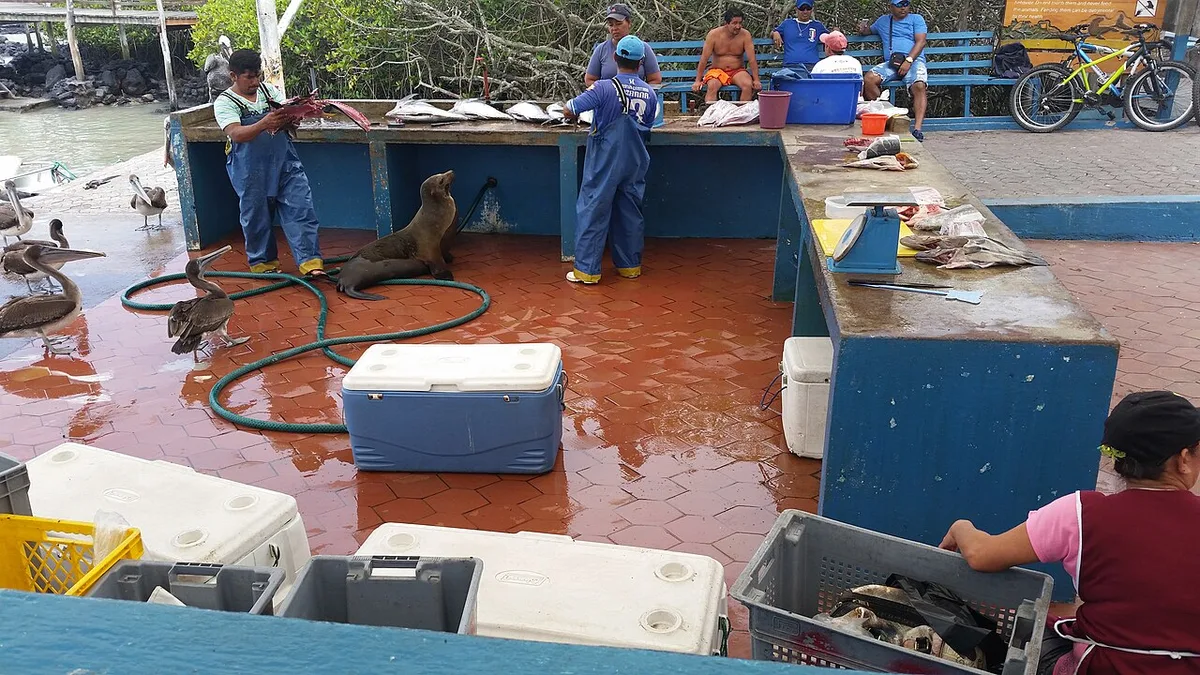 Photo: Pi3.124 (CC BY-SA 4.0) via Wikimedia Commons
Galápagos eats like a fishing town, because it is one. Almost everything on the island tables comes out of the Galápagos Marine Reserve, caught by small licensed boats under park rules, and the menu changes with whatever the fleet landed that morning. That is why a good restaurant here reads you the specials instead of handing you a laminated list. This page covers the dishes worth knowing before you order, what they cost, the lobster calendar, and the four restaurants in Puerto Ayora we book for guests and go back to ourselves.
The dishes, at a glance
| Dish | What it is | When | Typical price |
|---|---|---|---|
| Brujo | The local scorpionfish: dense, white, slightly sweet flesh; fried whole, grilled, in ceviche or encocado | Year-round | US$12–20 as a main |
| Langosta (spiny lobster) | Red or green spiny lobster, grilled with garlic butter or in encocado | Only in the open season (in 2026, 1 August to 31 December) | The priciest plate in town |
| Canchalagua | A chiton, an intertidal mollusc endemic to the islands, served as ceviche with red onion and lime | Regulated harvest; ask | US$10–15 |
| Encebollado | Ecuador’s fish soup: albacore tuna broth with yuca and pickled onion, eaten at breakfast or mid-morning | Daily | US$4–7 |
| Ceviche | Lime-cured fish or shellfish, Ecuadorian style with a tomato-and-onion broth, served with chifles or popcorn | Daily | US$8–15 |
| Albacora | Yellowfin tuna, seared, grilled or as tartare | Year-round | US$12–18 |
| Almuerzo (set lunch) | Soup, a main with rice, juice and sometimes dessert | Weekday lunchtime | US$5–8 |
Prices are what we see in Puerto Ayora in 2026 at local and mid-range places; the fine-dining tables cost two or three times more, and the kiosk street less.
Brujo: the island fish you will not find at home
The fish locals will tell you to order is the brujo, the Galápagos scorpionfish: dense, white-fleshed, slightly sweet, and almost never exported, which is why you have never seen it on a menu anywhere else. The artisanal fleet fishes it year-round, and it grows slowly, so responsible restaurants treat it as a special, not a daily catch. It arrives at the table four ways:
- Fried whole: crisp skin, and the cheeks are the best bite on the fish.
- Grilled: the simplest and, for a fish this good, often the best.
- Encocado: brujo in coconut sauce with rice, the coastal Ecuadorian classic.
- Ceviche: lighter, lime-cured, often mixed with the local shellfish.
Fried whole brujo at a kiosk table with rice, patacones and a squeeze of lime is the most Galápagos lunch there is. It is the one dish we tell every guest to try at least once.
Lobster, strictly by the calendar
Galápagos spiny lobster is the splurge, and it has a hard rule: the Galápagos National Park sets an open season each year for the artisanal fleet and closes the fishery the rest of the time so the population recovers. In 2026 the season for red and green spiny lobster opened on 1 August and closes on 31 December; in other years it has started in September. Inside the season, grilled lobster with garlic butter at a waterfront table in Puerto Ayora is the dinner people fly home talking about. Outside it, order the brujo or the tuna, and be suspicious of any restaurant that serves lobster in March: it is either frozen from last season or illegal, and neither is worth your money.
Canchalagua, encebollado and the rest
Canchalagua is a chiton, a flat, armoured mollusc that lives on the intertidal rocks and exists only in these islands. It is served as a ceviche with red onion and lime and tastes of the sea in a way mainland ceviche does not. Its harvest is regulated, so it is not on every menu every day.
Encebollado is Ecuador’s national fish soup: an albacore broth with yuca and pickled red onion, eaten at breakfast or mid-morning and famous as a hangover cure. Island comedores make it with tuna so fresh the broth tastes sweet. Order it with chifles (plantain chips) crumbled on top, the way locals do.
Albacora, the local name for yellowfin tuna, is abundant and appears everywhere from seared steaks to tartare. Pulpo (octopus) and pescado al ajillo (fish in garlic) round out most menus, and every table gets a bowl of ají, the fresh chilli sauce, to spoon over everything.
The fish market on the malecón in Puerto Ayora is worth a visit even if you cook nothing. Pelicans and sea lions supervise the scales, the catch changes daily, and it is the clearest window into where all this food comes from.
Where we send people in Puerto Ayora
We run trips here and we eat here every season. These four are the ones we book for guests and return to ourselves:
- The Point by Midori: the sushi and sashimi option, with local tuna cut the way it deserves, right on the water.
- Midori: the original of the pair; the nigiri and the tuna tataki are the reason it has outlived every trend in town.
- Frafre: the most creative kitchen in Puerto Ayora, where the brujo and the daily catch get the fine-dining treatment without losing the island on the plate.
- 1835 Restaurant & Coffee Shop: relaxed, reliable, excellent grilled fish and the best coffee near the malecón; the lunch you come back for twice.
For a louder, cheaper night, the kiosk street (Charles Binford) sets up open-air grills every evening where the day’s fish sizzles on the pavement. Sit with the locals and order what they order. Reserve ahead at the first four, especially in July, August and over Christmas.
Coffee, water and the vegetarian question
Galápagos grows its own coffee in the humid highlands of San Cristóbal and Santa Cruz, and the better cafés in town serve it. Buy a bag to take home; it is the one souvenir that is both local and legal.
Tap water on the islands is not safe to drink. Hotels and most restaurants have refill stations, and the islands banned single-use plastic bottles years ago, so carry a refillable bottle and fill it as you go.
Vegetarians eat well enough, not spectacularly: set lunches can usually swap the fish for eggs or lentils, pizza and pasta places exist in all three towns, and the markets have fruit. Vegans should expect to explain themselves twice and bring snacks for the boat days.
The sustainability note
Everything above depends on the marine reserve staying healthy. The fleet that feeds the restaurants is small-scale and licensed; industrial fishing is banned inside the reserve. Eat the regulated species in season, skip anything you cannot identify on the menu, and do not order cheap lobster in the closed months. Ordering well is not virtue; it is how the system keeps working.
And after the islands
The mainland half of the trip has its own table, and it has the best kitchen of the trip. Brito Restaurante, the fine-dining restaurant at our lodge in Mindo, Las Terrazas de Dana, is where the cloud forest version of this page happens: Ecuadorian and international plates built on locally sourced ingredients, an open kitchen surrounded by birdsong instead of traffic, and chefs from Mindo itself. Reserve ahead. It is small on purpose, with dinner from 6 to 9 pm and lunch from 12:30 to 4.
Frequently asked questions
What is brujo fish?
Brujo is the local name for the Galápagos scorpionfish, a slow-growing reef fish with dense, sweet white flesh. It is fished year-round by the islands’ artisanal fleet, served fried whole, grilled, in coconut sauce or as ceviche, and is almost never exported.
When is lobster season in Galápagos?
The Galápagos National Park sets the dates each year. In 2026 the season for red and green spiny lobster runs from 1 August to 31 December. Outside those dates lobster should not be on any menu.
Is food expensive in Galápagos?
More than on the mainland, because most of it arrives by ship or plane. A set lunch costs US$5–8, a fish main in a mid-range restaurant US$12–20, and dinner at the fine-dining tables US$30–50 per person. Lobster in season is the most expensive plate.
Can you drink tap water in Galápagos?
No. Use the refill stations at hotels and restaurants and carry a refillable bottle; single-use plastic bottles are banned on the islands.
What is canchalagua?
A chiton, a flat intertidal mollusc found only in Galápagos, served as a ceviche with red onion and lime. Its harvest is regulated, so it appears on menus only some of the time.
Related reading
Where to stay and how to spend a day in the town with the most restaurants is in our Puerto Ayora guide; what everything costs, from the set lunch to the cruise, is in what a Galápagos trip really costs; and the rules that keep the fish on the menu are in the Galápagos National Park rules.
Sources
- Spiny lobster fishing season opens in the Galápagos Marine Reserve, Galápagos National Park Directorate
- Red and green lobster fishing in Galápagos to start on 1 August 2026, El Diario
- Galápagos biodiversity, Galápagos Conservancy
Last verified: October 2026