
Travel guide · Planning
Galápagos entry fee and the TCT card: what you pay, where and how
Galápagos park entry fee by category ($200 adults, $100 under 12), the $20 TCT card, the online registration and what you pay in cash on arrival. Updated…
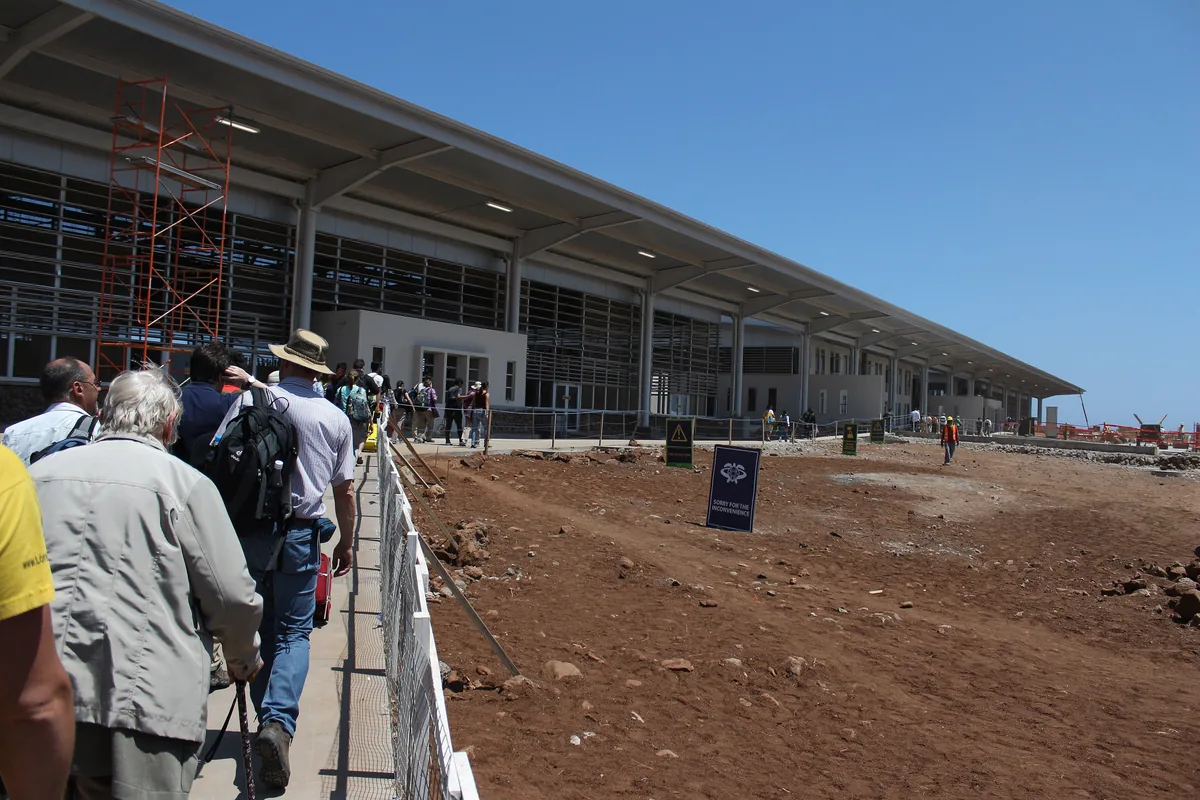 Photo: Xxchangwoo0120xx (CC BY-SA 3.0) via Wikimedia Commons
You pay twice to enter Galápagos, at two different points of the journey, and mixing the two up is the most common planning mistake we see. The first is the Tarjeta de Control de Tránsito (TCT), a US$20 transit card you register online before your flight. The second is the Galápagos National Park entry fee, US$200 for most foreign adults, paid in cash when you land on Baltra or San Cristóbal. Here is the whole picture, checked against the official resolutions and the park’s own 2026 collection rules.
The short version
| Payment | Who collects it | How much | When and where |
|---|---|---|---|
| TCT transit card | Galápagos Government Council (CGREG) | US$20 per person | Online, 24–48 hours before your flight; validated at the counter in Quito or Guayaquil |
| National park entry fee | Galápagos National Park rangers | US$200 foreign adult, US$100 foreign child under 12 | In cash, at the arrival counter on Baltra or San Cristóbal |
Two adults pay US$440 in total. A family of two adults and two children under 12 pays US$680: four TCT cards at US$20, two adult fees at US$200 and two child fees at US$100. Neither amount is inside your cruise or hotel price, so set it aside from day one.
First payment: the TCT transit card (US$20)
The TCT is issued by the Consejo de Gobierno de Galápagos (CGREG), the provincial government. Every non-resident visitor needs one, it is shown when you enter the province and again when you leave, and it is not the park fee: the US$20 goes to the migration control system, not to conservation.
Since 29 May 2025 the card is digital. You register on the government portal, pay by card and receive a QR code; the CGREG counters at the Quito and Guayaquil airports only validate it before you check in. The portal asks for:
- Your passport details and nationality.
- Your round-trip flight, with a return date no more than 60 days after arrival.
- The name of your hotel or cruise.
- A short declaration of responsibility and a data-use consent.
- Payment of US$20 by debit or credit card.
Register 24 to 48 hours before the flight, as the government recommends, and keep a screenshot of the QR code on your phone: you show it at the mainland counter, at boarding and again on arrival. The card covers up to 60 days of tourism per calendar year and is not extendable.
One more online form belongs to the same hour of your life: the digital goods declaration of the Galápagos Biosecurity Agency (ABG), which replaced the paper form in 2024. It is where you declare anything the inspectors care about, such as fresh food, seeds, plants or animal products. Your checked bags still get the biosecurity sticker at the mainland airport before you check in.
Children and the TCT. The park fee has a child rate and an exemption under 2 (see the table below). The government’s own TCT questions page lists no exemption for infants, so budget US$20 for every child on the booking. If the portal charges nothing for a baby, treat it as a bonus rather than a plan.
“INGALA card”, “ISABENA fee”. If a guidebook mentions an INGALA card, it means this card: INGALA is the old name of the institution that issues it. “ISABENA” appears in some trip reports and in no official source; it is a garbled version of the same thing. Anyone charging you an “ISABENA fee” is charging the TCT. Ask them to itemise it as such.
Second payment: the national park entry fee
Park rangers collect the entry fee at counters inside the arrival airports, Baltra and San Cristóbal, as you walk off the plane, and since 2026 there is also a counter on Isabela for the few flights that arrive there from within the archipelago. Bring US dollars in cash. The table below has been in force since 1 August 2024, was ratified by provincial ordinance in June 2025 and is confirmed by the park’s 2026 collection instructions.
| Category | Age or condition | Fee (US$) |
|---|---|---|
| Foreign non-resident | 12 and over | 200 |
| Foreign non-resident | Under 12 | 100 |
| Foreign non-resident | Under 2 | Free |
| Andean Community (CAN) and Mercosur citizens, non-resident | 12 and over | 100 |
| Andean Community and Mercosur citizens, non-resident | Under 12 | 50 |
| Foreign student enrolled at an Ecuadorian institution | Any | 50 |
| Transit passenger, as qualified by the CGREG | Any | 15 |
| Ecuadorian citizen or foreign resident of Ecuador | 12 and over | 30 |
| Ecuadorian citizen or resident | Under 12, 65 and over, or CONADIS disability card | 15 |
CAN means Bolivia, Colombia, Ecuador and Peru. Mercosur means Argentina, Brazil, Paraguay and Uruguay. Nationals of those countries pay the reduced rate as long as they do not live in Ecuador.
You pay once per visit, not once per island: hopping from Santa Cruz to Isabela by ferry does not trigger a second park fee. What Isabela does charge is a separate municipal arrival fee of US$10, collected at the dock, which we cover in the ferry guide.
Why the fee doubled in 2024
For 26 years the adult foreign fee was US$100. Resolution 002-CGREG-24-02-2024 raised it to US$200 from 1 August 2024, the first increase since 1998, and lifted the resident fee from US$6 to US$30. If a blog quotes US$100, it is out of date; if a tour price “includes park fees”, read the fine print, because almost none do.
The 2026 collection rules add a few details worth knowing. Payment runs through Banco del Pacífico channels, the park issues an electronic invoice for every fee, and tour operators can pre-register their passenger lists with the park 24 working hours before arrival, which is why cruise passengers usually clear the counter faster than independent travellers.
What the money pays for
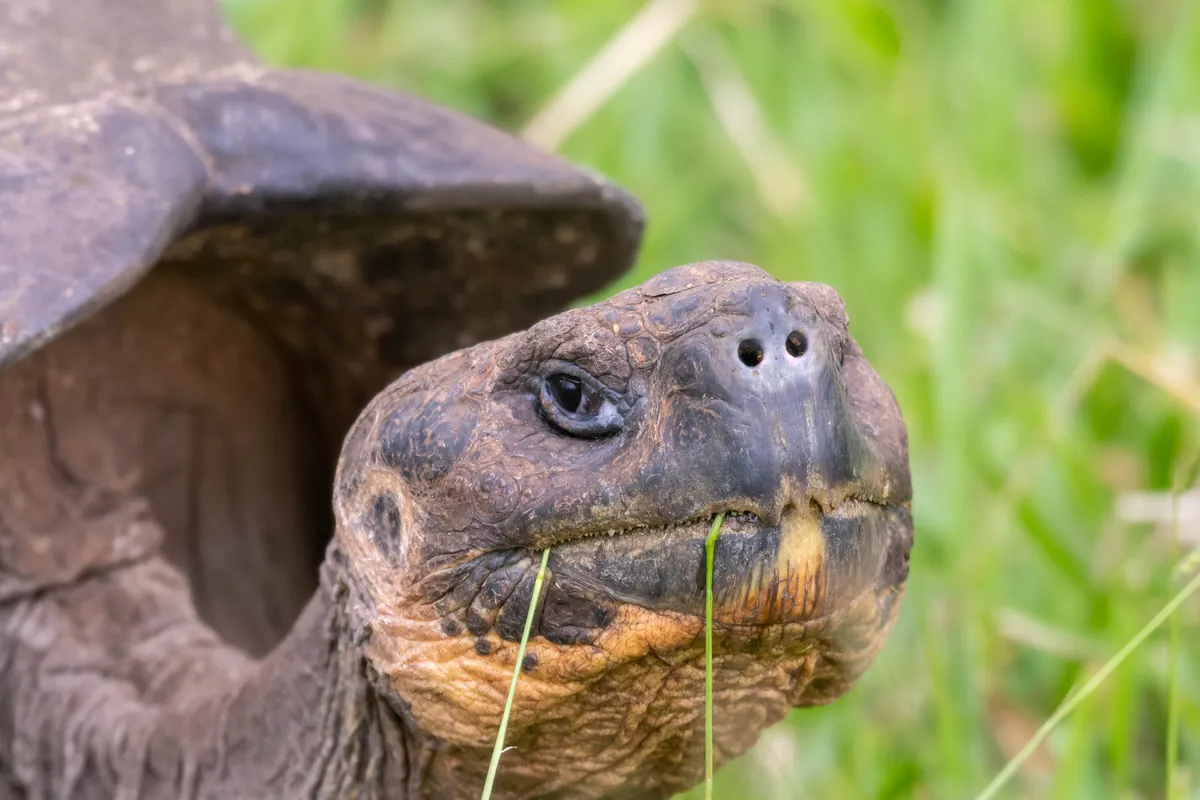
The fee is the park’s main source of income, and the park has a long list of expensive, slow projects to show for it. Removing more than 140,000 feral goats from Santiago, Isabela and Pinta cost around US$10.5 million. The giant tortoise breeding programmes at the Charles Darwin Research Station and on San Cristóbal and Isabela have returned thousands of young tortoises to islands where rats and goats had stopped natural breeding for a century. In February 2026, 158 young tortoises of the Floreana lineage were released on Floreana, the first of their kind on the island in more than 180 years. When you hand over US$200 at the counter, that is where it goes.
Five mistakes we see every month
- Arriving without cash. The airport counter is not the place to discover your card does not work. Carry the full amount in US dollars, in bills of US$20 or US$50 if you can; US$100 bills are refused in many places on the islands.
- Registering the TCT at the last minute. The portal needs your flight and hotel details and sends a verification email. Do it from the hotel the night before, not in the check-in queue.
- Assuming the cruise covers it. Cruise fares exclude both payments. So do most land packages.
- Forgetting the return flight rule. The TCT is tied to a return ticket dated within 60 days. One-way tickets are refused.
- Confusing the three fees. TCT (US$20, before the flight), park fee (US$200 or US$100, on arrival) and the Isabela dock fee (US$10, only if you take the ferry to Isabela). Three payments, three different offices.
Frequently asked questions
Can I pay the Galápagos park fee by card?
Plan on cash. The counters at Baltra and San Cristóbal have historically been cash only, and even where a card terminal exists it is not something to depend on after a flight. Bring the exact amount in US dollars.
Do children pay the Galápagos entry fee?
Foreign children under 12 pay US$100, and children under 2 pay nothing. For the TCT, budget US$20 per child of any age; the official rules list no infant exemption.
Is the TCT the same as the park entry fee?
No. The TCT (US$20) is a migration control card issued by the Galápagos Government Council before you fly. The park entry fee (US$200 or US$100) is collected by national park rangers when you land. You need both.
Do cruise passengers pay the same fees?
Yes. The park fee and the TCT are per person and do not depend on how you travel. Your cruise operator may pre-register your name, which speeds up the counter, but the amount is the same.
What happens if I lose my TCT?
The card is digital, so the QR code on your phone is the card. Keep a screenshot and your registration email. The counters can look you up by passport number, but a screenshot avoids the queue.
How much is the Galápagos entry fee in 2026?
US$200 for foreign adults and US$100 for foreign children under 12, unchanged since 1 August 2024 and confirmed by the park’s 2026 collection rules. Citizens of Andean Community and Mercosur countries pay half; Ecuadorians and residents pay US$30.
Where the fee fits in the budget
Entry costs are the fixed part of the trip. How they sit next to flights, cruises and daily spending is in our Galápagos budget breakdown, and if you are still choosing where to land, the fee is collected at either airport: see Baltra vs San Cristóbal. For cash on the islands themselves, read money, ATMs and cards.
Sources
- Galápagos National Park entry fee table, Galápagos Government Council
- Tributo de ingreso, Galápagos National Park Directorate
- TCT questions and answers, Galápagos Government Council
- TCT online registration portal
Last verified: October 2026