
Travel guide · Planning
Galápagos FAQ: 26 questions, short answers
Quick answers to the 26 most common Galápagos planning questions: fees, flights, ferries, guides, seasons, money, rules, costs and what a first trip really…
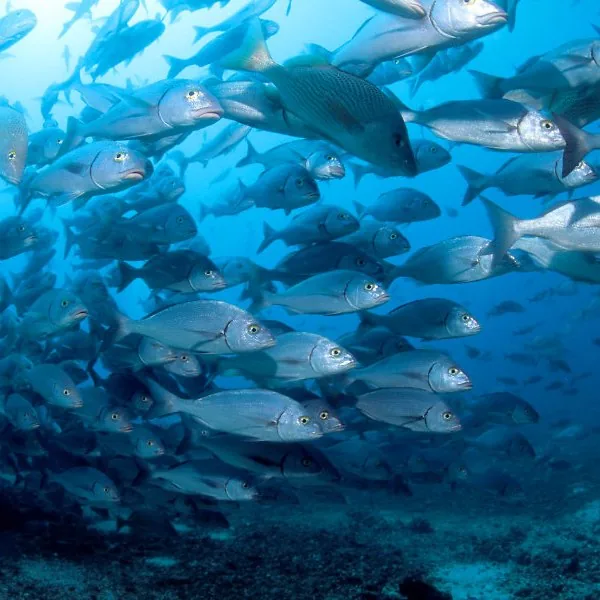
Short answers to the questions guests actually ask us, with links to the deep dives. All figures checked in October 2026.
Planning and logistics
How many days do I need in Galápagos? Five is the minimum that makes the flights worthwhile; seven is where the trip starts to breathe. A 4-day cruise gives you two full touring days once the flights eat the ends. Details in how many days.
Cruise or land-based: which is better? Neither, universally. Cruises reach the remote islands and handle every logistic; land trips cost less at the low end and give you freedom. We sell both and compare them in cruise vs land.
What is the best month to visit? There is no bad month. December to May is warm with calm seas; June to November is cooler, choppier and richer in marine life. Crowds peak at Christmas and in July and August; September and October are the quietest. Full tables in best time to visit.
How do I get to Galápagos? Fly from Quito or Guayaquil on Avianca or LATAM, the only airlines on the route. There are no international flights to the islands. A round trip costs US$400–550 for foreign visitors. See how to get to Galápagos.
Which airport should I fly into? Baltra (GPS) for Santa Cruz and most cruises; San Cristóbal (SCY) for a quieter start. Many one-week trips fly into one and out of the other. Comparison in Baltra vs San Cristóbal.
Do I need a visa? That depends on your nationality for Ecuador itself; many countries get 90 days visa-free. For Galápagos specifically, every visitor needs the TCT transit card, below. See visa and entry requirements.
Is Galápagos safe? For travellers, yes. Crime against visitors is rare, the towns are small and walkable at night, and the real risks are sun, currents and choppy ferry crossings. More in safety in Galápagos.
What is the capital of the Galápagos Islands? Puerto Baquerizo Moreno, on San Cristóbal. The biggest town, and the one most visitors use, is Puerto Ayora on Santa Cruz; people confuse the two constantly.
Fees, paperwork and money
What documents do I need to enter Galápagos? Your passport, the US$20 TCT transit card registered online before the flight, a return ticket within 60 days and the name of your hotel or cruise.
How much is the Galápagos National Park entrance fee? US$200 per foreign adult and US$100 per child under 12, paid in cash on arrival. Andean Community and Mercosur nationals pay US$100 and US$50; Ecuadorians and residents pay US$30 and US$15. Full table in entry fees.
What is the TCT card? The Tarjeta de Control de Tránsito, a US$20 transit card issued by the Galápagos Government Council. Register online 24 to 48 hours before your flight, pay by card and keep the QR code on your phone until you leave the islands.
What is the “INGALA card” or “ISABENA fee” I keep reading about? INGALA is the old name of the body that issues the TCT; “ISABENA” is a garbled version with no official existence. Both mean the US$20 TCT. The park fee is a separate payment.
Do children pay the same fees? No. The park fee for foreign children under 12 is US$100 (adults US$200) and children under 2 pay nothing; ferries are half price under 12. Budget the US$20 TCT for every child.
How much does a Galápagos trip cost? Per person, excluding international flights to Ecuador: about US$1,500–2,800 for a budget land-based week, US$3,000–4,500 mid-range, and US$4,000–6,500 for a mid-range 7-day cruise, with luxury yachts from US$7,000. Flights from the mainland, the park fee and the TCT are the same for everyone. The itemised version is in what a trip really costs.
How much cash should I bring? The park fee (US$200 per adult) is cash, ferries are US$50 per leg, water taxis US$1, Isabela charges a US$10 arrival fee and many small businesses are cash only. ATMs exist on Santa Cruz and San Cristóbal, not reliably on Isabela. More in money, ATMs and cards.
What currency is used? The US dollar; Ecuador adopted it in 2000. Cards work in hotels and the better restaurants, usually with a surcharge; ferries, taxis and small eateries run on cash, in small bills.
On the islands
How do I get between the islands? Public speedboats run twice a day between Santa Cruz and San Cristóbal, Isabela and Floreana, 2 to 2.5 hours per leg, US$50 per leg for tourists since August 2026. There is no direct San Cristóbal–Isabela boat. Schedules in ferries.
Do I need a guide for everything? Every official visitor site requires a licensed naturalist guide. A few sites near the towns are free access: Tortuga Bay, Concha de Perla, the town beaches. Your operator provides the guide on day tours and cruises. The rulebook is in park rules.
Can I visit Galápagos without a tour? Yes. Land-based travel is fully viable: you book hotels, ferries and day tours yourself. Free roaming is limited to the designated sites, and the remote islands require a guide and an authorised boat.
Can I fly my drone? Only with prior authorisation from the Galápagos National Park Directorate, which is not granted for tourism. Drones can be confiscated on arrival. Flash photography is prohibited at visitor sites too.
Can I drink the water? No. Tap water is not treated for drinking. Hotels and restaurants have refill stations, and single-use plastic bottles are banned, so carry a refillable bottle.
Is there good Wi-Fi and phone signal? Signal exists in the three port towns, slower and patchier than on the mainland. Many yachts now carry satellite internet and some offer it free; others have none. Plan on being mostly offline at sea. Details in internet and Wi-Fi.
Do I need travel insurance? Strongly recommended. Medical facilities on the islands are basic, evacuations are expensive, and the activities involve boats and currents. Dive operators usually require dive-specific cover. See travel insurance.
Is it safe for kids? Very, with the usual sea-and-sun precautions. The wildlife is gentle and close, beaches are swimmable in the warm season, and most day tours take children. Wetsuits matter for kids on cool-season snorkels. See Galápagos with kids.
What about seasickness? The inter-island ferries are the worst offenders, especially afternoon crossings between July and October. Take the morning boat and your remedy 30 minutes before departure. On cruises, catamarans and lower, central cabins move least. Full guide in seasickness.
What food can I bring to the islands? Sealed, processed snacks. Fresh fruit, seeds, raw meat, unprocessed dairy and plants are confiscated at the biosecurity inspections at airports and docks. Eating there is the better plan anyway: see what to eat in Galápagos.
Do I need to tip? It is customary. On cruises, about US$10–20 per guest per day for the guide and the same again for the crew; on land tours, US$5–10 per person per day. Voluntary, expected, and handed over in envelopes on the last day. More in tipping in Galápagos.
Next steps
If the questions above have settled the basics, the three guides to read next are how to choose a Galápagos cruise, what a trip really costs and the packing list. When you are ready to look at dates, every departure we book, with live prices, is in our cruise finder.
Sources
- Galápagos National Park entry fee table, Galápagos Government Council
- TCT questions and answers, Galápagos Government Council
- Visiting rules, Galápagos National Park Directorate
- Inter-island ferry fares from 11 August 2026 (Ministry of Transport resolution), Bitácora EC
Last verified: October 2026