
Travel guide · Month by Month
Best time to visit Galápagos
When to visit Galápagos, season by season: warm vs dry season climate, which wildlife peaks when, crowd levels and how flight prices move month to month.
A penguin swims past your mask in water warm enough to leave the wetsuit on the boat, while a hundred miles west, divers in thick neoprene watch hammerheads circle in the cold current. Same archipelago, same week — different seasons. That is the trick of planning Galápagos: it is not one destination with one season, it is several overlapping ones.
There is no bad month in Galápagos, and that is not travel-brochure optimism: the wildlife stays year-round, because most of it is resident and too comfortable around people to hide. What changes by month is which animals are doing what, the temperature of the water you will snorkel in, and how many other people are watching the same sea lion. Here is how the calendar actually splits.
The two seasons
Galápagos sits on the equator, so it has no summer and winter. It has two patterns, driven by ocean currents:
- Warm and wet, roughly December to May. Hot air, short heavy showers, calm seas, warm water for snorkelling. The land turns green and the land animals get busy: iguanas nest, land birds court, giant tortoises move to the highlands.
- Cool and dry, roughly June to November. The Humboldt current sweeps up from the Antarctic, cooling the air and water and fertilising the sea. Skies stay grey with the garúa mist. This is when the marine side peaks: whales, active sea lions, the best diving.
Season by season at a glance
| Season | Months | Air temp | Sea temp | Rain | Wildlife highlights | Crowds | Flight prices |
|---|---|---|---|---|---|---|---|
| Peak of warm/wet | Jan–Mar | up to 30–31 °C (Jan/Mar) | ~24.5–25 °C, no wetsuit | 1–2 in/month | Marine iguana nesting (Feb), green sea turtles nesting (Jan), hammerheads at Darwin/Wolf (Jan), albatross returning late Mar | Regular demand; spikes at Carnival and Easter | Moderate; rises around Easter week |
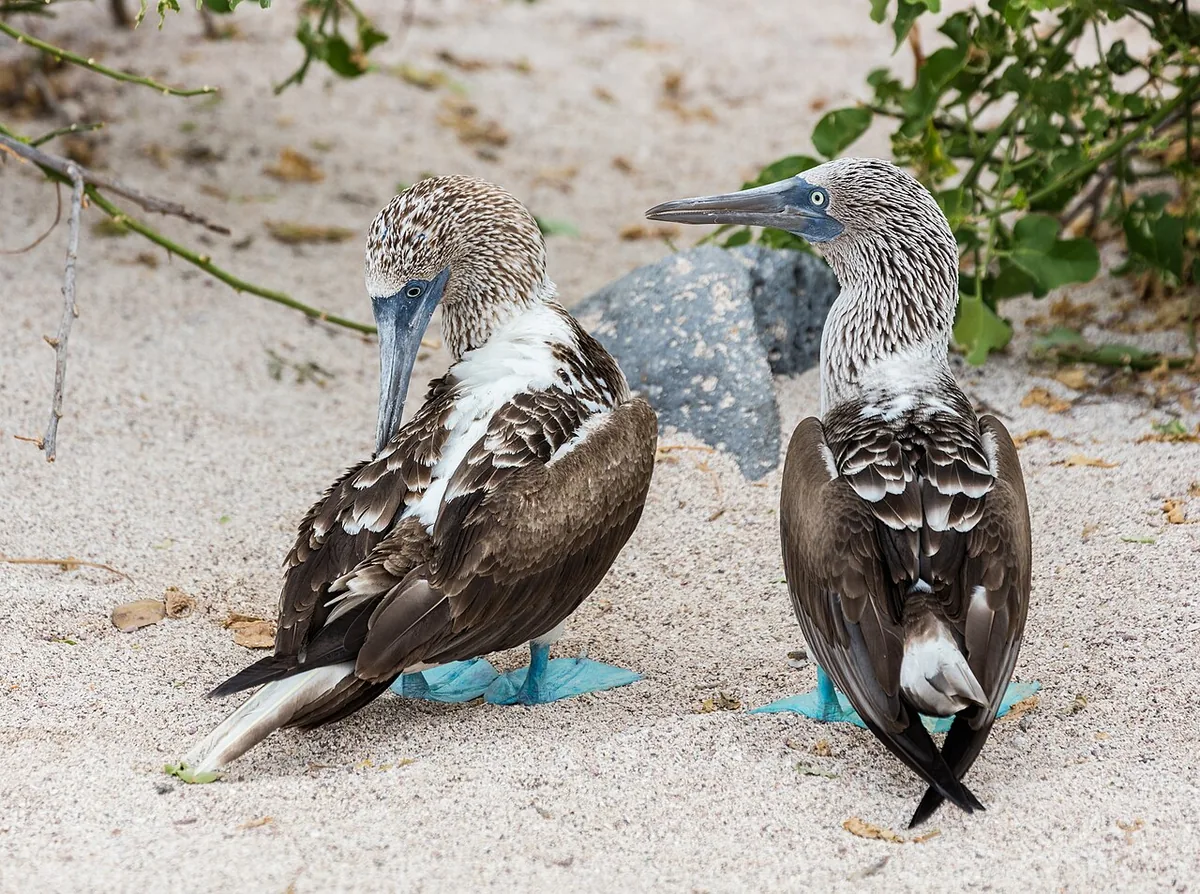
| Late warm/wet | Apr–May | 31 °C (Apr), 28 °C (May) | ~25 °C then 24.5 °C | 1.5 in (Apr), 0.75 in (May) | Waved albatross back on Española (Apr/May), sea turtle hatchlings, blue-footed booby courtship | Regular demand | Moderate |
| Shoulder into dry | Jun | 26 °C | ~23 °C, wetsuit helps | 0.15 in (driest month) | Whale season begins, Humboldt current arrives, frigate and albatross chicks | Regular; first half quieter | Starting to climb |
| Cool/dry peak | Jul–Aug | 26 °C | 21.5–22 °C, coldest sea | 0.5 in | Humpback whales, whale sharks at Darwin/Wolf, sea lion pups born, hammerhead schools | High demand (school holidays); worst month for last-minute deals | Highest of the year |
| Cool/dry quiet | Sep–Oct | 26 °C | 22–22.5 °C, wetsuit | 0.25–0.5 in | Whale watching continues, penguin courtship at Bartolomé (Oct), flamingo nesting | Lowest demand; some boats in dry dock, deals available | Lowest of the year |
| Transition | Nov–Dec | 26 °C | 22–22.5 °C, wetsuit early Nov | 0.5 in | Sea lion pups in nurseries (Nov), green turtle mating, land birds reactivate with first rains (Dec) | Low except the early-Nov long weekend and late-Dec holidays | Low, then spikes at Christmas |
Temperature notes come from monthly climate records on Galápagos weather guides: the hottest months are March and April at around 31 °C, the coolest stretch runs June to December at around 26 °C, and the sea ranges from about 21.5 °C in August-September to 25 °C in the warm season. March is the wettest month at around 2 inches of rain; June through September see almost none.
Warm season or dry season?
We tell guests this: if you are snorkel-driven, choose the warm season, because 25 °C water and calm seas make long snorkels pleasant and most people never touch a wetsuit. If you are wildlife-driven with a bias for the big stuff (whales, whale sharks, hammerheads, diving), the dry season is objectively richer, because the Humboldt current feeds everything. Photographers tend to prefer the shoulder months, April-May and October-November, when the light is soft and the boats are emptier.
One honest caveat: the dry season is the greyer one on land. First-time visitors expecting a tropical postcard can be thrown by the garúa mist over the highlands in August. The animals do not care, and neither should you, but pack accordingly.
Wildlife calendar quick hits
- Waved albatross: on Española roughly April to December; the world’s only breeding colony. Absent January to March.
- Humpback whales and dolphins: best June to November, especially around the Bolívar Channel between Isabela and Fernandina.
- Whale sharks: Darwin and Wolf, dive-cruise territory, June to November peaks.
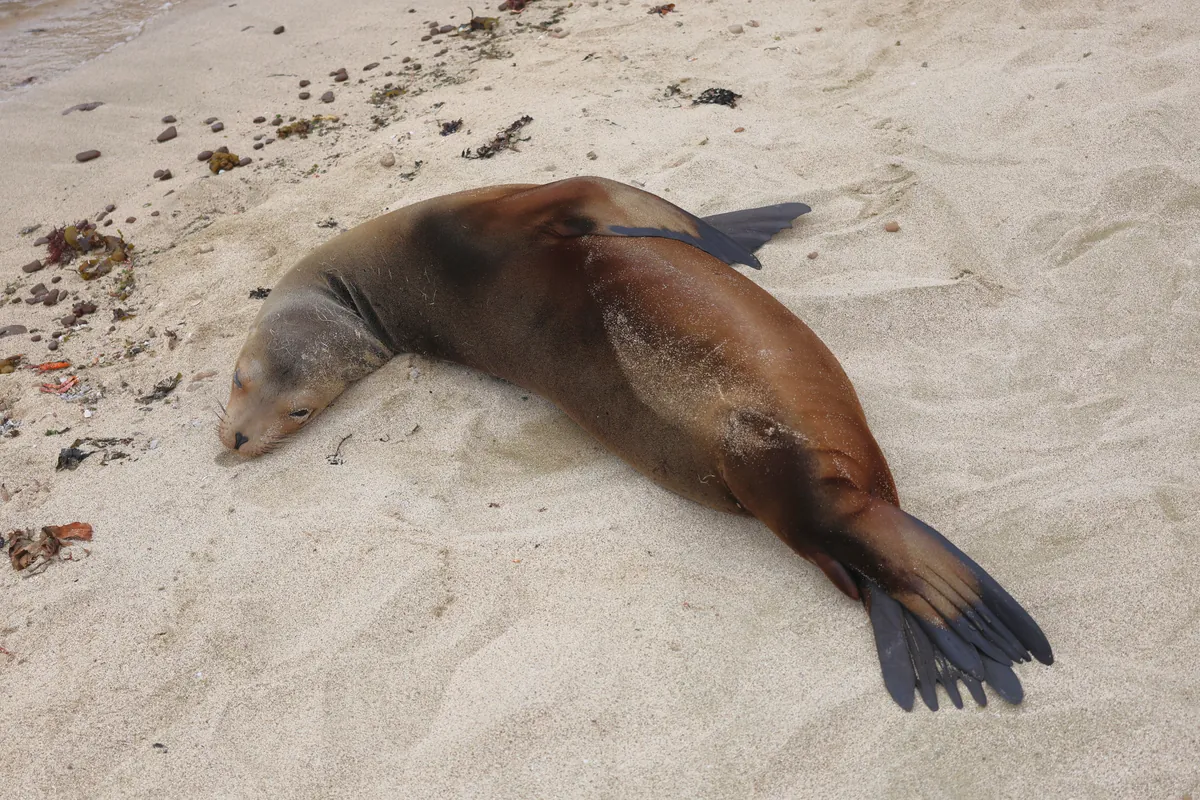
- Sea lion pups: born mostly in the cool season; nurseries are at their best August to November.
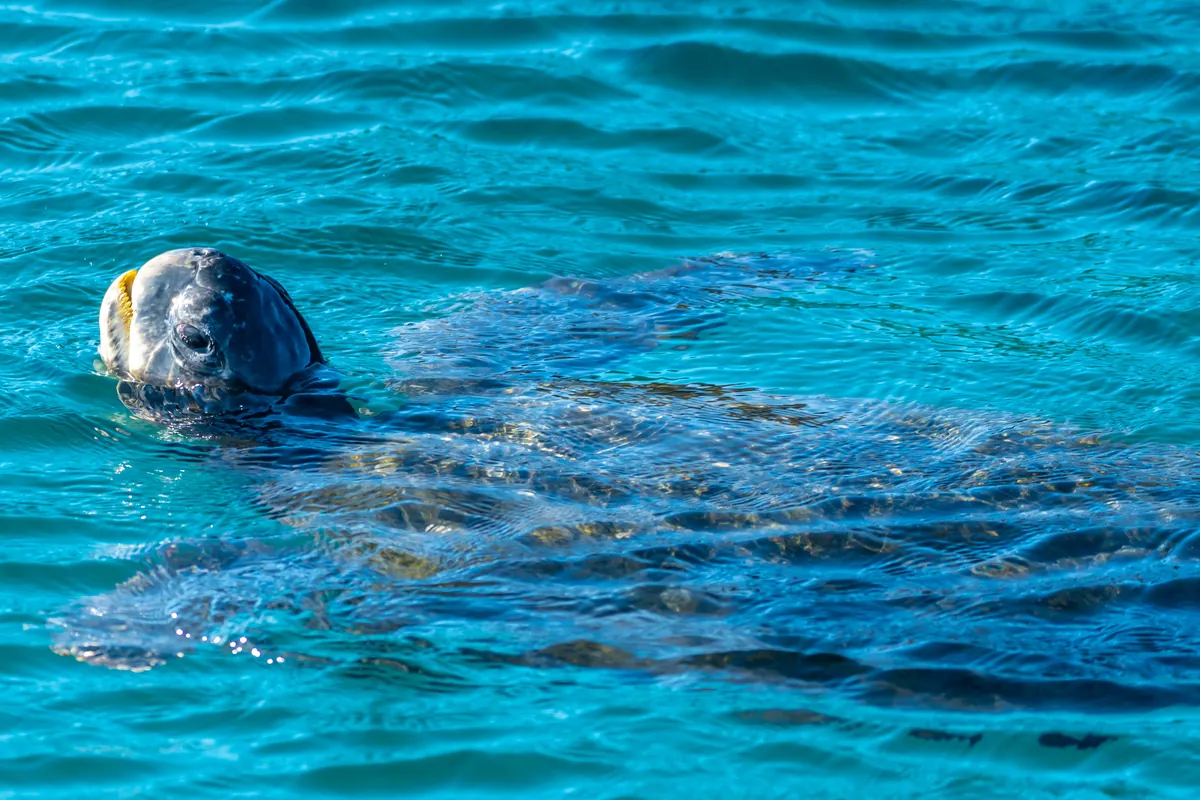
- Marine iguanas nesting: February-ish; green sea turtles nesting December to May.
- Penguins: present year-round on the west; courtship peaks at Bartolomé around October.
- Blue-footed boobies: courtship dance most visible around June to August on North Seymour.
Month by month
Every month has its own guide, with the weather and the sea week by week, the wildlife and who it suits, and its own page of live departures, with the dates, yachts and fares of the cruises sailing that month. For the wildlife alone, the wildlife calendar puts the whole year in one table.
| Month | In short | Cruises that month |
|---|---|---|
| January | Warm seas, turtle nesting, calm snorkel | Dates & prices |
| February | Warm peak, rain, green turtles | Dates & prices |
| March | Warming up, marine iguanas nesting | Dates & prices |
| April | Last warm month, albatross arrive | Dates & prices |
| May | Blue-footed booby mating, transition season | Dates & prices |
| June | Garúa season starts, cooler and drier | Dates & prices |
| July | Cold, dry, and full of whales | Dates & prices |
| August | Coolest month, sea lion pups | Dates & prices |
| September | Quietest month, albatross mating | Dates & prices |
| October | Garúa lifts, diving improves | Dates & prices |
| November | Warm returns, sea lion pups swim | Dates & prices |
| December | Warm season returns, Christmas crowds | Dates & prices |
Crowds and prices
The two crunch windows are Christmas-New Year and July-August, when flights sit at the top of their 400-550 USD round-trip range and cruise cabins sell out. The quietest stretch is September to early November, when some yachts go into dry dock but the boats still operating often discount. Ecuadorian holiday weekends (Carnival, Easter, the early-November break) fill local flights and ferries even in low season, so avoid moving between islands on those days. Inter-island ferries sell out up to 3 days ahead in the June-September and December-January peaks, another reason to book ahead: see getting around by ferry.
Frequently asked questions
What is the best month to visit Galápagos?
There is no bad month. April and May balance warm, calm water with the albatross and booby courtship; June to November brings whales, penguins courting and the best diving in cooler, rougher water; September is the quietest and cheapest. Choose by what you want to see and how you handle cold water and swell.
When is the water warmest for snorkelling?
February to April, when the sea surface reaches 26–27 °C and visibility is at its best. The dry season, June to November, runs 19–23 °C and most snorkellers wear a wetsuit.
When is Galápagos most crowded?
Christmas and New Year, Easter week and July to August. September and October are the quietest months, with some yachts in dry dock and discounts on the ones that sail.
Sources
- Galápagos weather and seasons, International Galápagos Tour Operators Association (IGTOA)
- Monthly sea surface temperature at Puerto Ayora (NOAA satellite data)
- How to get to Galápagos, Ecuador Travel (Ministry of Tourism)
- Annual visitor report 2017, Galápagos National Park Directorate (PDF)
Last verified: October 2026