
Travel guide · Planning
Internet and WiFi in Galápagos: What to Really Expect
The honest state of wifi, mobile data and SIM cards in Galápagos in 2026, town by town, plus how to stay reachable without ruining the trip.
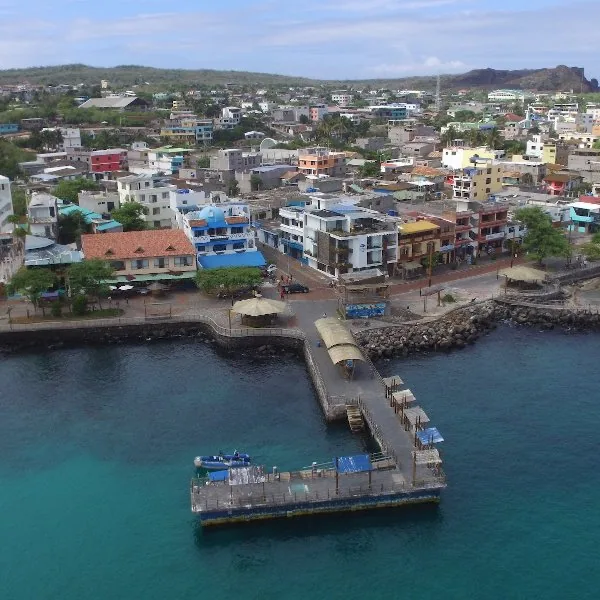
Set expectations now: Galápagos is reachable, but it is not fast. The islands hang off submarine cables and satellite links, bandwidth is shared by every hotel guest and every video call, and the moment you leave a town center, you are offline whether you like it or not. Here is what to expect and how to plan around it.
The honest summary
Wifi in your hotel works well enough for messaging, email and social media uploads that you do in the morning. It struggles with video calls at peak evening hours, and it disappears entirely on boat trips, at visitor sites and on most beaches. Plan your connected hours for mornings or late nights in town, and treat the rest of the trip as the digital detox you didn’t schedule.
Wifi on land: three towns, three realities
Puerto Ayora on Santa Cruz is the best-connected town, with the widest choice of hotels, cafés and coworking-friendly spots. Puerto Baquerizo Moreno on San Cristóbal runs close behind. Puerto Villamil on Isabela is the slowest and most intermittent of the three, which fits its sleepier character. In all three, the pattern is the same: ask your hotel for the network that actually works rather than the one on the sign, and upload your big photos at off hours.
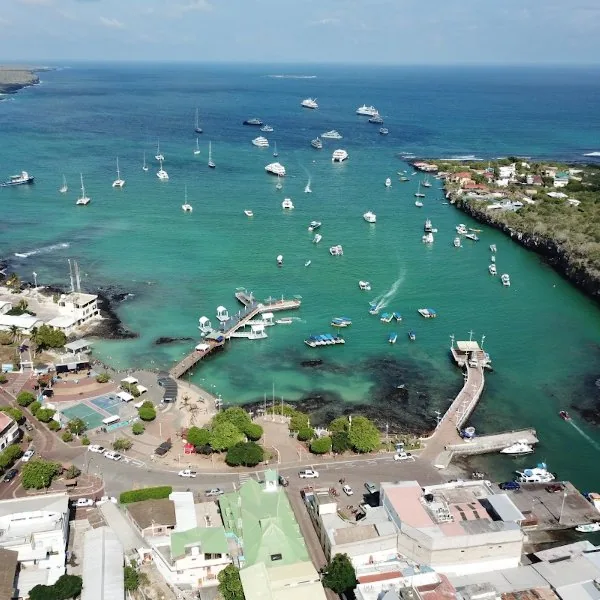
On cruises, wifi is a per-boat question, but the baseline moved: Starlink reached the islands. Since August 2025, state telecom CNT EP resells fixed high-speed satellite internet via Starlink across Galápagos, and the local installer Galapagos Telecom reports over 1,000 Starlink installations in homes, businesses, vehicles and vessels across the four islands. On boats, Starlink maritime is spreading fast through the cruise fleet: as of 2026 one major operator reported roughly 90% of its fleet with onboard Starlink, with a handful of older motorsailers still offline. In hotels, the three towns’ wifi now routinely rides on Starlink backhaul rather than the old congested links — but bandwidth is still shared per property, and the practical advice is unchanged: ask what your specific boat or hotel actually runs, before booking, not at embarkation.
Mobile data and SIM cards
Ecuador has nationwide mobile carriers, and coverage in the three towns is generally usable, thinning fast as you go up into the highlands or around to remote coasts. Two routes for travelers:
- Buy a local prepaid SIM in Quito or Guayaquil on arrival, with your passport, at carrier stores or airport counters. Check that the plan includes data and confirm it works in Galápagos, because not every cheap plan travels well to the islands.
- Use your home carrier’s international roaming day pass if it is reasonable; convenient, occasionally expensive, and the same coverage limits apply.
Either way, download offline maps of the towns, your hotel confirmations and your reading before you fly. Signal at sea is nonexistent to unreliable, so do not plan on checking in from the boat, whatever your seasickness strategy looks like.
Working remotely from the islands
It is possible, with caveats we would want you to hear before you promise your boss anything. Base yourself in Puerto Ayora on Santa Cruz, choose a hotel with a reputation for reliable wifi, keep meetings in the morning before the network gets busy, and have a mobile-data backup for the call that matters. Do not plan to run the meeting from Isabela, and never from a day boat. Treat any remote-work week in Galápagos as asynchronous work with occasional meetings, not the reverse.
Practical habits that save the trip
A few things that keep connectivity from hurting you:
- Download offline maps for all three towns before you arrive.
- Screenshot every booking and ferry ticket; confirmations arrive by email, and email is exactly what fails on a boat.
- Carry a small power bank. Boats and visitor sites offer few outlets.
- Tell the people who need to reach you that replies may take a day.
The islands have survived a century and a half without broadband. You will manage for a week.
Frequently asked questions
Is there wifi in Galápagos?
Yes, in hotels, cafés and most cruise boats, increasingly via Starlink since 2025. It handles messaging and email well and struggles with video calls at peak evening hours. At visitor sites and at sea you are offline.
Can I buy a SIM card for Galápagos?
Buy a prepaid SIM in Quito or Guayaquil with your passport and confirm the plan covers the islands. Coverage is usable in the three towns and fades in the highlands and on remote coasts.
Do cruise boats have internet?
Most of the fleet now carries Starlink, with a few older boats still offline. Ask what your specific boat runs before booking, and expect shared bandwidth rather than home speeds.
Sources
- CNT satellite service in Galápagos (2025), Crónica y Noticias
- High-speed internet for Galápagos, Ekos Negocios
- Starlink in Galápagos, Galápagos Telecom
Last verified: October 2026