
Travel guide · Planning
Money in Galápagos: currency, ATMs, cards and how much cash to carry
Galápagos uses the US dollar. Where the ATMs are (Santa Cruz and San Cristóbal, not Isabela), which cards work, daily limits and how much cash to carry for…
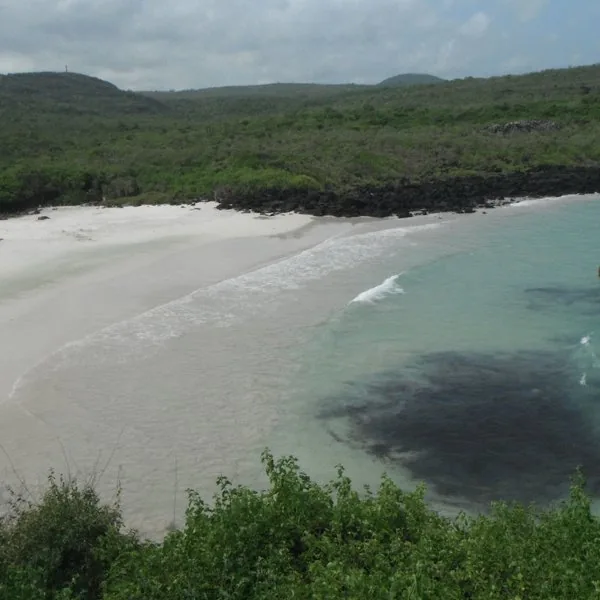
Galápagos runs on US dollars, in cash, more than most travellers expect. There is no exchange rate to think about, because Ecuador adopted the dollar as its official currency in 2000, but the card terminal you assume will be there is often not there, and the ATM you are counting on may be on another island. This page covers the currency, where the cash machines are, which cards work and how we would split your money between plastic and bills.
The currency: US dollars, with Ecuadorian coins
Ecuador uses the United States dollar. Bills are the same bills you would use in Miami; coins are a mix of US coins and Ecuadorian centavo coins of the same value, which you can spend only in Ecuador. There is nothing to exchange, so there are no exchange offices on the islands, and other currencies are not accepted anywhere.
Two habits matter more than the currency itself:
- Small bills. Many shops, taxis and water taxis cannot change a US$50, and US$100 bills are refused almost everywhere because of counterfeits. Arrive with twenties, tens and fives.
- Clean bills. Torn or heavily marked notes get rejected. Banks in Ecuador are strict about it, so shops are too.
Where the cash comes from: the ATMs
| Island | Town | Cash machines | What to expect |
|---|---|---|---|
| Santa Cruz | Puerto Ayora | Two bank branches with ATMs on and near the main street, plus a machine inside the Proinsular supermarket by the pier | The best place to get cash; machines still run dry on holiday weekends |
| San Cristóbal | Puerto Baquerizo Moreno | One bank with an ATM near the waterfront | Fine for a top-up, not for the whole trip |
| Isabela | Puerto Villamil | One machine that is often empty or offline and may reject foreign cards | Treat the island as cash only |
| Floreana | Puerto Velasco Ibarra | None | Bring everything you will spend |
Island ATMs typically cap withdrawals at around US$300 per transaction, so plan several withdrawals for a large sum, and expect your home bank to charge a foreign fee on each. Machines are refilled on business days, which is why they run out on long weekends. The rule we repeat to every guest: solve cash on Santa Cruz on the day you arrive, not on the day you need it, and never board the ferry to Isabela without the cash for the whole stay.
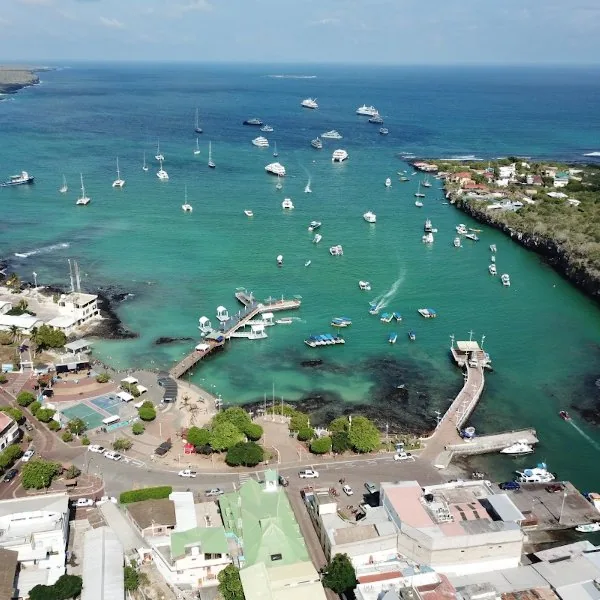
What you must pay in cash
Some of the biggest payments of the trip are cash only, and they fall in the first hours:
| Item | Amount | Where |
|---|---|---|
| National park entry fee | US$200 per adult, US$100 per child under 12 | Arrival counter at Baltra or San Cristóbal airport |
| Itabaca Channel barge (Baltra side) | US$1.50 per person each way | Usually included in airport transfers |
| Inter-island ferries | US$50 per leg for tourists (US$65 on the “special” service) | Ticket offices; some sell online, many prefer cash |
| Water taxis | US$1 per ride (US$1.50 on Isabela) | At the pier, every time you board a boat |
| Isabela arrival fee | US$10 for foreigners | At the Puerto Villamil dock |
| Island taxis | A few dollars per ride in town; more for the highlands | Cash |
| Tips | Guide US$10–20 and crew US$10–20 per guest per day on cruises; US$5–10 per person per day on land tours | Envelopes on the last day |
The park fee and the TCT transit card (US$20, paid online by card before you fly) are explained in detail in our entry fee guide.
Cards: which ones behave
Visa and Mastercard work nearly everywhere cards work at all: hotels, the better restaurants, dive shops and tour agencies in Puerto Ayora and Puerto Baquerizo Moreno. American Express is patchy and Discover is mostly theoretical. Three things to expect:
- A surcharge. Many tour agencies and some restaurants add 5% to 10% for card payments, which is legal and common in Ecuador. Ask before you tap.
- Dynamic currency conversion. Terminals may offer to charge you in your home currency. Say no and pay in dollars; your bank’s rate is better than the terminal’s.
- Blocked cards. Tell your bank you are travelling to Ecuador. A declined card at the one terminal in town is a long afternoon.
Contactless payment exists in the newer hotels and restaurants of Puerto Ayora and should be treated as a bonus, not a system. If your whole trip depends on tap-to-pay, you are planning the wrong trip.
How much cash to carry
Cruises and land packages are paid in advance, by transfer or card, through your operator. The cash you carry covers what happens on the ground. As a working figure for land-based travellers:
- Arrival day: the park fee (US$200 per adult) plus US$20–30 for the barge, the bus or taxi and a first meal.
- Each day on land: US$40–80 per person for meals in local restaurants, taxis, water taxis and small things, before day tours. Day tours (US$100–200 for boat trips, around US$150 for Los Túneles) can usually be paid by card at the agency, with the surcharge, or in cash without it.
- Each ferry leg: US$50 plus US$1–2.50 in water taxis.
- Tips: budget them in advance; envelopes are the custom on the last day.
For cruise passengers the list is shorter: the park fee, tips for the guide and crew, drinks on board if the boat charges for them, and some cash for the town visit. Most yachts accept cards for the bar bill, but not all, so ask when you book.
If a card is lost or stolen
Freeze the card in your banking app first, then call the bank. File a police report only if the insurance claim needs one. This is one of the reasons the travel insurance question matters: a policy with a 24-hour assistance line turns a lost wallet into a phone call. Keep a backup card in a different bag from the first, and keep a reserve of twenties in your luggage for the trip home.
Frequently asked questions
What currency is used in the Galápagos Islands?
The US dollar. Ecuador has used it as its official currency since 2000. You will see US bills and a mix of US and Ecuadorian coins; nothing needs exchanging and no other currency is accepted.
Are there ATMs in Galápagos?
Yes, on Santa Cruz (Puerto Ayora) and San Cristóbal (Puerto Baquerizo Moreno). Isabela has one unreliable machine and Floreana has none, so withdraw on Santa Cruz before you travel on.
Can I pay with a credit card in Galápagos?
In hotels, mid-range and upper restaurants, dive shops and tour agencies, yes, usually Visa or Mastercard and often with a 5–10% surcharge. Ferries, water taxis, small eateries, taxis and tips are cash.
How much cash should I bring to Galápagos?
Enough for the park fee (US$200 per adult, cash on arrival), the ferries (US$50 per leg), water taxis and tips, plus US$40–80 per person per day for meals and local transport if you travel land-based. Top up at the Puerto Ayora ATMs rather than arriving with thousands in cash.
Do shops accept US$100 bills?
Rarely. Counterfeit worries mean most businesses refuse US$100 notes and many struggle to change a US$50. Carry twenties and smaller.
Related reading
The fixed payments are itemised in the entry fee guide; how they fit into a full trip budget is in what a Galápagos trip really costs; and the custom for tips is in tipping in Galápagos and Ecuador.
Sources
- Galápagos National Park entry fee, Galápagos Government Council
- Inter-island fares resolution of August 2026 (news report, Bitácora EC)
- ATMs and cash in Galápagos, Galapatours FAQ
Last verified: October 2026