
Travel guide · Cruises & Tours
Small ship vs large ship in Galápagos: what the park rules mean
How Galápagos National Park rules on group size, landing slots and the two-week rotation shape your day, and why vessel size changes what you actually see.
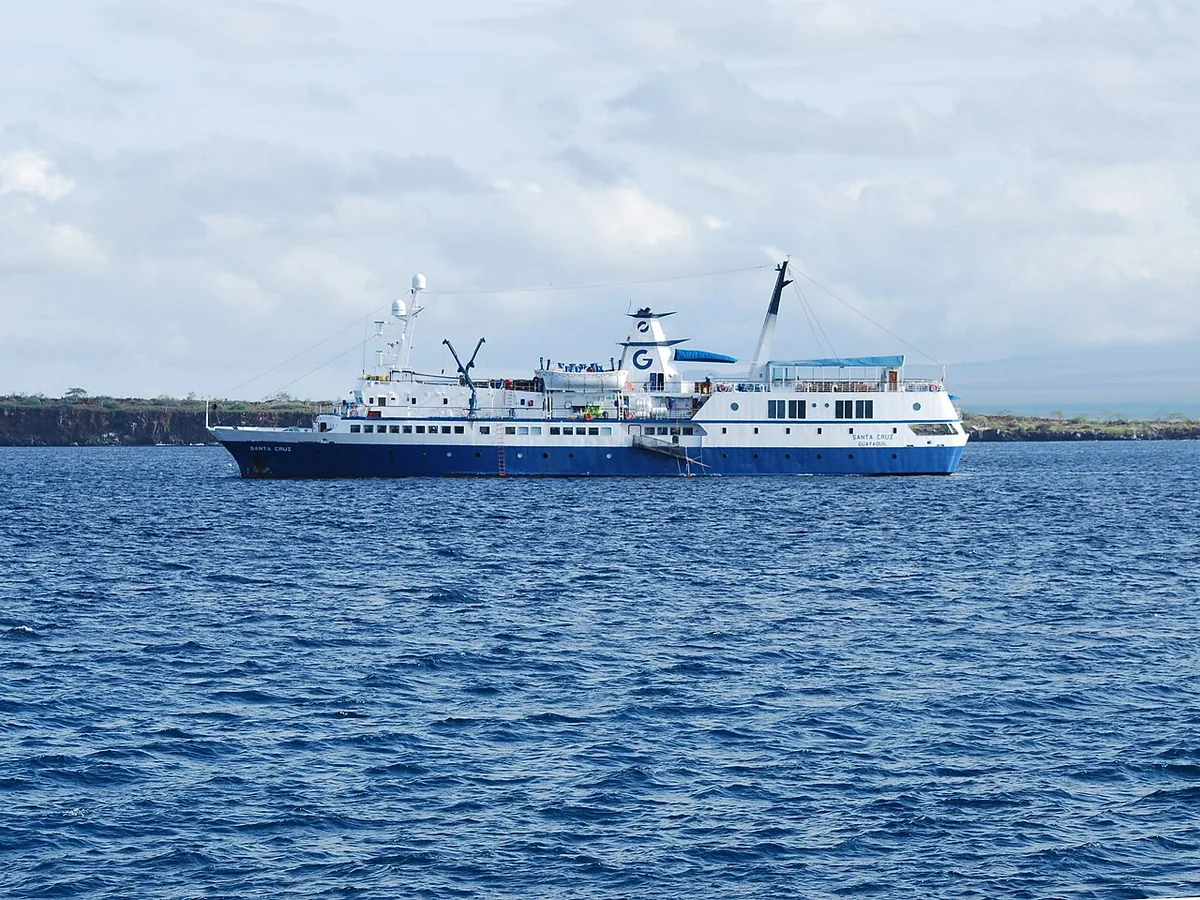 Photo: Jeff Hart (CC BY 2.0) via Wikimedia Commons
The rule nobody explains before you book
Most Galápagos research starts with boats, prices and itineraries. Almost nobody starts with the regulation that quietly shapes all three: the Galápagos National Park assigns every visitor movement in advance. Which ship visits which island, on which day, at what time, and how many people can stand on a given trail at once: all of it is choreographed by the park, not by the cruise line.
Once you understand that system, the choice between a 16-passenger yacht and a 100-passenger vessel stops being a matter of taste. It becomes a matter of how your days will actually run.
Two different permit worlds
The park splits the fleet by capacity, and the split is practical, not cosmetic. Vessels carrying roughly sixteen passengers or fewer work under permits that suit single-group operation: one naturalist guide, one panga, everyone moving together. Larger ships run under a group-rotation model: passengers are divided into teams that take turns at landing sites, because most sites cannot absorb a hundred visitors at once.
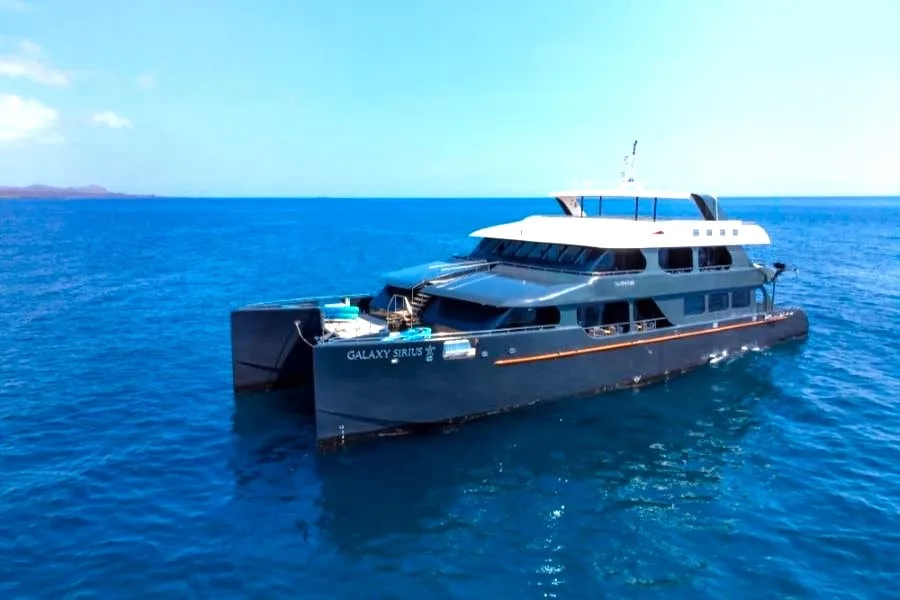
The consequences stack up over a day:
| ≤16 passengers | Larger vessels (40-100) | |
|---|---|---|
| Guides | 1 naturalist, everyone together | 4-5 guides, separate groups |
| Landing sites | One group at a time, no waiting | Groups rotate; you queue aboard |
| Morning start | Ashore early, in low light | First group lands after full rotations are set up |
| Schedule changes | Captain decides in minutes | Coordination across groups takes hours |
| Wildlife noise | Your group alone, or nearly | Other groups arriving mid-visit |
Why small boats land first
Landing slots are assigned by the park, and the tight ones, Bartolomé among them, fill by capacity. A boat with sixteen passengers fits into windows that a larger vessel physically cannot, and starts its day while bigger ships are still organizing their first rotation. On a popular morning at a capacity-limited site, a 16-passenger group can walk the full trail in near silence and be back on board before the second wave lands.
The two-week rotation rule reinforces this. After a ship visits a site, it must wait about two weeks before returning, which forces every boat to run two or three distinct itineraries. Small boats spread those rotations across more than eighty approved sites, which is why their routes reach the quieter, farther islands that big-ship itineraries rarely touch.
The texture of a small-ship day
The differences are not abstract. Aboard a small vessel, breakfast ends without ceremony, and by the time larger ships are organizing tenders and group assignments, you are already on the trail in the low morning light. A pod of dolphins appears off the bow; the captain shifts course and the whole ship is in the water in minutes, because coordinating sixteen people takes seconds. When your naturalist stops for a frigatebird stealing a fish mid-air, the group stops with her; nobody is waiting for a second wave to clear the path before they can move on.
On a large vessel, the same wildlife produces a different rhythm: briefing announcements, group numbers, tender queues, lunch rotations between landings. Nothing wrong with it: it is how hundreds of people see the islands comfortably and often more affordably. But it is a different shape of day, and worth choosing with open eyes.
What each one is actually good at
Honesty first: large ships are not a mistake. They carry doctors, bigger cabins, more social space, and per-person prices that small yachts rarely match. For travelers who want the Galápagos highlights with hotel-style comfort, they are a reasonable choice.
Small ships buy three things with their higher daily rate: timing (first ashore, best light), flexibility (the itinerary bends to the wildlife, not the schedule), and intimacy (one guide who learns your name and your interests by day two). If those three things are what you are paying for, a small ship is the honest answer. If space and price lead your list, the big vessels do the job well.
Where to check what fits
Our cruise finder lists the 30 yachts we book, 16-passenger yachts, catamarans and the big ships, with live availability and real prices, so you can compare both worlds side by side. For the hull question inside the small-boat world, see catamarans vs monohulls.
Frequently asked questions
Why do small ships land first in Galápagos?
Landing slots are assigned by the park and the tight ones fill by capacity. A 16-passenger yacht fits into windows a large vessel cannot and lands as a single group, while large ships rotate groups through tenders.
Are large ships a bad choice?
No. They carry doctors, bigger cabins, more social space and often lower per-person prices. They are a different shape of day: group numbers, tender queues and rotations instead of one guide and one panga.
How many passengers do most Galápagos boats carry?
Sixteen, the maximum per permit for most yachts. Larger vessels run from about 40 to 100 passengers under a group-rotation model.
Sources
- Special Regulation for Tourism in Protected Areas (RETANP), Ministry of Environment (PDF)
- Visitor sites of the Galápagos National Park, Galápagos National Park Directorate
- General visiting rules, Resolution 0000007 (Official Register 515), full text (PDF)
Last verified: October 2026