
Travel guide · Sites & Towns
Charles Darwin Research Station: what you see, what it costs and why it matters
Visiting the Charles Darwin Research Station in Puerto Ayora: the US$10 guided visit, hours, the tortoise breeding corrals, Lonesome George's exhibit,…
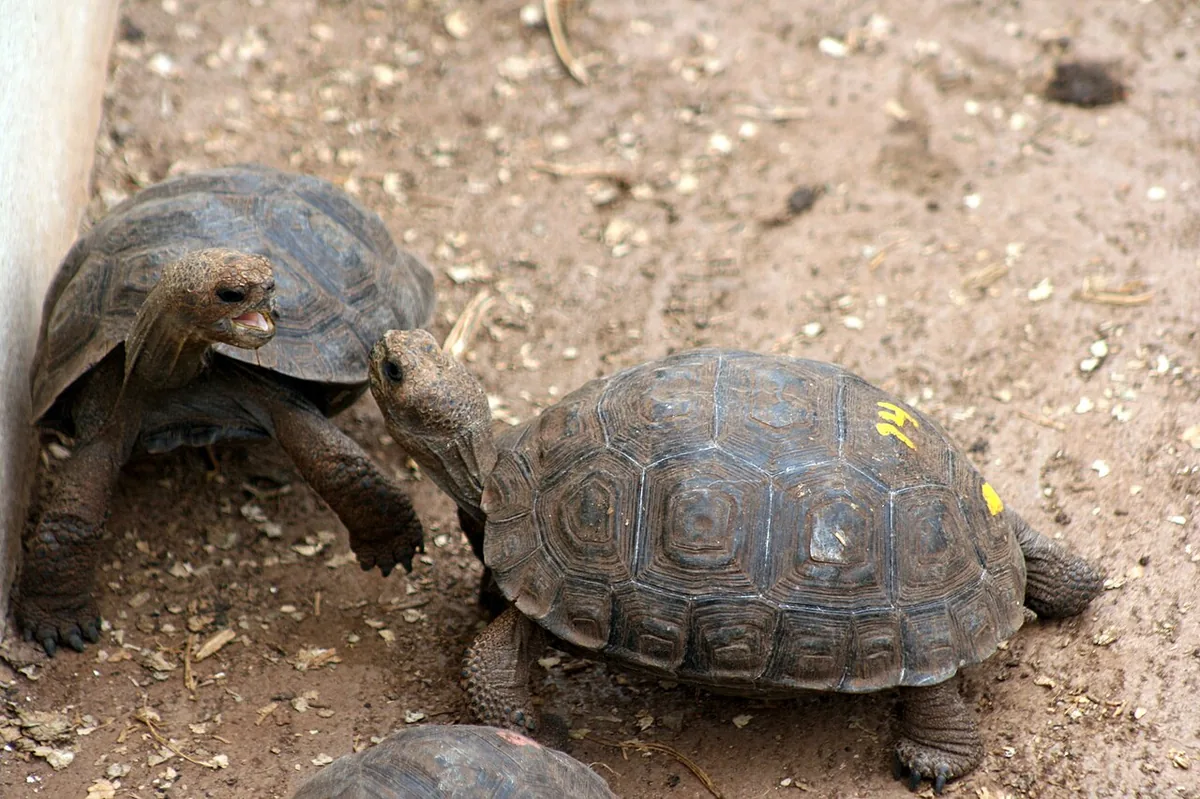 Photo: Wendyw (CC BY 3.0) via Wikimedia Commons
The Charles Darwin Research Station, a 15-minute walk from the centre of Puerto Ayora, is the most consequential 90 minutes in Galápagos tourism. This is where the giant tortoise recovery programme runs its breeding corrals with the Galápagos National Park, where Lonesome George lived his last decades and now lies preserved, and where the conservation work your entry fee funds becomes something you can stand in front of. It is also the site people most often mis-prioritise: go for the science and the story, not for a safari.
Key facts
| Where | At the eastern end of Puerto Ayora, Santa Cruz; 15 minutes on foot from the pier along Avenida Charles Darwin |
| Run by | The Charles Darwin Foundation, an international non-profit founded in 1959, with the Galápagos National Park, which runs the breeding centre |
| Visit | US$10 per person for the guided circuit, in groups with a certified guide; book a time slot through an agency or at the kiosk by the entrance |
| Hours | Open daily, morning and afternoon, with a break around midday; check your slot when you book |
| Time | 90 minutes to two hours; flat paths, shade in patches, fine for every age |
| What you see | Tortoise breeding corrals by age and island, the adult tortoises, the Lonesome George exhibit, the exhibition hall and the station’s wider projects |
What you see
The heart of the visit is the Fausto Llerena Breeding Center, the park’s tortoise programme, which has run on these grounds since 1965. Eggs arrive from islands whose populations need help, among them Pinzón, Santiago and Santa Cruz, because introduced rats and goats wiped out natural breeding on those islands for decades. The centre incubates the eggs, raises the hatchlings in predator-proof corrals sorted by age and origin, and returns them to their home islands once they are big enough to survive, at around five years old and the size of a dinner plate. Walk the corrals and you walk the age pyramid of the recovery.
- The young tortoise corrals, where the programme is visible in real time: hatchlings the size of a fist, then yearlings, then the five-year-olds waiting for their flight home.
- The adult tortoises, including animals whose domed or saddleback shells tell you which island their ancestors came from. The breeding males of the Española programme lived here for decades; Diego, the most famous of them, fathered hundreds of offspring before he was returned to Española in 2020.
- Lonesome George, the last Pinta Island tortoise, found in 1971 and dead in 2012 without an heir. His preserved body returned to the station in 2017 and is displayed in the “Symbol of Hope” hall, a climate-controlled room built for it. The exhibit explains both the loss and what his lineage contributed to the ongoing work.
- The exhibition hall and trails, with the station’s other projects: the mangrove finch rescue, invasive species control, marine research and the restoration of Floreana, where 158 young tortoises of the island’s own lineage were released in February 2026.
Visiting in 2026
The station sits at the end of the town’s waterfront road, an easy walk past the dive shops and the hotel gardens. The visit runs one way now: you pay US$10 per person, you go with a certified guide in a group, and you book the time slot in advance, through a tour agency or at the kiosk by the entrance, same price either way. The guide is worth it here: the breeding programme only makes sense when someone explains which corral holds which island’s lineage and why the hatchlings are numbered.
Go in the morning before the heat, budget 90 minutes to two hours, and wear a hat: the paths are flat but the shade is patchy. The adjacent station beach, Playa de la Estación, is a quiet swim spot if the afternoon is free, and the walk back along the waterfront passes the fish market, where the pelicans and sea lions queue for scraps. The whole thing works for families, see our guide to Galápagos with kids, and it is the right activity for a grey garúa morning.
Pair it the same day with Tortuga Bay and you have the definitive free-and-almost-free Santa Cruz day; our Puerto Ayora guide sequences both.
How cruises include it
Almost every cruise visits the station on its Santa Cruz day, usually combined with the highlands: in our live schedule 775 departures on 19 yachts list the station, and 580 list the Fausto Llerena breeding centre by name. Cruise groups arrive with their own naturalist guide and move through in about an hour, which is enough for the corrals and the George exhibit and not enough for the exhibition hall.
Why it matters more than the brochures say
Without this programme, several islands would have lost their tortoises entirely. Pinzón’s tortoises had not reproduced in the wild for nearly a century because rats ate every egg and hatchling; captive rearing and rat eradication reversed that, and the island has had wild-born hatchlings again since 2014. The Española tortoise came back from 15 survivors in the 1960s to more than 2,000 animals through the breeding programme here. The Floreana lineage, extinct on its island for 180 years, was reconstructed from tortoises carrying its genes found on Isabela’s Wolf Volcano and is now back on Floreana. These are among the great conservation recoveries anywhere, and this is where they were engineered. The Charles Darwin Foundation publishes the detail if you want to go deeper before or after the visit.
The distinction people confuse: the station breeds tortoises for release; the wild giants you meet at El Chato in the highlands are the free-living population. Different experiences, both worth the time.
Practical notes
- Entry is guided only, US$10, cash preferred; guides are stationed at the entrance.
- No flash photography near the animals, no food in the corral area, and the national park rules apply: two metres from the tortoises, even the ones that walk up to the fence.
- The gift shop funds the foundation’s work; the T-shirts are the one souvenir in town that does something.
Frequently asked questions
How much does it cost to visit the Charles Darwin Research Station?
US$10 per person for the guided visit, which is now the only way to see the tortoise corrals. The guide is included in the price.
Do I need a guide at the Charles Darwin Station?
Yes. Since the visit was reorganised, groups go through with a certified guide and a booked time slot, arranged through an agency or at the kiosk by the entrance.
What are the opening hours of the Charles Darwin Research Station?
It opens daily, in the morning and again in the afternoon, with a break around midday. Because visits are by time slot, confirm your hour when you book rather than turning up at the gate.
Can you see Lonesome George at the Charles Darwin Station?
Yes. His preserved body has been displayed at the station since 2017 in the “Symbol of Hope” hall, a climate-controlled room built to conserve it.
Is the Charles Darwin Station the same as El Chato?
No. The station breeds tortoises in corrals for release to other islands; El Chato, in the highlands, is a reserve where wild adult tortoises roam free. Most visitors do both on the same day or on consecutive days.
Related reading
The species, island by island, is in the giant tortoise guide; the wild population in the highlands is in the El Chato guide; and what the park entry fee funds is in the entry fee guide.
Sources
- Charles Darwin Foundation
- Galápagos giant tortoise restoration, Galápagos Conservancy
- Visitor sites, Galápagos National Park Directorate
Last verified: October 2026