
Travel guide · Sites & Towns
Garrapatero: the beach Santa Cruz keeps quiet
Playa Garrapatero on Santa Cruz: pale sand, flamingo lagoons and no crowds, 19 km from Puerto Ayora, by bike or taxi, with kayaks in the mangroves.
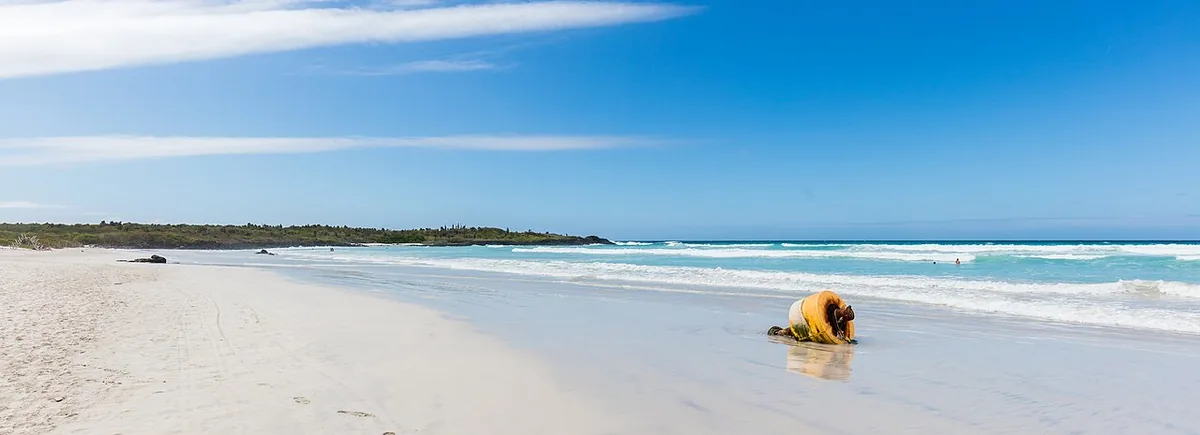 Photo: Diego Delso (CC BY-SA 4.0) via Wikimedia Commons
Playa Garrapatero is what Santa Cruz looks like when you remove the town: roughly 1.5 kilometres of pale sand on the island’s more sheltered side, backed by mangroves and a brackish lagoon, about 19 km northeast of Puerto Ayora. It is a park visitor site with free entry, and the people you meet there tend to be locals from the island rather than tour groups, which tells you most of what you need to know about it.
Getting there
Two practical routes from Puerto Ayora:
- Taxi to the Garrapatero gate (20-30 minutes; one-way fares quoted around $25-35, round trips around $30-35 for the vehicle; agree the fare and whether the driver waits before leaving town).
- Bicycle, the local way to do it. The ride is mostly downhill on the way out and a real climb on the return; rent a bike with gears and take water.
From the parking area, a flat walk of about one kilometre takes you to the sand, passing the lagoon and its birdlife. That last kilometre is why the beach stays empty: nothing with wheels goes further.
What you find
The beach itself is a long, calm crescent, good for swimming and better for walking, with enough shade at the mangrove edge to last an afternoon. The lagoon behind the beach is the second act: flamingos and white-cheeked pintails turn up here, along with the shorebirds that work the shallows, and the arid-zone scrub on the approach adds finches and mockingbirds. Kayaks are available to rent for paddling the mangrove edge (about $10-15 per person per local-operator rates, cash on site), and the snorkelling from the beach is modest by Galápagos standards but pleasant on a calm day.
What Garrapatero does not have: facilities of any kind, food vendors, or lifeguards. Bring water, food and shade, and carry everything back out; it is a protected site, and the rubbish rule is the park’s, not a suggestion. The park also keeps authorised campsites here, one of the few legal camping spots in the islands, booked in advance with the park (2 to 15 days ahead), which is the closest thing to sleeping on a beach that Santa Cruz offers.
Garrapatero or Tortuga Bay?
Both are free, both are excellent, and they are different moods. Tortuga Bay is the icon: bigger wildlife show, the iguana colony, the shark lagoon, a 45-minute walk from town. Garrapatero is the escape: fewer people, more sand per person, a flamingo lagoon instead of iguana dunes, and it takes half a day of transport rather than a morning’s walk. With three or more days in Puerto Ayora, do both; with two, start with Tortuga Bay. Our Puerto Ayora guide sequences the free days.
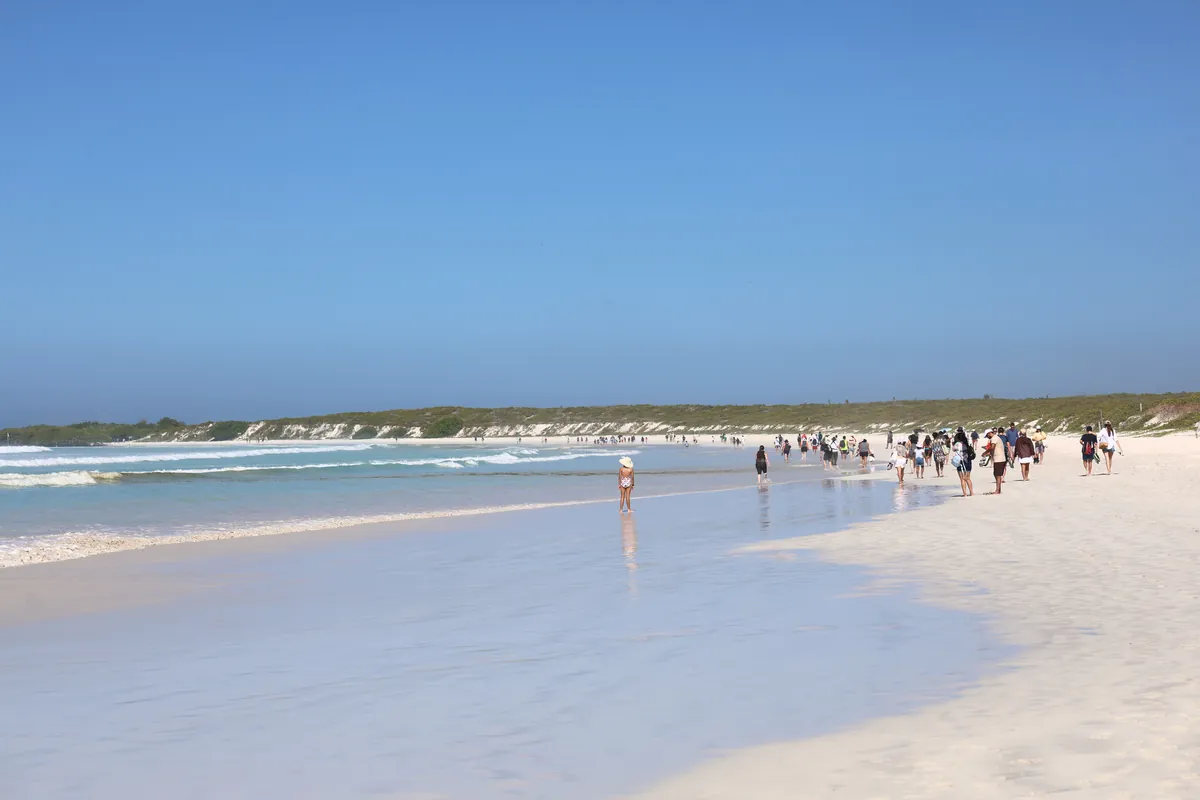
Go in the morning for the birds and the light, or late afternoon when the tour groups have gone and the beach belongs to whoever cycled out. There is no shade structure on the sand itself, so a hat does the work.
Garrapatero needs no tour and no ticket, which makes it a fixture of every budget route we build, see how it fits a full trip in our 5-day land-based itinerary. For the paid days around it, Galapagos Dana Tours books tours and cruises across every budget, and Las Terrazas de Dana Boutique Lodge & Spa, our lodge in Mindo Cloud Forest, is where we send people to decompress after the islands (combining Galápagos and Mindo).
The birds behind the beach
The lagoon is the reason to arrive early. In the first hour of light the flamingos feed with their heads inverted along the far edge, white-cheeked pintails paddle the shallows, and black-necked stilts and whimbrels work the mud, with the finches and mockingbirds of the arid scrub calling from the Opuntia on the walk in. Stay quiet on the lagoon side and the birds carry on; walk to the water’s edge and they move off, which is why the path keeps its distance. Lava herons hunt the rock pools at the north end of the beach, and brown pelicans dive just offshore.
The arid-zone walk from the car park is its own small lesson: palo santo trees, leafless most of the year and fragrant when scratched, the prickly pear cactus the finches feed on, and the saltbush where the pintails nest. It takes fifteen minutes if you walk and forty if you watch, and the second version is the one worth the taxi fare.
Frequently asked questions
How do I get to Garrapatero beach?
By taxi from Puerto Ayora, 20 to 30 minutes and roughly US$25–35 one way, or by bicycle. From the car park a flat one-kilometre walk leads to the sand.
Is Garrapatero free?
Yes. It is a park visitor site with no ticket and no guide requirement. Kayaks rent for about US$10–15 per person, cash on site.
Can I camp at Garrapatero?
Yes, at the authorised campsite, with permission requested from the National Park 2 to 15 days ahead. It is one of only a handful of legal camping spots in the islands.
Sources
- Camping in Galápagos, Galápagos National Park Directorate
- Visitor sites of the Galápagos National Park, Galápagos National Park Directorate
- Visiting rules, Galápagos National Park Directorate
Last verified: October 2026