
Travel guide · Islands
San Cristóbal Island: the capital, the first landing and the best snorkel rock in Galápagos
San Cristóbal, Galápagos: Puerto Baquerizo Moreno, Kicker Rock, Punta Pitt's three boobies, El Junco, the tortoise centre, La Lobería, how to arrive by…
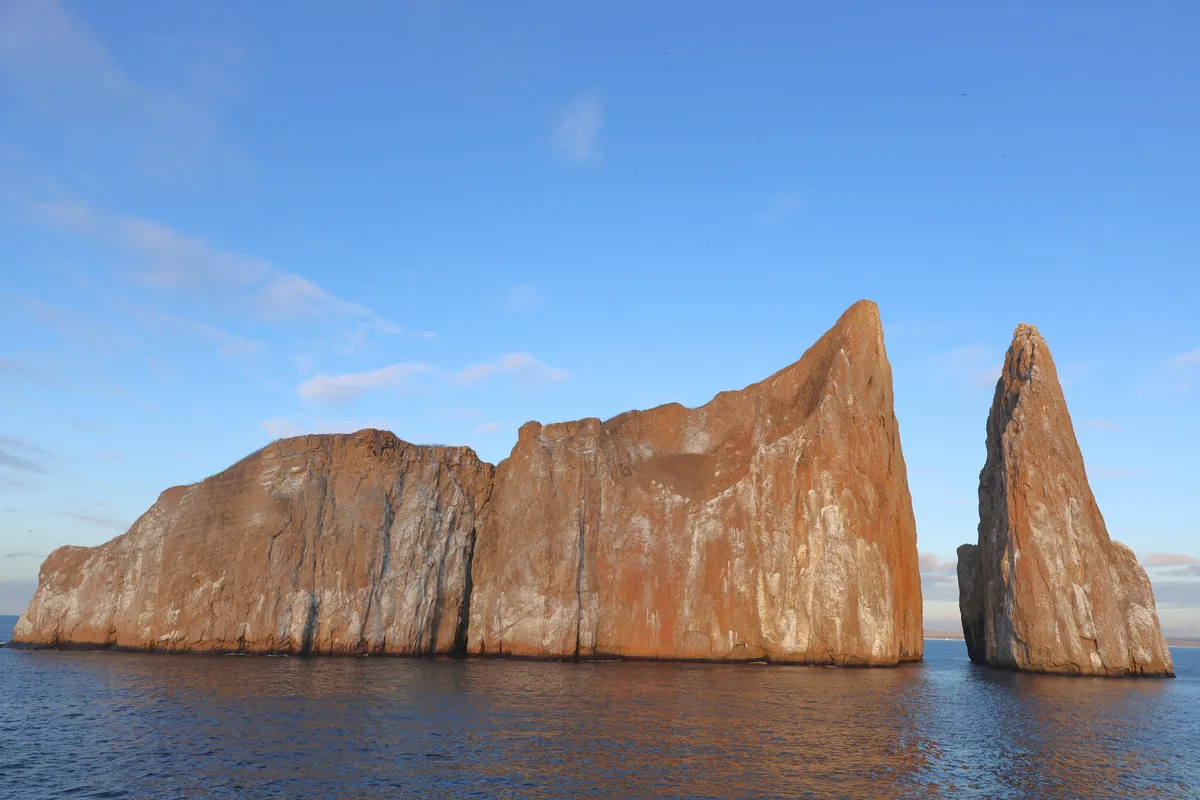 Photo: David Brito
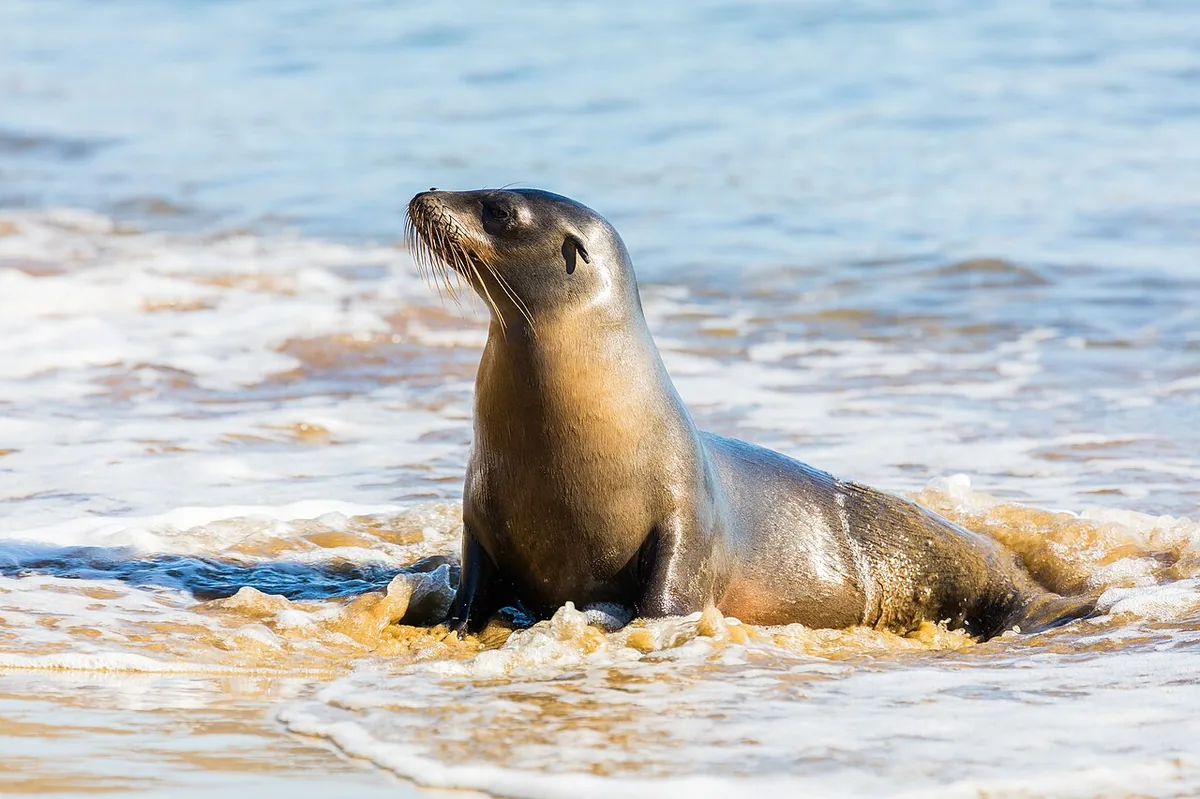
San Cristóbal is where the Galápagos story starts twice over. It holds the oldest permanent settlement in the archipelago, and it is the first island Charles Darwin stepped onto when the Beagle arrived in September 1835. Today it is the provincial capital and one of only two islands with an airport, which makes it a natural start or end for cruises and one of the three bases for land-based travel. Sea lions own the town beach, Kicker Rock rises out of the sea offshore, and the highlands hold the only freshwater lake in the islands.
Key facts
| Where | The easternmost island in the archipelago |
| Size | 558 km², the fifth largest; highest point 730 m |
| Town | Puerto Baquerizo Moreno, the provincial capital, with around 6,000 residents and the waterfront where sea lions sleep on the benches |
| Airport | San Cristóbal (SCY), ten minutes from town; flights from Quito and Guayaquil |
| Only here | The San Cristóbal mockingbird, the San Cristóbal giant tortoise, the San Cristóbal lava lizard; El Junco, the only permanent freshwater lake in Galápagos |
| Visitor sites | Kicker Rock, Punta Pitt, Isla Lobos, Cerro Brujo, Cerro Tijeretas, La Lobería, El Junco, the Galapaguera tortoise centre, Puerto Chino, the Interpretation Center |
| How to get there | Flights into SCY; the speedboat from Santa Cruz (07:00 and 15:00, 2–2.5 hours, US$50); or a cruise: 1,851 departures on 27 yachts in our live schedule start, end or stop here |
Getting there and around
Avianca and LATAM fly into San Cristóbal from Quito and Guayaquil, and the airport is a ten-minute taxi ride from the waterfront. The speedboat from Santa Cruz leaves Puerto Ayora at 07:00 and 15:00, takes 2 to 2.5 hours and costs US$50 per tourist leg since August 2026. If you are continuing to Isabela afterwards there is no direct boat: you change in Santa Cruz, five to six hours in total. Our ferry guide has the details, and Baltra vs San Cristóbal compares the two airports.
In town everything is walkable. Taxis (white pick-ups) take you to the highlands loop for a negotiated half-day rate, and the day boats to Kicker Rock and Punta Pitt leave from the pier at the end of the malecón.
The visitor sites and what you do at each
| Site | How you visit | What you do | Cruises in our schedule |
|---|---|---|---|
| Kicker Rock (León Dormido) | Day boat from town, or cruise | Snorkel or dive the channel between the two rocks: sharks, turtles, rays | 392 departures, 12 yachts |
| Punta Pitt | Cruise, or long day tour | Trail up a tuff cone to the only site where three booby species nest together | 545 departures, 11 yachts |
| Isla Lobos | Day boat, or cruise | Short trail, sea lion colony, blue-footed boobies; snorkel with sea lions | 786 departures, 19 yachts |
| Cerro Brujo | Cruise | White beach, lagoon, sea lions; the beach Darwin walked | 616 and 101 departures |
| Cerro Tijeretas | On foot from town | Frigatebird colony, viewpoint over Kicker Rock, snorkel cove | 365 departures |
| Interpretation Center | On foot from town, free | The human history of the islands; the trailhead for Tijeretas | 519 departures |
| El Junco, the Galapaguera, Puerto Chino | Taxi loop through the highlands | The crater lake, the tortoise centre, a white beach | 138 departures at El Junco |
| La Lobería | Taxi or 30-minute walk | A coral-sand beach with its own sea lion colony and a surf break | On foot |
Kicker Rock (León Dormido)
The signature site of the island: a 140-metre tuff cone rising sheer from the sea, split by a narrow channel that boats and snorkellers pass through. This is one of the most reliable places in the archipelago to see Galápagos sharks, hammerheads, sea turtles and eagle rays in clear, deep water. Day tours from town run here through the year, usually with a beach stop on the way back; currents are moderate, and weaker swimmers stick to the sheltered side. If you do one paid excursion from San Cristóbal, make it this one. The full page is in our Kicker Rock guide.
Punta Pitt and Isla Lobos
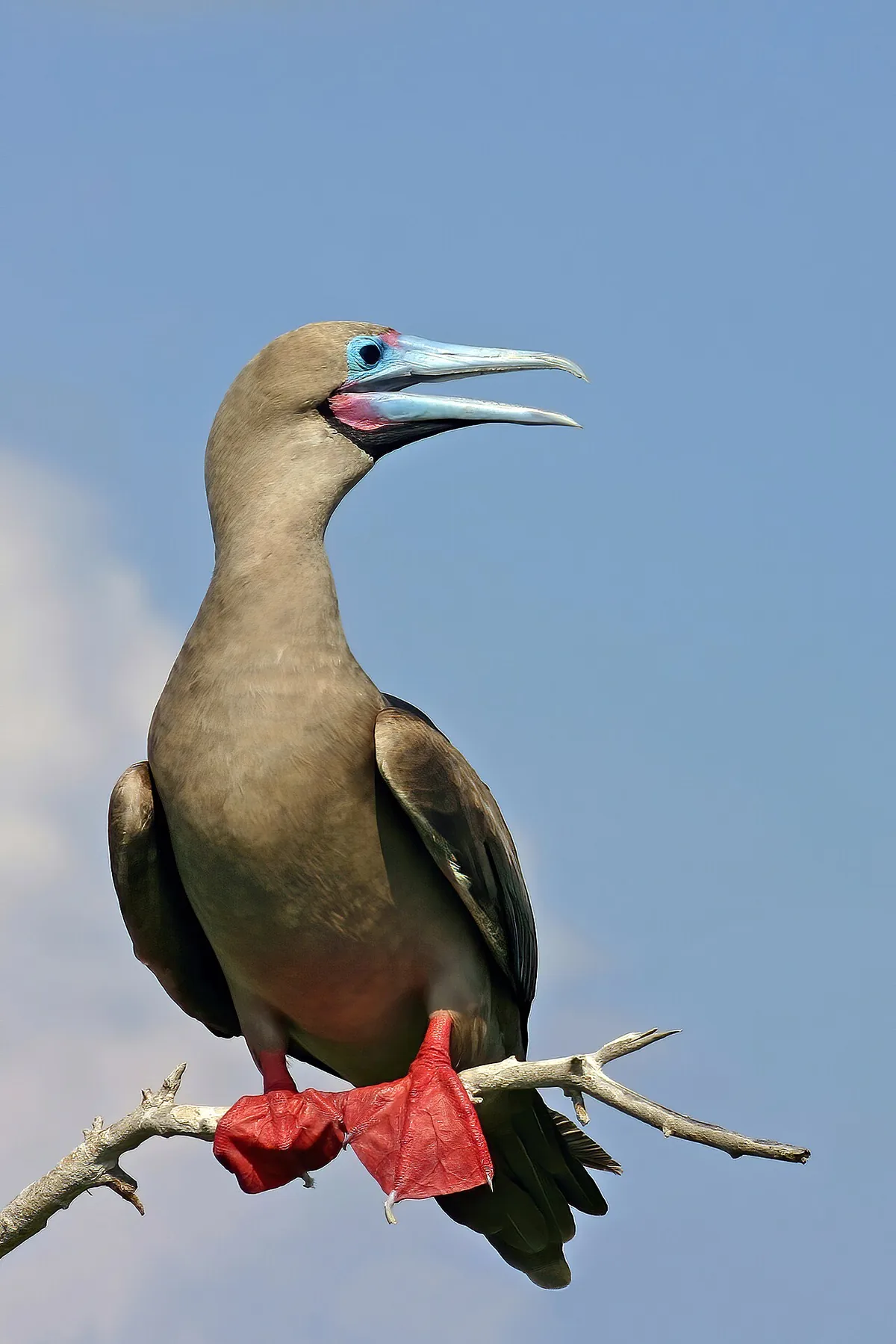
Punta Pitt, on the island’s north-east tip, is the only site in Galápagos where all three booby species, blue-footed, red-footed and Nazca, nest side by side, along a 1.4 km trail up a tuff cone that takes about two hours. The red-footed boobies are the prize: they nest in trees and bushes rather than on the ground, and this is one of only two large colonies in the archipelago. Isla Lobos, closer to town, is a small islet with an 850-metre loop trail, a sea lion colony (the name gives it away) and nesting blue-footed boobies and frigatebirds; the snorkel in the channel is the gentlest sea lion encounter on the island.
Cerro Tijeretas, La Lobería and the Interpretation Center
Tijeretas Hill is walkable from the Interpretation Center on a trail of about 3.5 km round trip, two hours with the stops: one of the few places where both frigatebird species nest in the same colony, a cove where you can snorkel with sea lions and a viewpoint over Kicker Rock at the end. The Interpretation Center itself, run by the park, is free, covers the human history of the islands from whalers to prisoners, and is the best hour of context in the archipelago. La Lobería is a coral-sand beach ten minutes by taxi from town with its own sea lion colony and a surf break for experienced surfers.
The highlands loop
El Junco is the only permanent freshwater lake in Galápagos, a crater lake about 270 metres across at 700 metres, filled by rain and bathed in mist; frigatebirds come to rinse the salt from their feathers, which makes for some of the best flight photography in the islands. The park caps the site at 64 visitors, coordinated a day ahead. The Galapaguera de Cerro Colorado, a tortoise breeding centre about 22 km from town, raises the island’s own tortoise species and releases the young into the surrounding habitat; semi-wild adults roam the grounds. Puerto Chino, a white beach with snorkelling, ends the loop. A taxi for the half-day runs around US$80 for the car (check current rates).
Wildlife highlights
Sea lions everywhere, including the town beach and the benches of the malecón; the San Cristóbal mockingbird, found nowhere else; red-footed boobies at Punta Pitt; both frigatebird species at Tijeretas; the swallow-tailed gull, the world’s only nocturnal gull, along the cliffs; and offshore, the sharks and turtles of Kicker Rock. July to November the cold Humboldt water feeds the marine life; the warm season brings the clearest water and hammerhead sightings at Kicker Rock.
When to visit
| Months | What is happening on San Cristóbal |
|---|---|
| December to May | Warm, calm water and the best visibility at Kicker Rock; hammerheads in the channel |
| March to June | Frigatebirds with full red pouches at Tijeretas and Lobos |
| June to November | Cooler, richer water: more fish and sharks at Kicker Rock, choppier boat rides; the highlands in garúa mist |
| August to November | Sea lion pups on La Lobería, Lobos and the town beach |
Cruise or land-based?
San Cristóbal is one of the three islands where land-based travel genuinely works: hotels in town in every range, sites you can walk to, day boats to Kicker Rock and the northern sites, and a taxi loop of the highlands. Cruise itineraries commonly start or end here because of the airport, and eastern itineraries include Punta Pitt, Cerro Brujo and Lobos, which day boats reach less often. If you are torn, our cruise vs land guide lays out who each suits, and the Puerto Baquerizo Moreno guide covers the town itself.
Costs on arrival are the same as anywhere: the US$200 park fee for foreign adults at the airport and, before you fly, the US$20 TCT card, both explained in the entry fee guide.
Who San Cristóbal is for
- Snorkellers and divers: Kicker Rock alone justifies the trip for many visitors.
- Land-based travellers who want a real town, not a tourist strip: the malecón, local restaurants, surf beaches and sea lions as neighbours.
- Birders: Punta Pitt for the three boobies, El Junco for frigatebirds bathing in fresh water, and the endemic mockingbird.
- Travellers with five days or more doing two islands by ferry, pairing it with Santa Cruz; the 5-day land-based itinerary shows how.
Frequently asked questions
Is San Cristóbal better than Santa Cruz?
Different. Santa Cruz has more hotels, more day tours and the busiest town; San Cristóbal is quieter, has Kicker Rock and the sea lions in town, and its own airport. With five days or more, do both; with three, pick one and stay put.
Can you fly directly to San Cristóbal?
Yes. Avianca and LATAM fly to San Cristóbal (SCY) from Quito and Guayaquil. Many one-week trips fly into one Galápagos airport and out of the other.
What is Kicker Rock?
León Dormido in Spanish: a 140-metre tuff cone split in two off the north-west coast of San Cristóbal, where the channel between the rocks concentrates sharks, turtles and rays. It is the island’s best snorkel and dive site, reached by day boat from town.
Can you see red-footed boobies on San Cristóbal?
Yes, at Punta Pitt on the north-east tip, the only site in the islands where blue-footed, red-footed and Nazca boobies nest together. The largest red-footed colony is on Genovesa, but Pitt is the accessible one.
Where is the capital of the Galápagos Islands?
Puerto Baquerizo Moreno, on San Cristóbal. Puerto Ayora on Santa Cruz is bigger and busier, which is why people confuse the two.
Related reading
The snorkel site is in the Kicker Rock guide; the town is in the Puerto Baquerizo Moreno guide; the birds of Punta Pitt are in the red-footed booby and frigatebird guides; and the island’s place in the archipelago is in getting your bearings.
Sources
- San Cristóbal Island, Galápagos Conservancy
- Visitor site capacities and guidelines, Galápagos Government Council (PDF)
- Inter-island fares, August 2026 (Bitácora EC)
Last verified: October 2026