
Travel guide · Sites & Towns
Tortuga Bay: the best free half-day in Puerto Ayora
Tortuga Bay from Puerto Ayora on foot: the 2.5 km paved trail, Playa Brava vs Playa Mansa, opening hours, the water taxi option, wildlife by season and what…
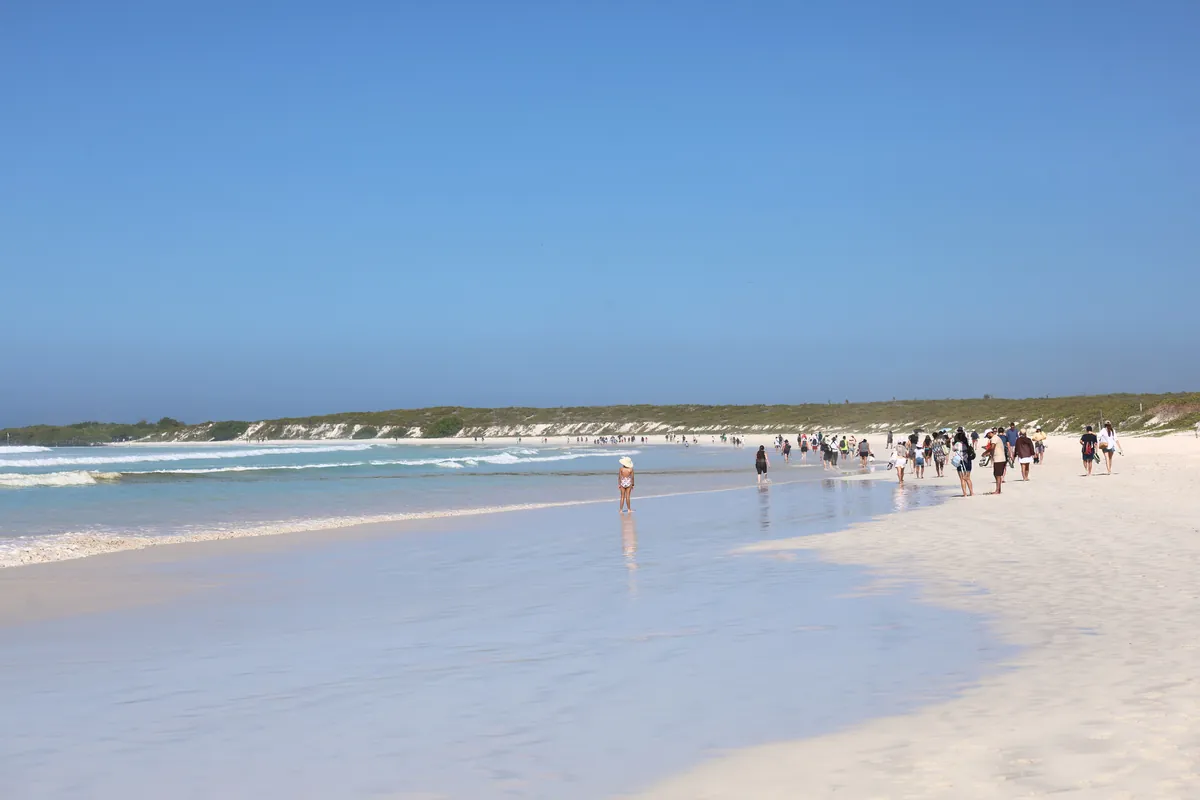 Photo: David Brito
Tortuga Bay is the beach walk every Santa Cruz itinerary includes, and it earns the repetition. From the edge of Puerto Ayora a paved path runs about 2.5 kilometres through cactus and palo santo to one of the great beaches of the archipelago. No boat, no ticket, no guide: it is one of the park’s free-access sites, and it delivers marine iguanas by the hundred, young sharks in a mangrove lagoon and a long white-sand beach in a morning.
Key facts
| Where | South-west of Puerto Ayora, Santa Cruz; the trail starts at the end of Avenida Charles Binford |
| Cost | Free. Sign the register at the ranger station at the trailhead |
| Hours | 06:00 to 18:00; the rangers stop admitting people in the late afternoon, so start by 16:00 at the latest |
| The walk | 2.5 km on a paved path, 30 to 45 minutes each way, mostly flat, little shade |
| Two beaches | Playa Brava: open ocean, surf, no swimming. Playa Mansa: a sheltered lagoon for swimming, snorkelling and kayaking |
| Facilities | None. No shops, no water, no toilets on the beach; kayaks for hire at Playa Mansa |
| Alternative | Water taxi from the Puerto Ayora pier to Playa Mansa, around US$10 per person each way |
The walk in
The trail starts at the ranger hut at the top of Charles Binford, where you sign in. It is a straight, paved path through the arid zone: Opuntia cactus trees, palo santo, Darwin’s finches and mockingbirds in the branches, lava lizards doing push-ups on the wall, and, partway along, the first marine iguanas crossing the path. It is shaded in patches and open in others, and the equatorial sun does not care about clouds. Take water even for this short a walk, and go early: the path is cooler, the light is better and the animals are busier before the heat of midday.
Two beaches, one name
Playa Brava is where the path ends: a long arc of white sand facing the open ocean, with strong currents and a shore break. Swimming is not allowed and the red flag is not a suggestion. Surfers use it; marine iguanas use it more. This is one of the biggest iguana colonies near town, and in the nesting months the dunes behind the beach are full of burrows. Walk the beach along the wet sand, below the marked nesting zones, and give the iguanas their two metres even when they are asleep in a pile.
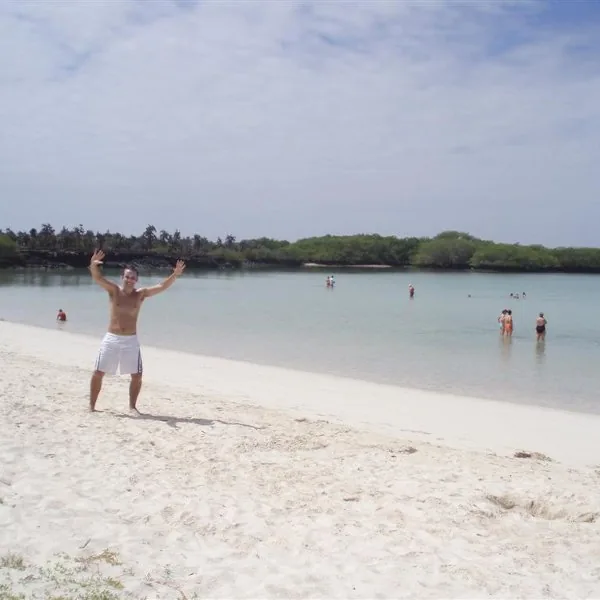
Playa Mansa is twenty minutes further on, through a signposted mangrove path at the far end of Brava: a calm, shallow lagoon protected from the swell. This is the swimming half. Young whitetip reef sharks cruise the mangrove edge, rays rest on the sand, pelicans dive, and green sea turtles feed in the seagrass. Kayaks can be hired by the hour at the landing, and paddling the lagoon at iguana-eye level is the version we point guests to. The water is at its warmest and clearest in the warm season, from December to May; in the cooler months it stays swimmable, but the wind picks up after midday.
| Playa Brava | Playa Mansa | |
|---|---|---|
| Swimming | No | Yes |
| Snorkelling | No | Yes, modest: rays, young sharks, reef fish |
| Surfing | Yes, for experienced surfers | No |
| Kayaks | No | Yes, for hire |
| Wildlife | Marine iguana colony, shorebirds, pelicans | Whitetip reef sharks, turtles, rays, herons |
Wildlife by season
- Marine iguanas are here all year. Males turn darker and more aggressive in the breeding season around December to March, and nesting runs into the early months of the year.
- Green sea turtles nest on the beach between roughly December and March; hatchlings emerge from January to June if your timing is lucky. Nests are marked; do not walk through them.
- Whitetip reef sharks and rays are in the Mansa lagoon all year, easiest to see at low tide along the mangroves.
- Birds on the trail include Darwin’s finches, Galápagos mockingbirds, yellow warblers, lava gulls and, on the beach, oystercatchers and whimbrels.
What to bring
Nothing is sold inside, so bring:
- Water and something to eat, and carry the rubbish back out (a park rule, not a suggestion).
- Mineral sunscreen and a hat. The national park rules restrict reef-damaging sunscreens.
- Snorkel gear if you have it, or rent it in town the day before.
- Shoes that survive lava rock for the mangrove path, and sandals for the sand.
- A dry bag for the phone if you plan to kayak.
How it fits a Santa Cruz day
Tortuga Bay pairs naturally with an afternoon at the Charles Darwin Research Station or a highlands run to the tortoises at El Chato: beach in the morning, green in the afternoon. If you are fitting the island into a short trip, our how many days guide shows where Santa Cruz sits in a 5- or 7-day plan. The water taxi from the pier is the option for tired legs, around US$10 per person each way, and it drops you at Playa Mansa; the walk is better than the boat by every other measure.
Cruise itineraries rarely include Tortuga Bay, because they spend their Santa Cruz day in the highlands and at the station. For cruise passengers, it is the ideal use of a free afternoon in Puerto Ayora before or after the boat.
Frequently asked questions
Is Tortuga Bay free?
Yes. It is a free-access site of the Galápagos National Park. You sign the register at the ranger station at the start of the trail and need no guide or ticket.
Can you swim at Tortuga Bay?
At Playa Mansa, the sheltered lagoon at the far end, yes. At Playa Brava, the main beach, swimming is prohibited because of the currents and the shore break.
How long is the walk to Tortuga Bay?
About 2.5 km on a paved path from the edge of Puerto Ayora: 30 to 45 minutes to Playa Brava, plus another 20 minutes along the beach and through the mangroves to Playa Mansa.
What time does Tortuga Bay open?
The trail is open from 06:00 to 18:00. The rangers stop admitting walkers in the late afternoon so that everyone is out by closing time, so start by 16:00.
Can you take a boat to Tortuga Bay?
Yes. Water taxis from the Puerto Ayora pier run to Playa Mansa for around US$10 per person each way. Most people walk in and take the boat back, or the other way round.
Are there sharks at Tortuga Bay?
Yes, small whitetip reef sharks rest and feed in the shallow mangrove lagoon at Playa Mansa. They are harmless to swimmers and one of the reasons to go.
Related reading
The other free sites and the day tours from the same town are in our Puerto Ayora guide and the Santa Cruz island guide; the beach you can reach by taxi on the other side of the island is Garrapatero.
Sources
- Visitor sites, Galápagos National Park Directorate
- Reglas de visita, Galápagos National Park Directorate
Last verified: October 2026