
Travel guide · Cruises & Tours
Last-minute Galápagos cruises: how the discounts really work
How last-minute Galápagos cruise deals work: the 90-day window, how much is really discounted, which months and boats, the costs that never drop, and how to…
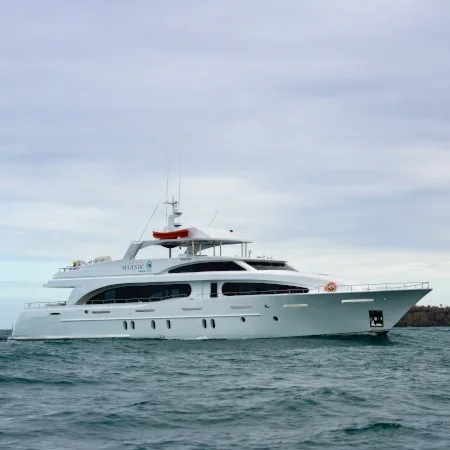
Last-minute is the best-kept open secret in Galápagos: the same cabin on the same yacht, often 15% to 40% cheaper, for travellers who can move fast. It is not a marketing trick; it is arithmetic on the operator’s side, because an empty cabin sails whether or not it is sold. Here is how the window works, what gets discounted and what never does, which months deliver, and how to book one in days rather than months.
Why last-minute exists here
Galápagos is a supply-limited market. The number of licensed boats is fixed by the national park, there is no such thing as a ship “adding capacity”, and an unsold cabin is worth nothing the moment the yacht leaves Baltra. So operators watch their bookings as a departure approaches, and when a boat is under-sold inside the window, they discount rather than sail with empty cabins. We book 30 yachts, and at any given time a few hundred of their upcoming departures carry a reduced fare.
The timeline
| How far out | What happens | What it means for you |
|---|---|---|
| 6 to 12 months | Normal pricing; the best cabins and the best dates sell | Book here for Christmas, July–August, a specific yacht or a specific island (Genovesa, Española) |
| About 90 days | Operators review sales and release the first reduced fares | The widest choice of discounted departures |
| 30 to 60 days | The real deals: the cabins still open are discounted hardest | The sweet spot if your dates are flexible |
| Under 2 weeks | Still possible, but the choice is narrow and flights get expensive | Only if you are already in Ecuador or can fly on short notice |
Hold windows are short. When we find you a discounted cabin, the operator usually holds it for 24 to 72 hours, and a top suite on a popular yacht can be gone in a day.
What gets discounted, and by how much
- 15% to 40% off the published fare is the realistic range. The deeper cuts come on luxury yachts, where an empty suite is expensive to carry and there is more room between cost and price.
- Shoulder and low months discount most: September to early December, late January to February, and May. In the calm-sea, high-demand weeks (July–August, Christmas and New Year, Easter) there is rarely inventory left to discount.
- Luxury discounts hardest in absolute dollars; mid-range discounts most often. Budget boats discount too, but from a lower base, so the saving is smaller.
- Single supplements are the quiet win: operators often waive them close to departure rather than sail with an empty cabin, which makes last-minute the best time of all to travel solo.
What never gets discounted
The deal is on the cabin and nothing else. Flights from Quito or Guayaquil (US$400–550 return for foreign visitors) do not get cheaper close to departure and are often more expensive inside a month. The national park fee (US$200 per foreign adult) and the TCT transit card (US$20) are fixed by law and are not part of any discount; both are explained in our entry fee guide. So a 30% cruise discount is a smaller saving on the total trip, and a real one all the same.
Where to find them
Our last-minute page lists every departure in the next 60 days that carries a reduced fare, straight from the same inventory we book from, updated as operators release and withdraw them. Behind it sits the full cruise finder, where you can filter by month, island, yacht and budget and see the reduced fares marked against the published ones.
A note on what you are looking at: we show the operator’s published fare and the reduced fare side by side, and we only call something “last minute” when the saving is real. Pages that advertise “up to 50% off” on every departure of the year are describing a theoretical maximum, not a cabin you can buy.
How to book one in four steps
- Tell us your dates, your flexibility and your tolerance for rough seas. Flexible on the yacht and firm on the week beats the reverse. The sea matters because many discounted sailings fall in the July–October swell window; read our seasickness guide if that worries you.
- We come back with what is open and at what price, including departures that never make it onto public deal pages.
- Decide inside the hold window, usually 24 to 72 hours. Pay the deposit, and the cabin is yours.
- Book the flights the same day. Avianca and LATAM fly from Quito and Guayaquil; book the flight to match the cruise, never the other way round.
Every cruise we book comes with complimentary nights in Mindo Cloud Forest at our own lodge, and a last-minute fare qualifies the same way a full fare does: the gift tier depends on the fare per person you pay, so a discounted luxury cabin can still reach the Mindo Plus or Mindo All-Inclusive level. Details are on our Mindo complimentary nights page.
The risks, stated plainly
- Your itinerary choice shrinks. Last-minute means choosing from what is open. If your one non-negotiable is the waved albatross on Española or the red-footed boobies on Genovesa, you may have to wait a season, because those routes sell first.
- Flights can cost more than the discount saves. Check the flight price before you commit to the cabin.
- A cheap cabin on a tired boat is not a bargain. Vet the yacht before the price thrills you: guide ratio, cabin layout, year of the last refit, the itinerary’s islands. Our how to choose a cruise guide covers the non-price criteria.
- Hold windows are short. If you need a week to decide, last-minute is not your strategy.
Last-minute without a cruise
Land-based trips can also be booked on short notice. Hotels in Puerto Ayora and Puerto Villamil have space outside the peak weeks, day tours (North Seymour, Bartolomé, Kicker Rock, Los Túneles) can usually be booked two or three days ahead in town, and the inter-island ferries sell tickets up to the day before. The limits are the flights and, in high season, the good day boats. Our land-based itinerary shows what a short-notice week looks like.
Frequently asked questions
How much can you save on a last-minute Galápagos cruise?
Typically 15% to 40% off the published cabin fare, with the largest discounts on luxury yachts and in the shoulder months. Flights and park fees are never discounted.
How far in advance do last-minute Galápagos deals appear?
Operators usually release reduced fares about 90 days before departure and discount hardest in the final 30 to 60 days. Inside two weeks deals still exist, but the choice is narrow.
Which months are best for last-minute Galápagos cruises?
September to early December, late January to February, and May. July, August, Christmas, New Year and Easter rarely have cabins left to discount.
Are park fees and flights included in last-minute deals?
No. The US$200 park fee and the US$20 TCT card are fixed by law, and flights from the mainland are sold separately by the airlines; both cost the same whether your cruise was discounted or not.
Can I still get the Mindo nights on a last-minute cruise?
Yes. Every cruise we book includes complimentary nights in Mindo Cloud Forest, and the tier (Mindo, Mindo Plus or Mindo All-Inclusive) depends on the fare per person you pay, discounted or not.
Related reading
Book early for high season and use last-minute only when your dates float: the full logic is in how to choose a Galápagos cruise, and where the discount lands in the total trip is in what a Galápagos trip really costs.
Sources
- Last-minute Galápagos cruises, live departures with reduced fares, Galapagos Dana Tours
- Galápagos National Park entry fee, Galápagos Government Council
Last verified: October 2026
After the islands, the cloud forest: Las Terrazas de Dana Boutique Lodge & Spa, Mindo Cloud Forest, included with every cruise we book.