
Travel guide · Sites & Towns
Post Office Bay: mail that travels by traveller
Post Office Bay on Floreana: the 1793 whalers' barrel, how the unstamped mail tradition works, and what a Floreana day trip includes beyond the barrel.
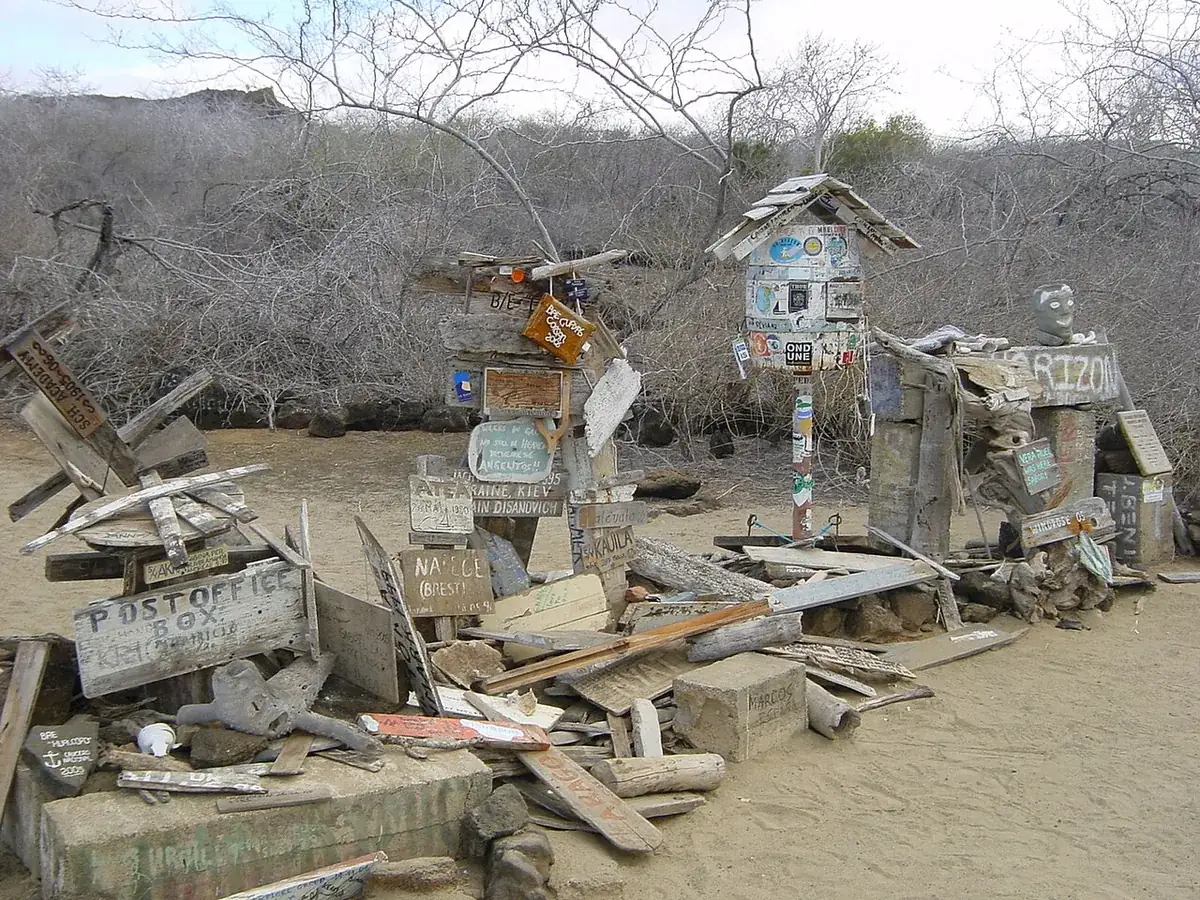 Photo: ProfessorX (CC BY-SA 3.0) via Wikimedia Commons
On the north shore of Floreana sits a weathered barrel that has been running an unofficial postal service since 1793, when British whalers planted it in the sand. Ships outbound left letters; homeward crews picked up whatever was addressed near their route and hand-delivered it, sometimes months later. The system never had stamps or a postmaster, and it still works the same way today: leave a postcard, take one you can honestly deliver by hand. It is the oldest “post office” in continuous use in the Pacific, and arguably the only one where the mail moves at the speed of tourism.
The history, briefly
Whalers chose Floreana for practical reasons: one of the few reliable freshwater springs in the archipelago, plus tortoise meat to salt down for the voyage. The barrel (the original whiskey barrel’s descendants, replaced many times over) became the letterbox for crews who would be two or more years at sea, so a letter left here could beat a letter sent home by a year or more. Darwin used the system on the Beagle’s visit. Floreana’s later human history is darker and stranger: penal colonies, the 1930s settlers of the Galápagos Affair, and the extinction of the Floreana tortoise, hunted out by exactly the ships that used this bay. The nearby lava tunnel close to the barrel is visitable with a flashlight.
The tradition today
The mechanics are unchanged and charming:
- Bring postcards from home, unstamped.
- Drop yours in the barrel.
- Sort through what is there and take one or more addressed to somewhere you can actually reach by hand after your trip.
- Deliver it, in person, however long that takes. Post a photo if you can.
No stamps, no fees, honour system end to end. It works because thousands of visitors a year keep doing it; cards from the barrel regularly arrive a year late with a note explaining the detour. Bring postcards from home rather than buying them on the islands, and a pen.
How you visit
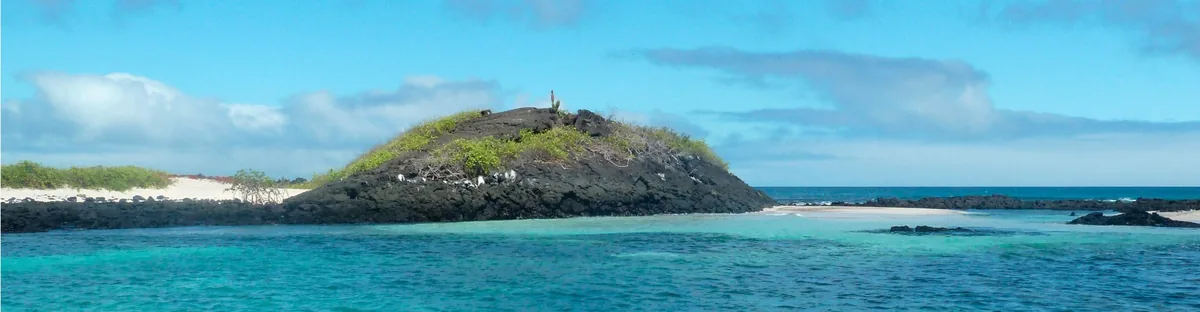
Post Office Bay is a Floreana visitor site, reached on cruise itineraries that include Floreana. The beach landing is short, the barrel is the centrepiece, and the visit combines with Floreana’s other stops: Punta Cormorant with its olivine sand and flamingo lagoon, and snorkelling at Devil’s Crown, the drowned crater just offshore where reef sharks, sea lions and sometimes penguins patrol. A wet landing, a walk on sand, and the barrel: it is the lightest walking day you will spend in the park, which is precisely why families love it.
Practicalities: there are no shops or facilities at the bay, so water and sun protection come with you. Access is only with an authorised tour or cruise; there is no public ferry to Floreana, which keeps the site quiet. See our ferry guide for what the inter-island network does and does not connect, and the park rules that apply on any landing.
Why this site stays on lists two centuries later
Because it is interactive in a place that mostly asks you to observe. You participate in one of the archipelago’s few human traditions, and the cost of participation is a promise to a stranger. We have delivered guests’ cards to Germany, Australia and a dozen US states over the years, and the story is always the same: the trip ends, the card keeps travelling.
If you are choosing between land-based days and a cruise, Floreana is one of the sites that tips the balance toward the boat: our cruise vs land comparison explains the trade. Galapagos Dana Tours books Floreana day tours and cruises across every budget, and when the islands are done, Las Terrazas de Dana Boutique Lodge & Spa, our lodge in Mindo Cloud Forest, is the decompression stop we recommend (how to combine them).
Frequently asked questions
How does the Post Office Bay barrel work?
Leave an unstamped postcard in the barrel and take one addressed to somewhere you can deliver by hand after your trip. No stamps, no fees, honour system end to end.
Can I visit Post Office Bay without a cruise?
Only with an authorised Floreana day tour, since there is no public ferry to Floreana. Most visitors arrive on cruise itineraries that include the island.
What else is there to do on Floreana?
Punta Cormorant’s olivine beach and flamingo lagoon, the snorkel at Devil’s Crown, the highlands around Asilo de la Paz and the lava tunnel near the barrel.
Sources
- Visitor sites of the Galápagos National Park, Galápagos National Park Directorate
- The islands, Galápagos Conservancy
- Together for Floreana, Charles Darwin Foundation
Last verified: October 2026