
Travel guide · Islands
Isabela Island: volcanoes, penguins and the wild west of Galápagos
Isabela, the biggest Galápagos island: Sierra Negra volcano, Los Túneles, Las Tintoreras, Concha de Perla, the Wall of Tears, the cruise-only west coast with…
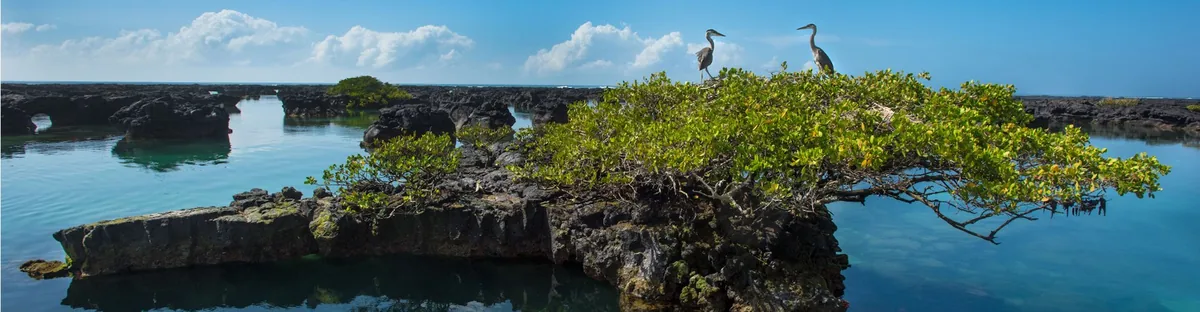
Isabela is the biggest island in Galápagos: 120 km long, shaped like a seahorse, and built from six volcanoes that fused together, five of them still active. It holds the archipelago’s penguin strongholds, its largest tortoise population, and a west coast no other island can match for raw geology. It is also, with Santa Cruz and San Cristóbal, one of the three islands you can visit land-based, from the sleepy beach town of Puerto Villamil. This guide covers both Isabelas: the one you reach by ferry and the one you reach only by yacht.
Key facts
| Where | The west of the archipelago, with Fernandina across the Bolívar Channel |
| Size | 4,588 km², more than half the land area of Galápagos; Wolf Volcano, 1,707 m, is the highest point in the islands |
| Volcanoes | Ecuador, Wolf, Darwin, Alcedo, Sierra Negra and Cerro Azul; all but Ecuador are active, and Sierra Negra last erupted in 2018 |
| Town | Puerto Villamil on the south coast, around 2,300 people, a long white beach and sand streets |
| Only here | The pink land iguana of Wolf Volcano (closed to visitors); the largest giant tortoise population in the islands; most of the world’s Galápagos penguins and flightless cormorants, shared with Fernandina |
| Visitor sites | Land-based: Sierra Negra, Los Túneles, Las Tintoreras, Concha de Perla, the wetlands, the Wall of Tears, the Arnaldo Tupiza breeding centre. Cruise-only: Punta Vicente Roca, Tagus Cove, Urbina Bay, Elizabeth Bay, Punta Moreno |
| How to get there | Speedboat from Santa Cruz (07:00 and 15:00, 2–2.5 hours, US$50), small plane from Baltra or San Cristóbal, or a cruise: 934 departures on 30 yachts in our live schedule, from US$2,996 per person |
Getting there
The speedboat is the normal route, with Puerto Ayora as the mandatory hub. Two things catch visitors: on arrival at the Puerto Villamil dock you pay a municipal fee of US$10 (foreigners), and the town’s single cash machine cannot be relied on, so bring all the cash you will need from Santa Cruz. Emetebe’s small planes connect Baltra, San Cristóbal and Isabela in half an hour, at fares well above the ferry. Our ferry guide covers the schedules and the water taxis; money in Galápagos covers the cash.
The land-based sites: what you do at each
| Site | How you visit | What you do | Cost |
|---|---|---|---|
| Sierra Negra volcano | Guided day hike from town | 15 km round trip along the rim of the second-largest caldera in the world, on to Volcán Chico’s fresh lava | Around US$30–50 (check current rates) |
| Los Túneles | Half-day boat tour | Walk the lava arches, snorkel with seahorses, whitetip sharks, turtles and penguins | Around US$150 |
| Las Tintoreras | Short boat tour from the dock | Walk a lava islet past marine iguana piles and a shark channel; snorkel | Modest tour fee |
| Concha de Perla | On foot from the dock, free | A sheltered lagoon for snorkelling with sea lions, rays and the odd penguin; no guide needed | Free |
| The wetlands and the Wall of Tears | On foot or by bike from town, free | Boardwalks through mangroves and lagoons with flamingos, then 6 km to the prisoners’ wall | Bike hire |
| Arnaldo Tupiza breeding centre | On foot from town | Isabela’s five tortoise lineages in corrals | Free |
Sierra Negra and Volcán Chico
The day trip that defines the island. Sierra Negra’s caldera, about 10 km across, is the second largest in the world. From Puerto Villamil a vehicle climbs to the trailhead, then the hike follows the rim for views across the black floor of the caldera, where the 2018 eruption left fresh flows, and continues to Volcán Chico, a cluster of parasitic cones from the 1979 eruption with sulphur-stained vents and views over the north of Isabela to Fernandina. Fifteen kilometres round trip, half a day, with a guide as the park requires. Bring real water and a windbreaker: the rim sits in cloud more often than not, and the lava at Chico is hot by noon. Our hiking guide has the trail in detail.
Los Túneles, Las Tintoreras and Concha de Perla
Los Túneles is a maze of lava arches half-sunk in a calm turquoise bay west of town and our pick for the best snorkelling day on Isabela: seahorses, whitetip reef sharks resting under the arches, turtles, rays and penguins, in water sheltered enough for nervous swimmers. Las Tintoreras is a chain of islets in the bay in front of town, named after the whitetip sharks (tintoreras) that rest in its narrow channels; the short walk over lava passes marine iguana piles and the snorkel is easy. Concha de Perla, a shallow lagoon beside the dock reached by a boardwalk through the mangroves, is free, needs no guide, and gives you sea lions, rays and sometimes a penguin before breakfast.
The wetlands, the Wall of Tears and the breeding centre
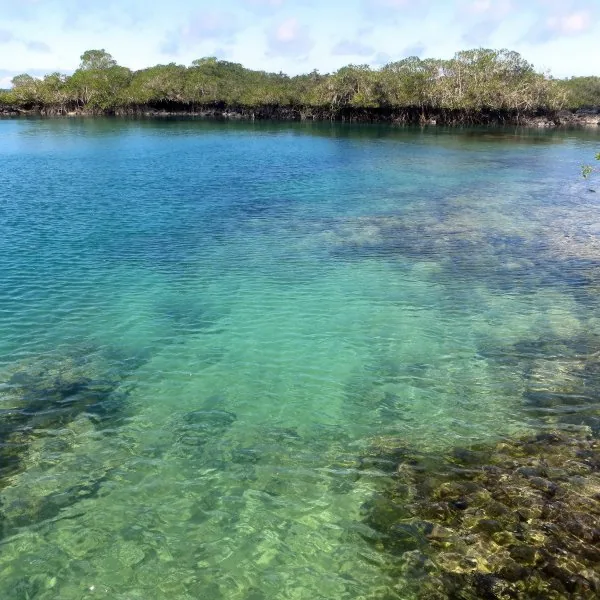
A boardwalk network links the salt lagoons behind Villamil’s beach, the only place where all four of the islands’ mangrove species grow together, with flamingos, white-cheeked pintails, stilts and, for the patient, the mangrove finch, one of the rarest birds on Earth and found only on this coast. From there a flat track continues 6 km to the Muro de las Lágrimas, the Wall of Tears, a wall of lava blocks built by the prisoners of the island’s penal colony between 1946 and 1959 for no purpose other than to keep them working. The Arnaldo Tupiza breeding centre, a short walk from town, keeps the island’s five tortoise lineages in corrals and releases the young into the wild.
The west coast: cruise-only Isabela
The west side of Isabela is where Galápagos gets strange, and it is cruise-only territory because there is no land infrastructure for 100 km. The cold upwelling of the Cromwell Current makes it the richest water in the archipelago.
| Site | Landing | What you do | Cruises in our schedule |
|---|---|---|---|
| Punta Vicente Roca | No landing: panga ride and snorkel | Two coves at the foot of Volcán Ecuador: sunfish, flightless cormorants, fur seals, turtles by the dozen | 785 departures, 23 yachts |
| Tagus Cove | Dry | The historic anchorage with ship names painted on the cliffs since the 1800s; a steep trail to Darwin Lake and the viewpoint; snorkel and kayak in the cove | 702 departures, 25 yachts |
| Urbina Bay | Wet | The 1954 uplift that raised 6 km of seabed; a 3 km trail with giant tortoises, land iguanas and stranded coral | 682 departures, 23 yachts |
| Elizabeth Bay | No landing: panga only | Mangrove channels and the Marielas islets: penguins, rays, turtles, herons | 342 departures, 15 yachts |
| Punta Moreno | Dry, onto lava | A 2 km walk over bare lava to brackish lagoons with flamingos; cormorants and penguins on the shore | 489 departures, 21 yachts |
Off Cape Marshall, on the north-east coast, giant manta rays gather in such numbers from January to May that divers call it Manta City; it is a dive-boat site, not a cruise stop. And the pink land iguana of Wolf Volcano, discovered by science only in 2009, lives in a habitat closed to tourism; only researchers go.
Wildlife highlights
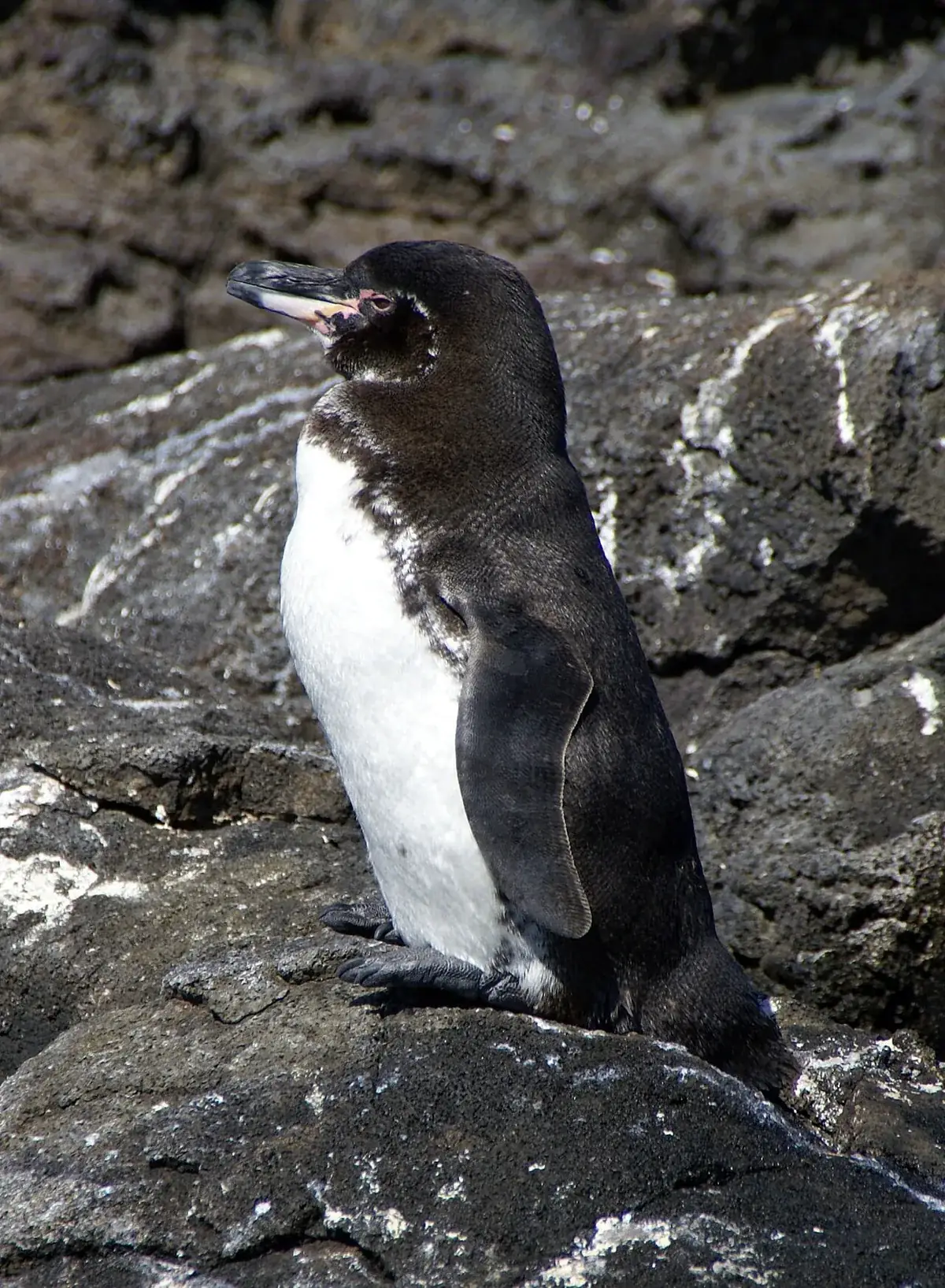
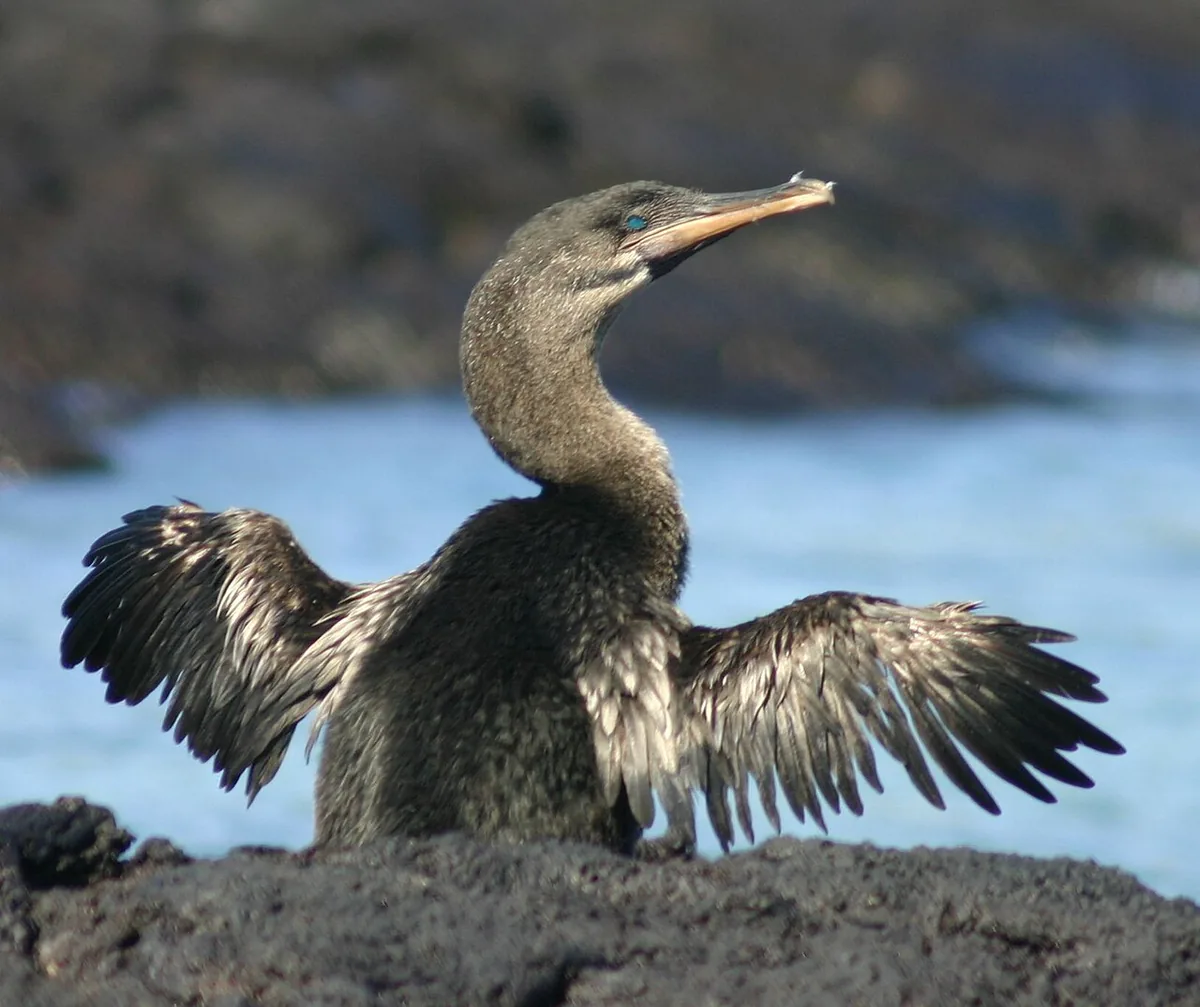
Isabela and Fernandina hold about 95% of the world’s roughly 2,000 Galápagos penguins and all of its 1,600 or so flightless cormorants, both best seen on the west coast or, for penguins, around Los Túneles and Las Tintoreras. The biggest marine iguanas in the archipelago; the largest giant tortoise population, with the Wolf Volcano group alone counting 7,000 to 8,000 animals; flamingos in the wetlands and at Punta Moreno; and 16 whale species recorded offshore, including Bryde’s, humpbacks and orcas, best from June to November in the cold season, when the sunfish also come up at Vicente Roca.
When to visit
| Months | What is happening on Isabela |
|---|---|
| December to May | Warm, calm, clear water at Los Túneles and the Tintoreras; the Sierra Negra trail is drier underfoot; mantas at Cape Marshall |
| June to November | The cold season: whales offshore, sunfish at Vicente Roca, penguins and cormorants most active, choppier crossings, mist on the volcano |
| July | Flightless cormorants courting and nesting on the west coast |
| August to November | Sea lion pups on Villamil’s beach and at the Tintoreras |
Cruise or land-based?
Both, and they show you different islands. Land-based Isabela means Villamil: days built around Los Túneles, the Tintoreras, the Sierra Negra hike and free biking to the Wall of Tears, in the most relaxed of the three towns. Cruises, specifically western itineraries, are the only way to see Vicente Roca, Tagus, Urbina, Elizabeth Bay and Moreno, and the west is where the penguins and cormorants concentrate. The ideal, if you have the days, is both: a western cruise and two or three nights in Villamil before or after. Our cruise vs land guide explains the trade, and the Puerto Villamil guide covers the town.
Fixed costs are the same either way: the US$200 park entry for foreign adults and the US$20 TCT card, both in the entry fee guide, plus the US$10 Isabela dock fee for those who arrive by boat.
Who Isabela is for
- Active travellers: the Sierra Negra hike is the best volcano walk you can do as a day trip in Galápagos.
- Snorkellers: Los Túneles for seahorses and sharks, Concha de Perla for sea lions without a boat.
- Wildlife obsessives chasing penguins and flightless cormorants, for whom a western cruise is the surer bet.
- Slow travellers: Villamil’s long beach, the wetlands and cheap local food make it the easiest island to do nothing on for a few days. If you are fitting it into a bigger trip, how many days covers the two- and three-island timing.
Frequently asked questions
How do you get to Isabela Island?
By speedboat from Santa Cruz (07:00 and 15:00, 2 to 2.5 hours, US$50 per tourist leg), by Emetebe’s small planes from Baltra or San Cristóbal, or on a cruise. There are no flights from the mainland.
Is Isabela worth visiting without a cruise?
Yes. Puerto Villamil gives you Los Túneles, the Tintoreras, Concha de Perla, the Sierra Negra hike, the wetlands and the Wall of Tears in two or three days, with hotels in every range. The west coast, though, is cruise-only.
Can you see penguins on Isabela?
Yes. Small groups fish around Los Túneles, Las Tintoreras and Concha de Perla, and the west coast sites hold the main colonies, which cruises visit. Isabela and Fernandina have almost all of the world’s Galápagos penguins.
How hard is the Sierra Negra hike?
About 15 km round trip on a mostly gentle rim trail, with a rougher section on the lava at Volcán Chico: half a day for a reasonably fit walker, with a guide, water and a windbreaker. Mud is likely in the cool season.
Is there an ATM on Isabela?
One machine in Puerto Villamil that is often empty or offline and may not accept foreign cards. Bring all the cash you need from Santa Cruz, including the US$10 dock fee.
Related reading
The headline tour is in the Los Túneles guide; the town is in the Puerto Villamil guide; the birds of the west are in the penguin and flightless cormorant guides; and the pink iguana is in its own guide.
Sources
- Isabela Island, Galápagos Conservancy
- Sea birds of Galápagos (penguin and cormorant populations), Galápagos Conservancy
- Visitor sites, Galápagos National Park Directorate
- Inter-island fares, August 2026 (Bitácora EC)
Last verified: October 2026