
Travel guide · Islands
Floreana Island: pirates, postcards and the strangest human story in Galápagos
Floreana Island, Galápagos: Post Office Bay's whalers' barrel, the flamingos of Punta Cormorant, snorkelling Devil's Crown, the 1930s settler…
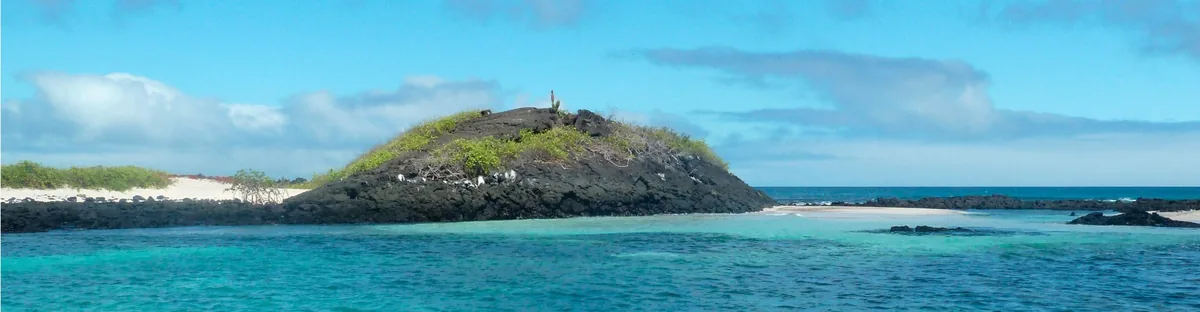
Floreana packs more human history into fewer square kilometres than any island in Galápagos. It was the first island Ecuador colonised, in 1832; it has one of the archipelago’s few freshwater springs, which is why everyone from buccaneers to whalers stopped here; and its 1930s settler mystery remains unsolved. Between the stories it holds one of the best snorkel sites in the islands, a flamingo lagoon, a mail barrel that has worked since 1793 and, since February 2026, giant tortoises of its own lineage again. Cruises include it on central and southern itineraries; a few land-based travellers reach it by ferry from Santa Cruz.
Key facts
| Where | The south of the archipelago, between Santa Cruz and Española |
| Size | About 173 km²; the oldest lava is 1.5 million years old, with more than 50 cinder cones inland |
| English name | Charles, as in Charles Island; also Santa María in Ecuadorian usage |
| People | Around 150, almost all in Puerto Velasco Ibarra, the smallest inhabited settlement in the islands |
| Visitor sites | Post Office Bay, Punta Cormorant, Devil’s Crown, the Baroness’s Lookout, Champion Islet; Asilo de la Paz in the highlands |
| How to get there | Cruise: 1,073 departures on 28 yachts in our live schedule, from US$1,422 per person. Ferry from Santa Cruz on some days, US$50 per leg |
A short human history, because here it matters
Whalers stopped from the 1790s for the fresh water and the tortoises and hunted the island’s giant tortoise to extinction by the 1840s. In 1832 Ecuador’s first governor established a penal colony and the first settlement in the islands. The first recorded Galápagos birth happened here in 1933, to the Wittmer family, whose descendants still run the island’s lodging and tours. That same decade a cast of settlers arrived: the German doctor Friedrich Ritter and Dore Strauch, the Wittmers, and a self-styled Austrian baroness, Eloise Wehrborn, with two lovers in tow. In March 1934 the baroness and one lover vanished without trace; Ritter died of food poisoning that November; the other lover’s mummified body turned up on Marchena. Nobody was ever charged. The documentary “The Galapagos Affair: Satan Came to Eden” (2013) and the 2024 drama “Eden” both retell it, and today’s islanders are the descendants and successors of that story.
The visitor sites and what you do at each
| Site | Landing | What you do | Cruises in our schedule |
|---|---|---|---|
| Post Office Bay | Wet | The mail barrel; a short walk; a lava tunnel nearby; snorkel off the beach | 1,033 departures, 27 yachts |
| Punta Cormorant | Wet, onto green sand | Trail past the flamingo lagoon to the white turtle-nesting beach | 1,073 departures, 28 yachts |
| Devil’s Crown | No landing | Snorkelling in and around a submerged crater: sharks, rays, sea lions, coral | 476 departures, 15 yachts |
| Champion Islet | No landing | Snorkel with sea lions; the last refuge of the Floreana mockingbird, seen from the panga | 233 departures, 7 yachts |
| Baroness’s Lookout | Dry | A short climb to the viewpoint named after the baroness | 417 departures, 9 yachts |
| Asilo de la Paz | By vehicle from the port | The pirate caves, the freshwater spring and the tortoise enclosure in the highlands | 65 departures |
Post Office Bay
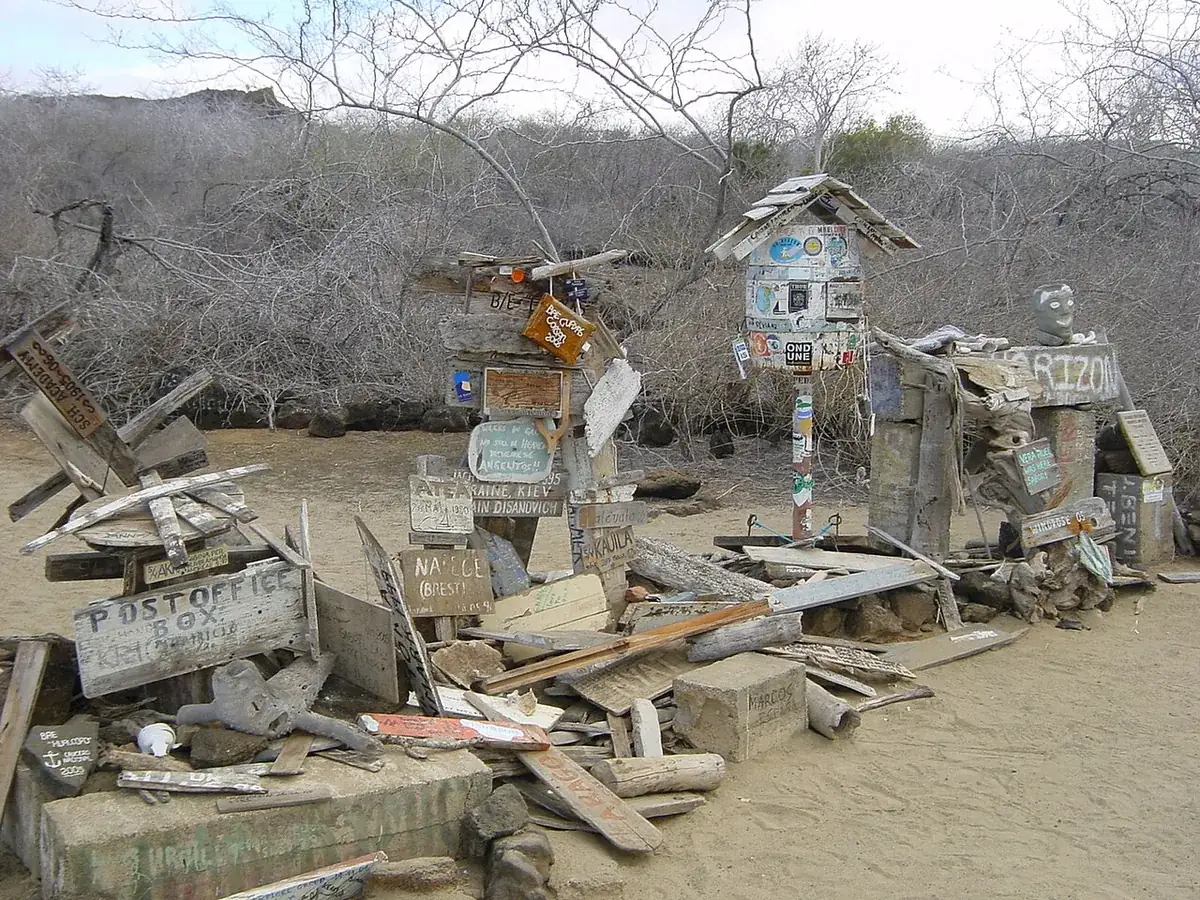
British whalers set up a barrel here in 1793 as an unofficial mail drop, so that ships heading home could carry letters from ships heading out; Darwin’s Beagle used it. The tradition survives, unbroken: you leave a postcard unstamped and take one addressed near your home to deliver by hand. Cards can wait in the barrel for years, which is how the whalers on two-year voyages started it. A lava tunnel sits a short walk away; bring a headlamp.
Punta Cormorant
A wet landing onto a beach of olivine-green sand between two cones, then a short trail to a brackish lagoon that is one of the archipelago’s most reliable flamingo sites, where the birds build their mud nests from February and dance in courtship in season, and on to a beach of fine white coral sand where green turtles nest from December to May and stingrays rest in the shallows. Snorkelling is not allowed at the coral beach; it happens at the Crown or the islet instead.
Devil’s Crown
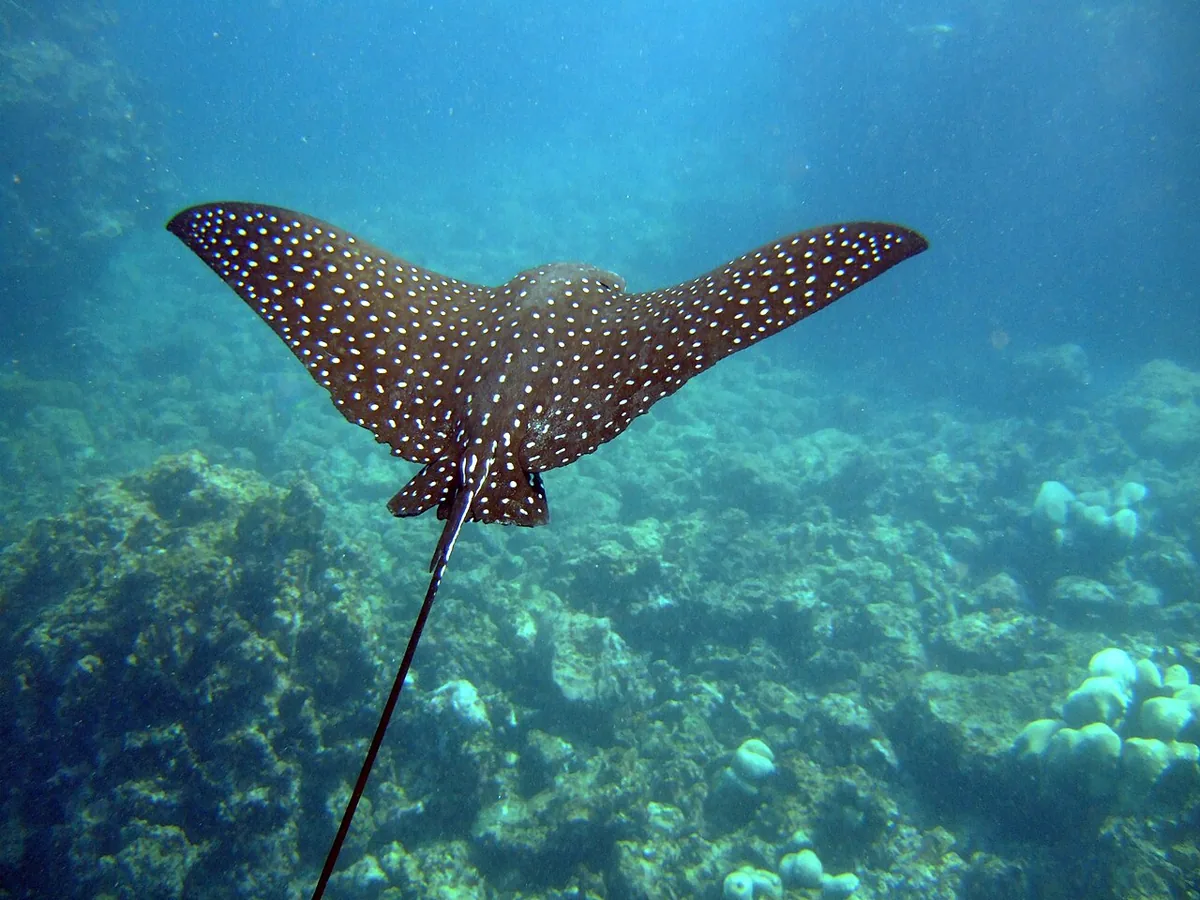
The eroded remains of a volcanic cone, almost entirely submerged just offshore, and one of the best snorkel sites in Galápagos: coral heads, whitetip and Galápagos sharks, sea lions, eagle rays, turtles, schools of surgeonfish and, now and then, a penguin. The caveat: it is exposed to current and surge, so it rewards confident swimmers. The panga drops you up-current and collects you on the far side; the calm centre of the crown is the easy part.
The highlands
Asilo de la Paz, 45 minutes by vehicle from the port, holds the pirate caves and the spring that explains why everyone wanted this island, plus a tortoise enclosure. Cerro Alieri, a 340-metre hill nearby, carries 48 endemic plant species and the last few wild individuals of Floreana’s own Scalesia. These are visited mainly by the few land-based travellers who overnight in the village and by cruises that include a highlands stop.
Wildlife highlights
The American flamingo at Cormorant’s lagoon; green sea turtles nesting from December to May; the Floreana mockingbird, extinct on the main island and surviving only on Champion and Gardner islets, with a few hundred birds, one of the rarest in the world; the Floreana racer snake, also confined to the islets; sea lions everywhere; and the Devil’s Crown fish life, the headliner underwater. Feral goats, which did enormous damage, were eradicated in 2007, and the main island is now the subject of the archipelago’s most ambitious restoration project.
The tortoises come home
The Floreana giant tortoise was declared extinct in the 1840s. Then geneticists found tortoises on Isabela’s Wolf Volcano carrying Floreana genes, descendants of animals whalers had dumped there, and a breeding programme at the Charles Darwin Research Station reconstructed the lineage. On 20 February 2026, 158 young tortoises were released into Floreana’s highlands, the first of their kind on the island in more than 180 years, after rats and cats had been removed from the main island. The programme is run by the Galápagos National Park with the Charles Darwin Foundation, Galápagos Conservancy and Island Conservation. You will not see them on the standard route, because they live in the monitored highlands, but it is why Floreana matters beyond its beaches.
When to visit
| Months | What is happening on Floreana |
|---|---|
| December to May | Turtle nesting at Cormorant; the clearest, warmest water for Devil’s Crown; flamingos nesting from February |
| June to November | Cooler water, more fish at the Crown, more surge too; sea lion pups at Champion from August |
| November | Sea lion pups play with snorkellers at Champion; the Crown is at its liveliest |
How Floreana is visited
Realistically by cruise. Central and southern itineraries stop for Post Office Bay, Cormorant and the Crown, often in a single day. Land-based visitors can reach the island on the inter-island speedboat from Santa Cruz, which runs on fewer days than the other routes and costs US$50 per tourist leg since August 2026; confirm the return before you commit, and expect a village with a handful of beds, including the Wittmer family’s lodging. Our ferry guide has what is confirmed.
Fixed entry costs are the same as everywhere: the US$200 park fee for foreign adults on arrival at Baltra or San Cristóbal, plus the US$20 TCT card before your flight; the entry fee guide has all categories.
Who Floreana is for
- History readers: no other island packs pirates, whalers, a mail barrel and an unsolved mystery into one morning.
- Snorkellers comfortable in current: Devil’s Crown is a top-tier site.
- Birders collecting the rare ones: the Floreana mockingbird is the hardest of the four mockingbird species to see, and only from a panga.
- Repeat visitors: if you have done the classic central route, Floreana’s human story is the differentiator.
Frequently asked questions
Can you stay on Floreana Island?
Yes, in a small way: Puerto Velasco Ibarra has a few guesthouses, including the Wittmer family’s, and locals run highlands tours. Most visitors come by cruise for the day.
How does Post Office Bay work?
Leave an unstamped postcard in the barrel and take one addressed near your home to deliver by hand. The tradition dates from 1793 and still works without stamps or postal services.
Is Devil’s Crown safe for beginners?
It is a site for confident swimmers. Current and surge are normal on the outside of the crown; the inside is calmer. Guides adapt the drop-off to the conditions and weaker swimmers can stay inside.
What happened to the settlers on Floreana in the 1930s?
The baroness and one of her lovers disappeared in March 1934, Friedrich Ritter died of poisoning that November, and the other lover was found dead on Marchena. The case was never solved; it is retold in the documentary “The Galapagos Affair” and the film “Eden”.
Are there giant tortoises on Floreana?
Since February 2026, yes: 158 young tortoises of the reconstructed Floreana lineage were released into the highlands, the first on the island since the 1840s. They live in monitored areas away from the visitor sites.
Related reading
The barrel has its own page in Post Office Bay; the species that survive only on the islets are in the mockingbird and racer snake guides; and the flamingo lagoon’s timing is in the wildlife calendar.
Sources
- Floreana Island, Galápagos Conservancy
- Floreana tortoise release, Galápagos National Park Directorate
- Floreana restoration, Island Conservation and the Charles Darwin Foundation
Last verified: October 2026