
Travel guide · Wildlife
Waved albatross
Waved albatross in Galápagos: the only colony on Earth, on Española. When they arrive, the courtship ritual, the 2.2 m wingspan and why they are vanishing.
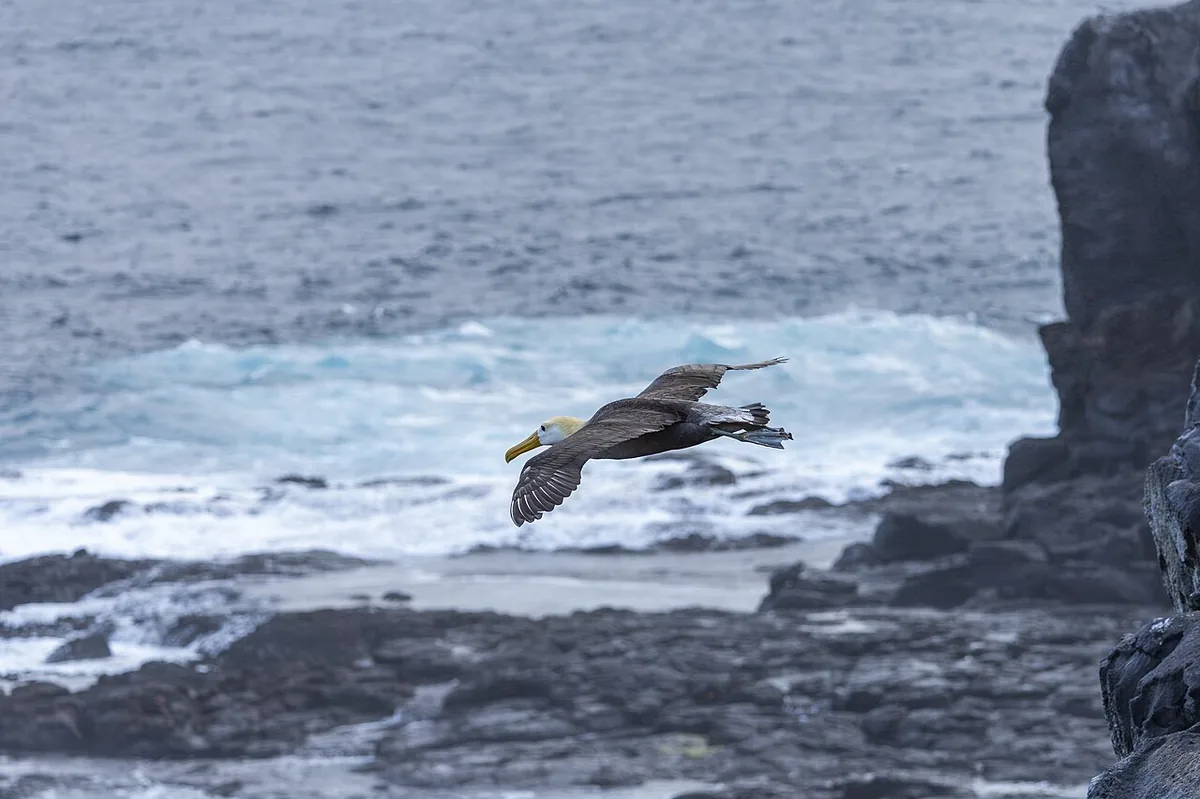 Photo: E bailey (CC BY-SA 4.0) via Wikimedia Commons
The waved albatross is the reason many birders choose one itinerary over another. The entire world population comes to a single island, Española, to breed, which makes this the most predictable blockbuster sighting in Galápagos and also a fragile one: the species is critically endangered. Here is the calendar, the courtship, and how to fit it into a trip.
One island, one colony
Punta Suárez on Española is the only breeding ground for the species, except a tiny satellite colony on Isla de la Plata off the Ecuadorian coast (probably fewer than 10–20 pairs). The birds spend the rest of the year at sea, ranging from waters east of the archipelago down the coasts of Colombia, Ecuador and Peru, feeding on fish and squid and often following fishing boats. Outside the breeding season you will not see one; inside it, you cannot miss them.
The season, month by month
- They arrive at the colony from late March, with most arrivals in late March and April.
- Egg laying runs from mid-April to the end of June, and the courtship is at its peak from April into June.
- Chicks hatch through the dry season, and the young birds fledge and leave Española in December.
- By January through March the island is empty of them.
So the honest window is April to December, with April to June the prize months. If your trip is in the warm season, do not book an Española day trip expecting albatross; check our wildlife calendar instead.
The courtship dance
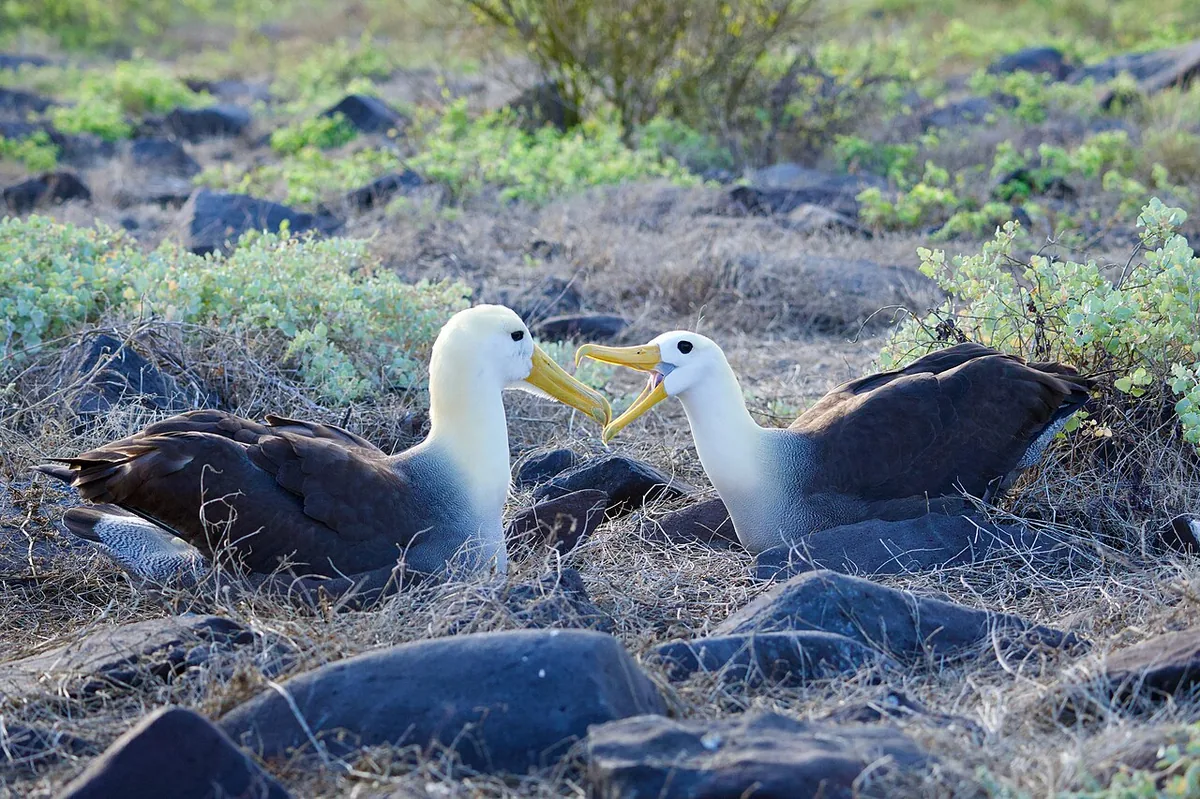
Pairs mate for life, and every season they renew the bond with a ritual that is equal parts comedy and choreography: bill-circling, rapid bill-clacking, and deep bows, two birds waddling in circles while clacking like castanets. It is the most theatrical display in Galápagos and one of the main reasons photographers put Española on an itinerary.
Built for the open ocean
An adult stretches past 90 cm, weighs 3 to 4 kg, and carries a 2.2 m wingspan. Albatrosses are the ocean’s gliders, covering huge distances with barely a wingbeat, and one adult can circle the globe in 46 days. Young birds leave the nest, fly out to sea, and stay away for up to six years before returning to Española to breed.
Why they are in trouble
Outside the reserve, longline fishing is the killer. Boats set hundreds of kilometres of baited hooks; albatrosses dive for the bait, get hooked, and drown dragged under. The Española colony itself is protected and monitored by the National Park, and birds breed successfully there, but every year spent at sea carries the risk. That is the whole conservation story in one sentence, and it is why the status reads critically endangered.
How to plan around them
Española sits on many eastern and southern cruise itineraries, and day trips from San Cristóbal visit in season. If the albatross is the reason you are coming, travel between April and December and confirm Española is on the route before booking. Our Nazca booby and blue-footed booby pages cover the colonies you will share the trail with, and the complete birds guide has the rest.
Watching the colony without disturbing it
Punta Suárez is a long trail, about two hours over lava and through the colony, and the albatross nest right beside it, sometimes on it. The birds show no fear, which is exactly why the rules matter: the two-metre distance keeps a sitting adult on its egg, and an egg left for a few minutes in the equatorial sun is an egg lost. Walk in single file where the trail narrows, stop where your guide stops, and let the group pass a displaying pair without clustering around it; the dance goes on longer when the birds are not surrounded.
The best viewing is from the cliff section at the far end of the trail, where adults take off into the wind and come in to land with the awkward, wing-braking hop that makes the species look drunk on arrival. A 200 mm lens is plenty. If you are there in late March or early April, before the full colony has returned, you will see the first arrivals walking the trail looking for last year’s mate; if you are there in December, the fledglings practising on the cliff edge are the last act of the season.
Frequently asked questions
When can I see the waved albatross?
From late March to December, with the courtship at its best from April to June. From January to March the birds are at sea and Española has none.
Where does the waved albatross breed?
Only at Punta Suárez on Española, apart from a tiny satellite colony on Isla de la Plata off the Ecuadorian coast. It is the only albatross that breeds on the equator.
Why is the waved albatross critically endangered?
Mostly longline fishing outside the reserve: the birds dive for baited hooks and drown. The Española colony itself is protected and breeds successfully.
Sources
Last verified: October 2026