
Travel guide · Wildlife
Galápagos birds: the complete guide
Every Galápagos bird in one guide: 56 native species, the big seabird colonies, Darwin's finches, and a link to each species page we've written.
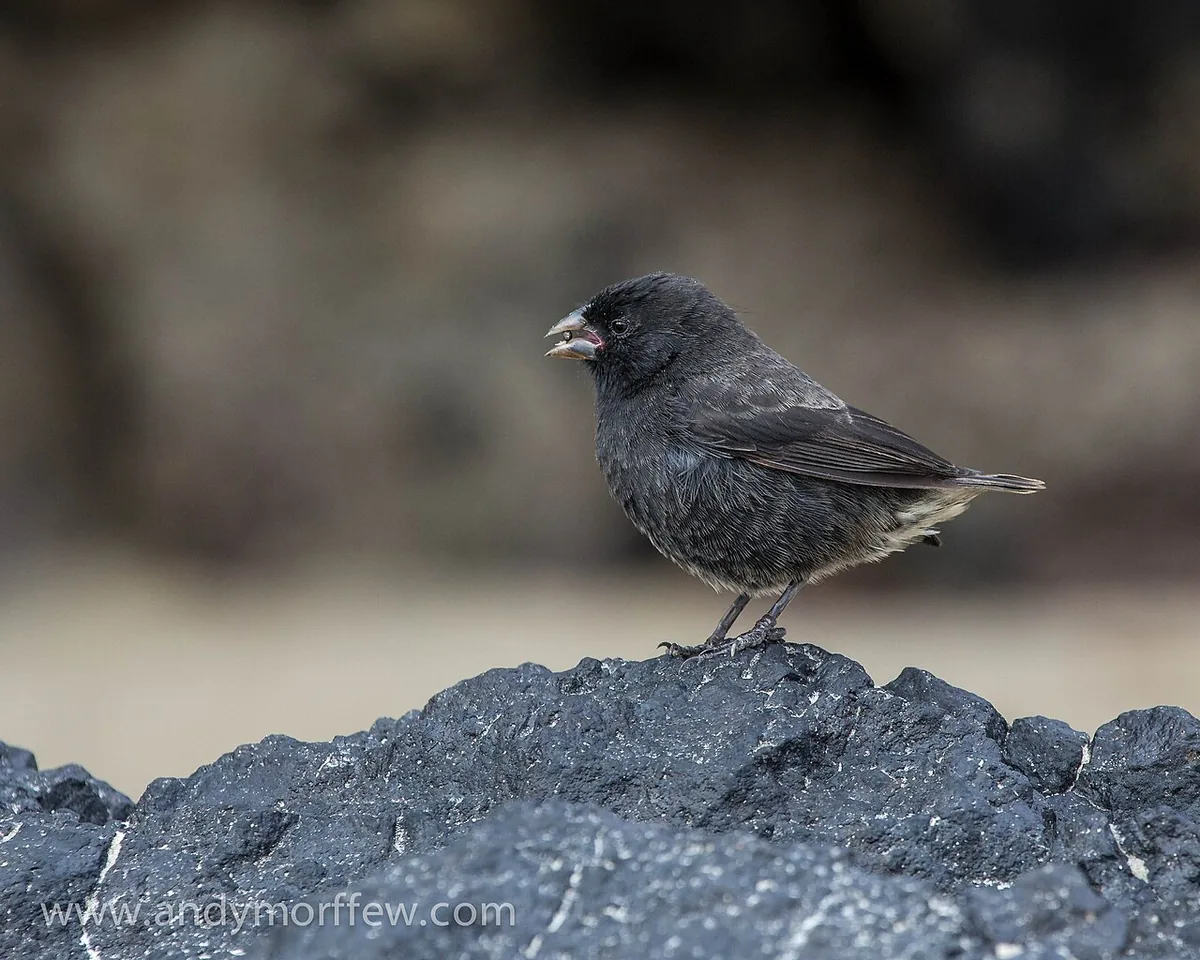 Photo: Andy Morffew from Itchen Abbas, Hampshire, UK (CC BY 2.0) via Wikimedia Commons
Galápagos is one of the world’s great birding destinations, and the numbers explain why: 56 native species live here, 45 of them endemic, plus 29 regular migrants and a list of rare visitors that keeps growing. This page is the index to our bird coverage, with a line or two on each species so you can decide which ones to build a trip around.
How the bird list works
The resident birds split into three practical groups. Seabirds nest in colonies on the cliffs and beaches and are the easiest to see well: boobies, frigatebirds, albatross, gulls and terns. Land birds live in the islands’ interior: Darwin’s finches, mockingbirds, the flycatchers, the rail. Shorebirds and migrants arrive mainly from August to March, the northern winter. Guides carry the full checklist; you do not need one, but a notebook helps.
Seabirds
- Blue-footed booby: the icon. The 2012 archipelago survey, still the latest full count, found around 6,400 adults (down from 20,000-30,000 in the 1960s-70s); colonies are on open ground beside the trails, and the courtship dance is as good as promised. Best months for the dance: May to August.
- Red-footed booby: the most numerous booby and the sneakiest, nesting in trees on outlying islands. Genovesa holds one of the largest colonies in the world.
- Nazca booby: the big white booby with two eggs and one survivor. Genovesa nests August-November, Española November-February.
- Waved albatross: almost the entire world population breeds on Española (plus a few pairs on Isla de la Plata, Ecuador), April to December, with a bill-clacking courtship worth the trip on its own. Critically endangered.
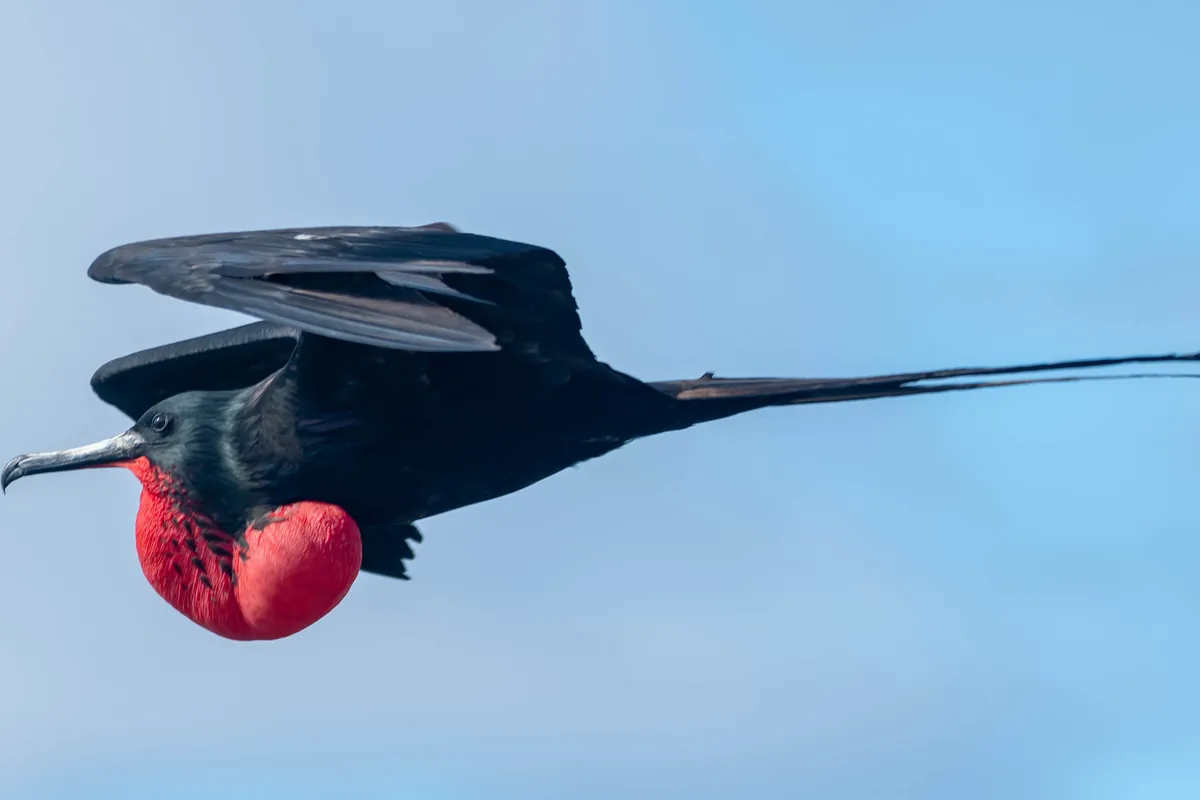
- Frigatebirds: great and magnificent in shared colonies, red pouches, piratical habits and a 56-day flight record. North Seymour and Genovesa are the strongholds.
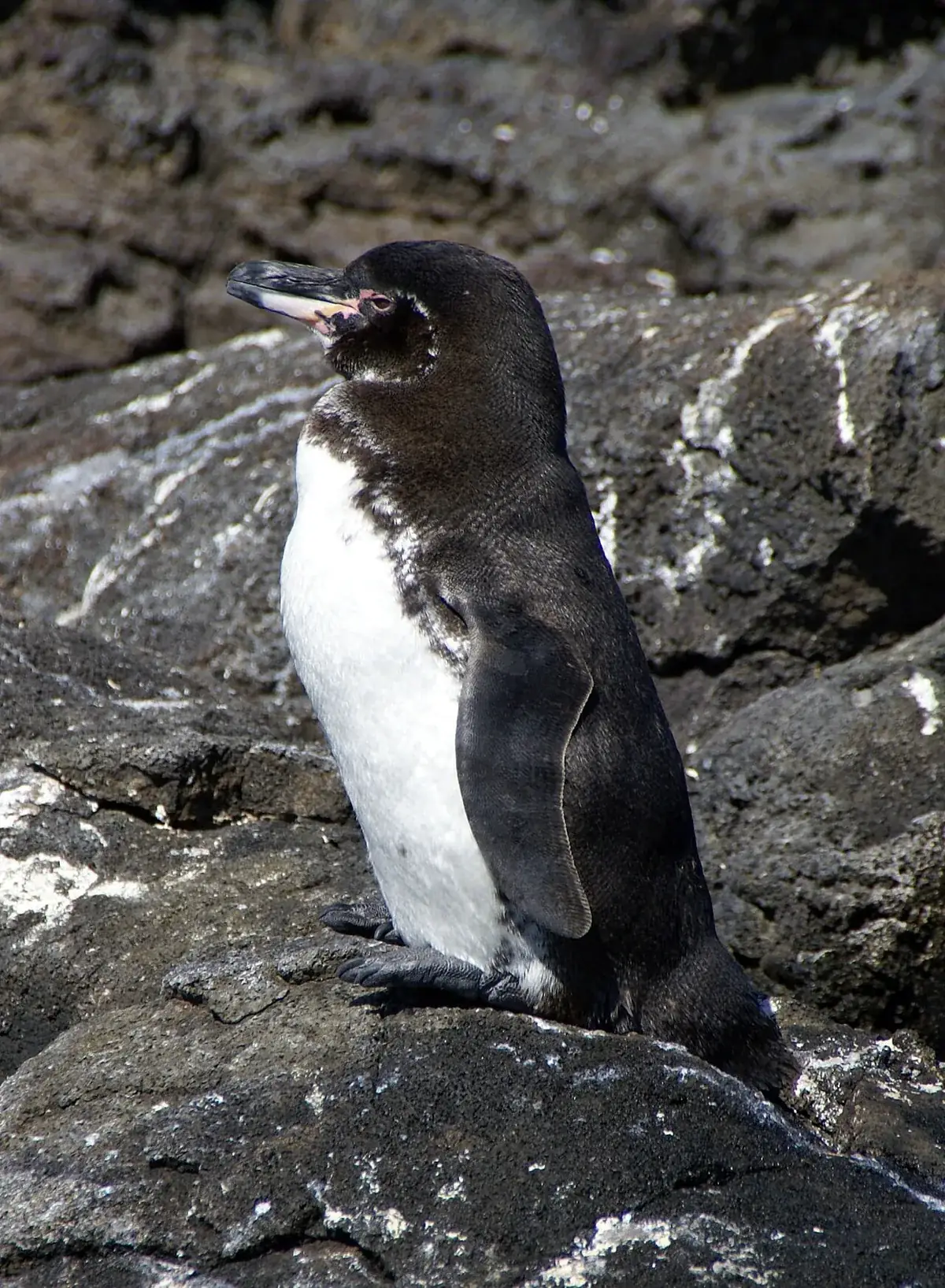
- Galápagos penguin: the only penguin north of the equator line, around 2,000 individuals, 95 percent concentrated on Fernandina and Isabela. Swimming with them is a standard snorkel highlight. See the penguin guide.
- Flightless cormorant: the world’s only flightless cormorant, roughly 1,600 adults (IUCN estimate 1,574-1,941 mature individuals), restricted to Fernandina and the west coast of Isabela. Details in the cormorant guide.
- Swallow-tailed gull: the world’s only nocturnal gull, an estimated 10,000-15,000 pairs spread across dozens of colonies, feeding on squid far out at sea at night. Genovesa is the classic site.
- Lava gull: the rarest gull on Earth, estimated at 900-1,200 individuals, all of them here. Look around Puerto Ayora’s harbor.
- Red-billed tropicbird: the long-tailed flyer nesting in cliff crevices; best watched from a panga ride below the cliffs of South Plaza, Española and Genovesa.
- Galápagos shearwater: breeds only here, seen in flocks feeding alongside boobies.
- Galápagos petrel: an endemic that nests in highland burrows; IUCN lists it as Critically Endangered (2019), citing a suspected decline of more than 80 percent over three generations.
Land birds
- Darwin’s finches: 13 or more species, the birds that started the theory of evolution, distinguished mainly by beak shape. Everywhere except the beaches; Los Gemelos on Santa Cruz is a good place to slow down and count species.
- Galápagos mockingbirds: four species, and the Floreana mockingbird survives only on two tiny islets, with a population estimated at 350-500 birds (Endangered per IUCN). On the main islands they are curious and will come inspect you.
- Galápagos hawk: the archipelago’s only diurnal raptor, roughly 400-500 birds (270-330 mature per IUCN) in about 130 breeding territories, with a breeding system in which one female mates with up to seven males.
- Galápagos dove: common and tame, with the Opuntia pollination story on Genovesa.
- Lava heron: the small grey hunter on the shoreline rocks, nesting September to March.
- American flamingo: a few hundred individuals in coastal lagoons (galapagos.org: approximately 320-350); Punta Cormorant on Floreana is the most reliable spot.
- Galápagos martin: an endangered endemic, an estimated 250-1,000 mature individuals, seen on the wing over cliffs and towns.
- Galápagos rail: a secretive highland crake, easier to hear than to see.
- Vermilion flycatcher: the red flash of the highlands, breeding December to May.
- Barn owl and short-eared owl: the two nocturnal hunters, the latter famous for hunting petrels around Genovesa.
When to plan a birding trip
Land birds nest after the first rains of the warm season, so January to April is peak activity in the highlands, with vermilion flycatchers displaying and finches busy. Seabird courtship peaks vary by species: frigatebirds March to June, blue-footed boobies May to August, Nazca boobies on Genovesa August to November. The waved albatross owns April to December. Our wildlife calendar lays the whole thing out month by month, and the best time to visit guide explains the two seasons behind the calendar.
Choosing an itinerary for birds
No single route covers every species, so pick the islands around the birds you most want:
- Western islands (Isabela, Fernandina): penguin, flightless cormorant, hawk, and the Bolívar Channel seabird feeding frenzies. Cruise only.
- Genovesa (northern loop): red-footed and Nazca boobies, swallow-tailed gulls, red-billed tropicbirds, short-eared owls hunting petrels, and the Opuntia doves. Cruise only.
- Española and the south-east (Española, Floreana, San Cristóbal): the albatross from April to December, Nazca boobies, flamingos at Punta Cormorant, and the Floreana mockingbird seen from the boat off Champion.
- Central day trips (North Seymour, Santa Fe, South Plaza): blue-footed boobies, frigatebirds, tropicbirds and doves, all reachable from Santa Cruz without a cruise.
- Santa Cruz highlands: finches at Los Gemelos, vermilion flycatchers, the rail, and petrel burrows, best from January to April.
Our birdwatching itinerary turns that into a day-by-day plan, and cruise itineraries explained shows which standard routes reach the far islands.
Frequently asked questions
How many bird species live in Galápagos?
Fifty-six native species, 45 of them endemic, plus 29 regular migrants and a growing list of rare visitors. The seabirds are the easiest to see well; the land birds live in the highlands.
Which birds can I only see on a cruise?
The waved albatross on Española, the red-footed booby colonies and swallow-tailed gulls on Genovesa, and the flightless cormorant on Fernandina and western Isabela. Day tours do not reach those islands.
When is the best time for birdwatching in Galápagos?
Land birds peak from January to April after the first rains; seabird courtship varies by species, with frigatebirds from March to June, blue-footed boobies from May to August and the albatross from April to December.
Sources
- Sea birds of Galápagos, Galápagos Conservancy
- Biodiversity of Galápagos, Galápagos Conservancy
- Galápagos hawk factsheet, BirdLife International
- Why are there so many Darwin’s finches?, Linnean Society of London (2024)
Last verified: October 2026