
Travel guide · Wildlife
Nazca booby
Nazca boobies in Galápagos, the world's largest colonies, the two-egg siblicide system, staggered breeding by island and where to see the courtship.
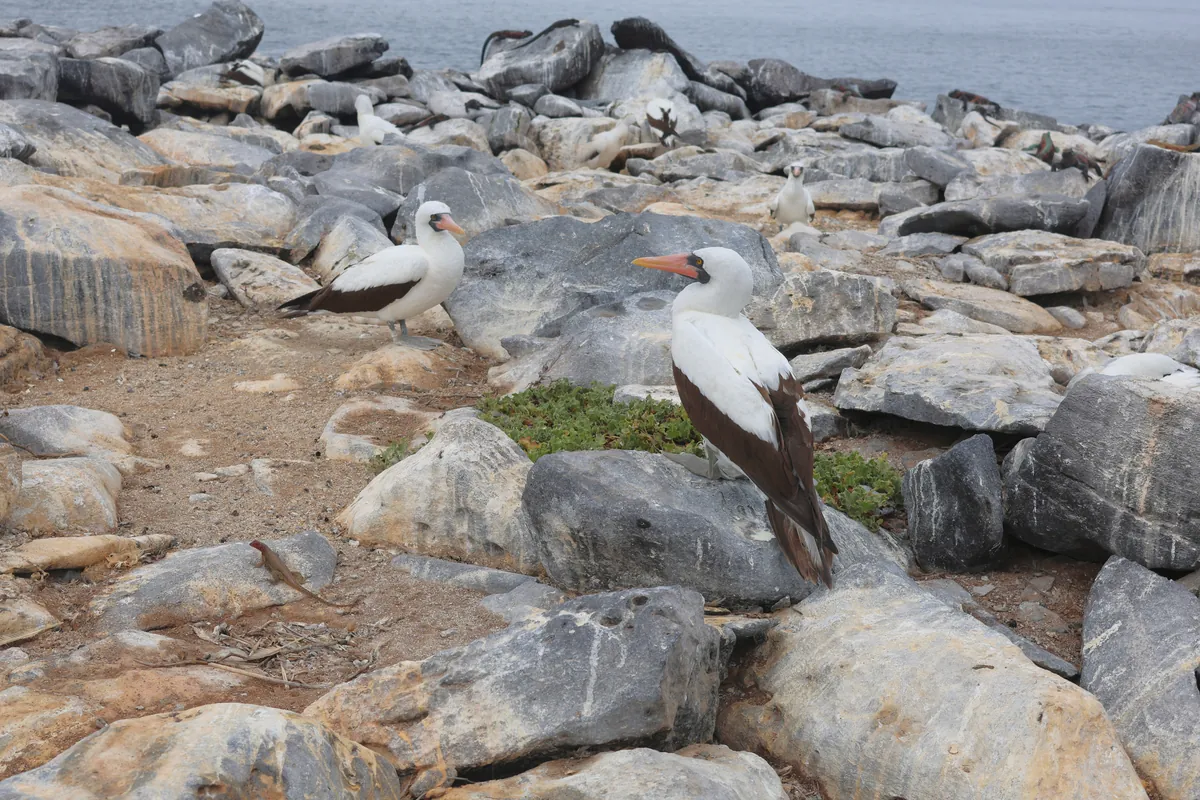 Photo: David Brito
The Nazca booby is the big, white, unbothered one with the orange bill, and Galápagos holds the largest breeding colonies of the species in the world. It is also the booby with the darkest family life: two eggs, one survivor, by design. Here is where to see them and what is actually going on in those colonies.
Where to see them
Genovesa and Española carry the headline colonies. Floreana and Punta Pitt on San Cristóbal also hold nesting birds. Around 20,000 breeding pairs live in the archipelago, and the species is listed as of Least Concern (IUCN 2021) with a global population in decline. The only other booby comparison you need: the blue-footed booby dances for attention while the Nazca barely acknowledges you.
The staggered calendar
Nazca boobies stagger their breeding season by island. Española nests from November to February, Genovesa from August to November. That is convenient for planning, because an Española itinerary in the warm season and a Genovesa itinerary in the dry season both land you in an active colony with eggs or chicks. In February the Española season winds down; in August it is in full swing on Genovesa.
Two eggs, one chick
The female always lays two eggs, laid up to nine days apart, and this is not redundancy but a system. The first chick hatches about five days before its sibling and almost always kills the second chick, especially in years when food is scarce. The second egg exists as insurance against the 25 to 50 percent of first eggs that fail. Guides explain it flatly, visitors flinch, and the colony carries on.
Egg failure is common even by booby standards, and in El Niño years Nazca boobies may skip breeding altogether.
Courtship and nests
The display is a parade: pairs face each other and tip their beaks to the sky, the classic sky-pointing dance. The nest is an afterthought, a scrape in the ground ringed with a few pebbles and lined with the birds’ own guano, usually on cliff tops.
In the air
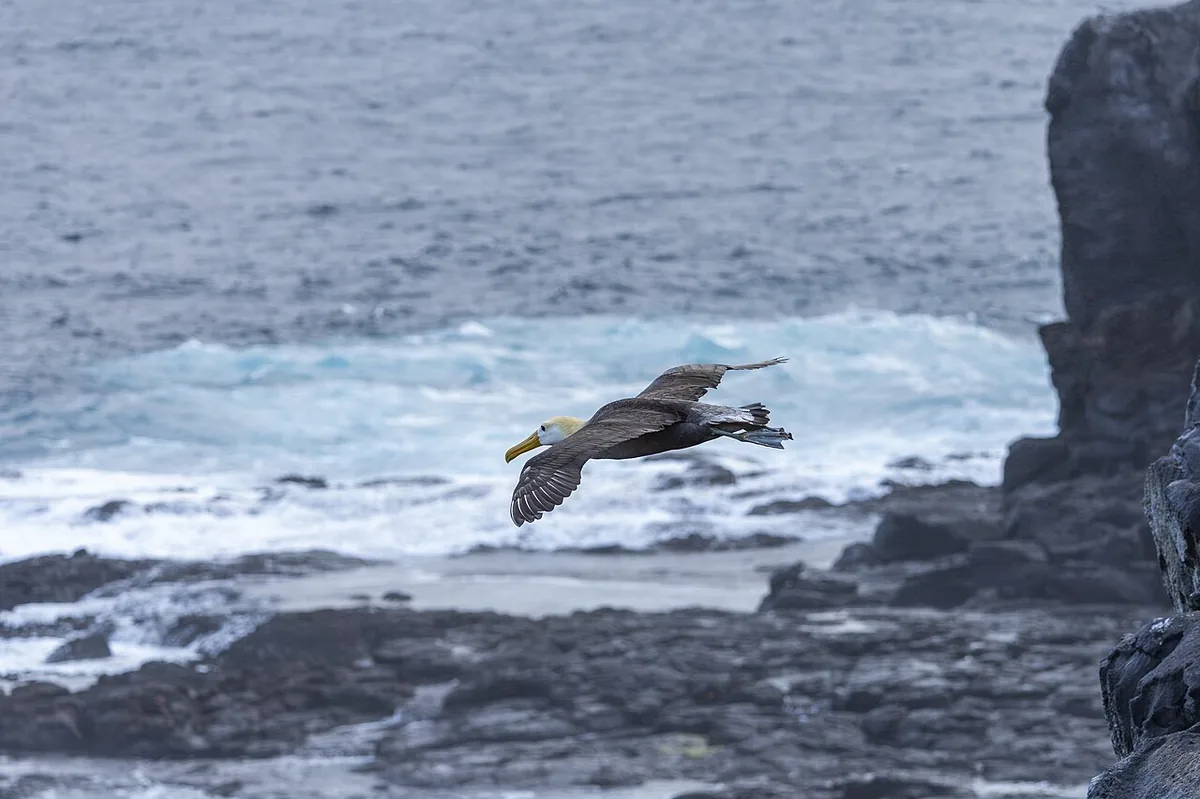
Nazcas plunge-dive from up to 30 meters for sardines, flying fish, anchovies and squid. They live 20 to 25 years. One caution from the sea: they are frequent victims of fishing gear outside the reserve, which is the main pressure on the species.
Sibling rivalry, in context
Siblicide sounds like a horror story until you see the logic: in a bad year, the second chick is food the parents cannot provide anyway, so the species wastes nothing. The masked booby, the Nazca’s sister species, was only split off as its own species in 2002, which is why older books call it a masked booby.
Both of its booby cousins have their own pages: the tree-nesting red-footed booby and the blue-footed showman. Our Galápagos birds guide links every species page, and the wildlife calendar shows which colonies are active in your month.
How to see the courtship
The sky-pointing display is the thing to photograph: a pair faces each other, bills vertical, wings slightly spread, and holds the pose for seconds at a time. Males initiate with a slow wing-flap and a whistle; females answer with a deeper, honking call. On Española you can sit at Punta Suárez and watch multiple pairs cycle through the display within a few meters of the trail: no blind needed, no disturbance, the birds simply ignore you. Bring a 200mm lens or longer; the head detail (orange bill, black facial mask) is what separates a good Nazca shot from a generic white bird.
Nazca vs blue-footed vs red-footed
| Feature | Nazca booby | Blue-footed | Red-footed |
|---|---|---|---|
| Nesting | Cliff top scrape | Ground scrape | Tree or shrub |
| Display | Sky-pointing | High-stepping dance | Beak-grappling |
| Feet | Gray-olive | Blue | Red |
| Population trend | Declining | Stable | Stable |
| Where to see | Española, Genovesa | Most islands | Genovesa, Darwin Bay |
Threats
The IUCN lists the species as Least Concern globally, but the Galápagos population faces specific pressures: El Niño events crash the sardine stocks they depend on (breeding failure reaches 80% in strong events), and longline fishing outside the reserve hooks them as bycatch. Inside the park, they are safe; outside, nobody is counting.
Frequently asked questions
Where and when can I see Nazca boobies?
Española from November to February and Genovesa from August to November, the two headline colonies; Floreana and Punta Pitt on San Cristóbal also hold nesting birds.
Why does the Nazca booby raise only one chick?
The female lays two eggs as insurance, but the first chick to hatch almost always kills the second. In a bad year the second chick is food the parents cannot provide anyway.
Is the Nazca booby the same as the masked booby?
It was split from the masked booby as its own species in 2002, which is why older books use the other name. The Nazca booby has an orange bill; the masked booby’s is yellow.
Sources
Last verified: October 2026