
Travel guide · Wildlife
Blue-footed booby
Blue-footed boobies in Galápagos, where the big colonies live, how the courtship dance works, when chicks hatch, and why bluer feet win the female.
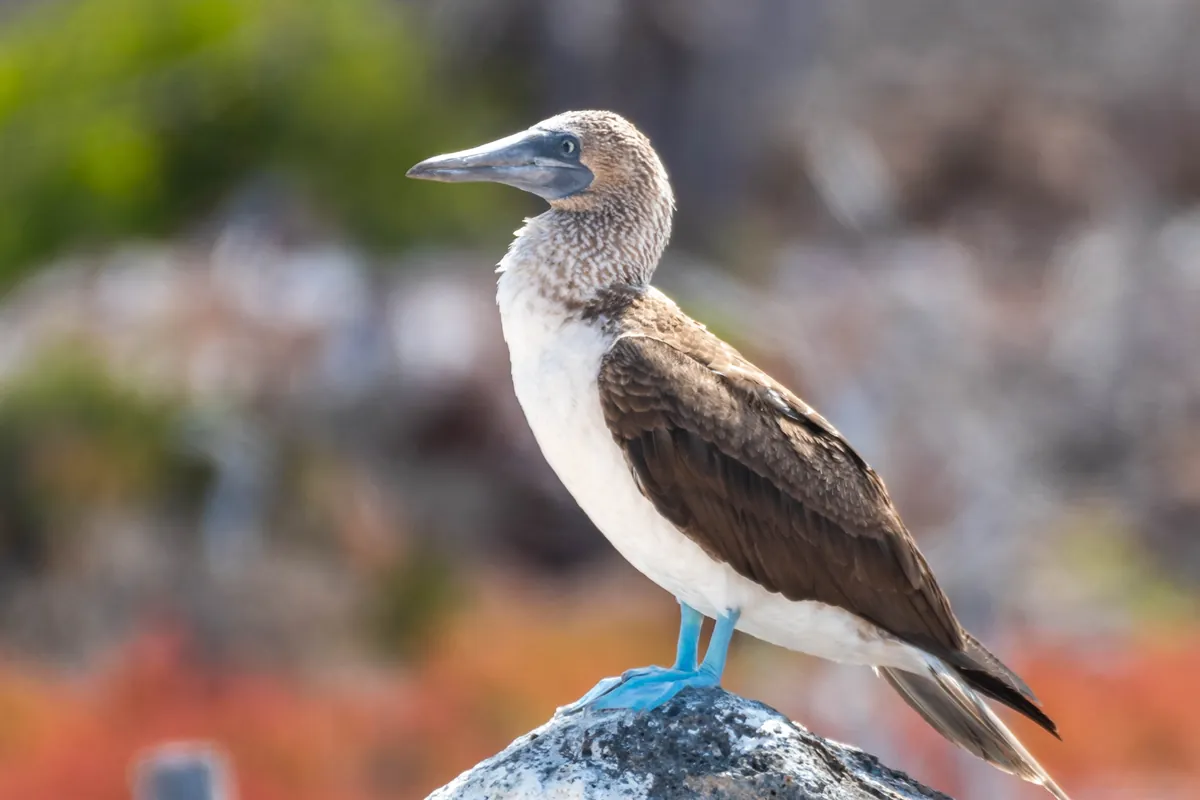 Photo: David Brito
The blue-footed booby is the bird most people picture when they picture Galápagos, and it earns that status. The archipelago holds one of the species’ most important breeding populations, the colonies sit at ground level a few steps off the trail, and the courtship dance is genuinely funny to watch. This page covers where to find them, what the dance means, and when the chicks show up.
Where you’ll see them
North Seymour holds the largest nesting colony in the archipelago, with Española close behind. Both islands sit on most classic cruise itineraries, and North Seymour is also a standard day trip from Santa Cruz. Because these birds breed throughout the year and nest on open ground, you do not need a lucky month for this one. Guides usually steer visitors around boobies sitting in the middle of the trail, not the other way round.
The 2012 archipelago-wide survey counted around 6,400 adults, down from the 20,000–30,000 estimated in the 1960s and 70s; it is still the latest full count, and the Galapagos Conservation Trust funds the monitoring that follows the colonies today. They are permanent residents. There is no wrong month for seeing them; the courtship peaks earlier in the year, which we break down below.
The courtship dance
The male picks a nest site and parades past the female, lifting his feet high with every step so she can judge the color. If she lingers, he presents her with a stone or a piece of nest material, spreads his wings, points his beak to the sky and whistles. She answers with a honk. That sky-pointing whistle is the image on half the postcards in Puerto Ayora.
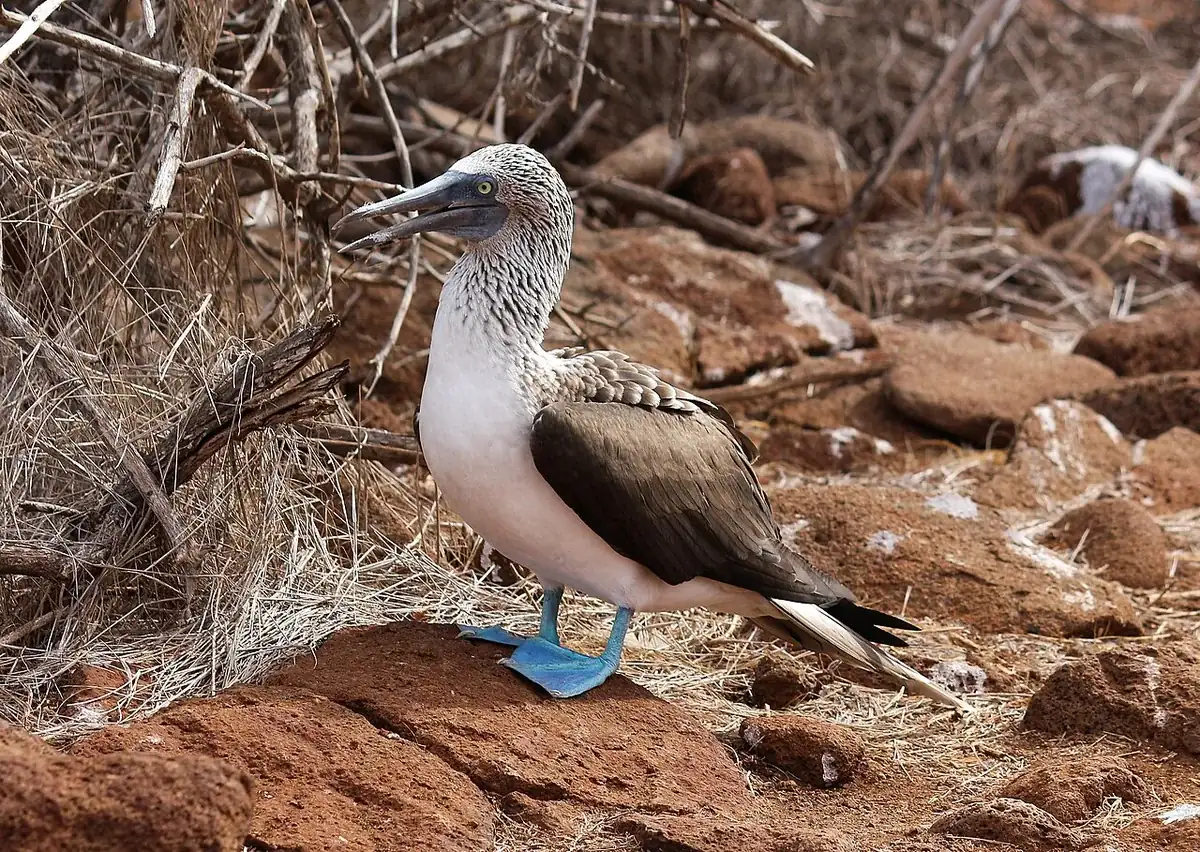
The blue is the whole message. Foot color comes from compounds in their fish diet, so a well-nourished booby has brighter feet, and females choose the bluest males. The feet shine brightest in young adults and fade a little with age, so color also works as an age signal.
Small details worth knowing
- There is no nest. The female lays her eggs straight onto bare ground, which is why the colonies are so easy to spot from the path.
- Boobies cool off by defecating on their own feet, a trick called urohidrosis. Chicks are usually plastered in the evidence.
- Females are slightly bigger than males and have larger pupils, which is how guides sex them at a glance.
- The name comes from the Spanish bobo, clown or fool, the word sailors used because the birds showed no fear and were absurdly easy to catch.
When to time a visit
Courtship gets going in late April on North Seymour and peaks in June and July, and chicks start hatching from July. In July on Española you can find four different nesting stages side by side, from fresh eggs to nearly grown chicks, and pairs keep raising young into November. If the dance is your priority, aim for May to August. If you just want close encounters, any month works.
The IUCN lists the species as Least Concern: the global population is estimated around 90,000 mature individuals (2019 estimate) with a stable trend, even though monitoring in Galápagos has documented population fluctuations. Pages that call the species endangered are out of step with the Red List.
The other two boobies
Galápagos has three booby species, and they divide the islands between them. The red-footed booby is the most numerous but the hardest to see, because it nests in trees on outlying islands like Genovesa. The Nazca booby is the big white one with the orange bill, and its chick-raising habits are grim in a way that fascinates every guide. Our complete Galápagos birds guide puts all three in context, and the wildlife calendar tells you which colony is doing what in your travel month.
Frequently asked questions
Where is the best place to see blue-footed boobies?
North Seymour, which holds the largest nesting colony and is a day trip from Santa Cruz, and Española. The colonies sit on open ground beside the trails and are active year-round.
When do blue-footed boobies dance?
Courtship starts in late April on North Seymour, peaks in June and July and continues into August. Chicks hatch from July. Any month gives close encounters; May to August gives the dance.
Why are their feet blue?
Pigments from their fish diet. A well-fed booby has brighter feet, females choose the bluest males, and the colour fades a little with age, so it also signals youth.
Sources
- Blue-footed booby conservation status, Birds of the World (Cornell Lab)
- Blue-footed booby, National Geographic
- Sea birds of Galápagos, Galápagos Conservancy
Last verified: October 2026