
Travel guide · Activities
Snorkeling in Galápagos: best sites, seasons and prices
Where to snorkel in Galápagos: the best sites by island and difficulty, water temperature by season, wetsuit advice, tour costs and the park rules that apply.
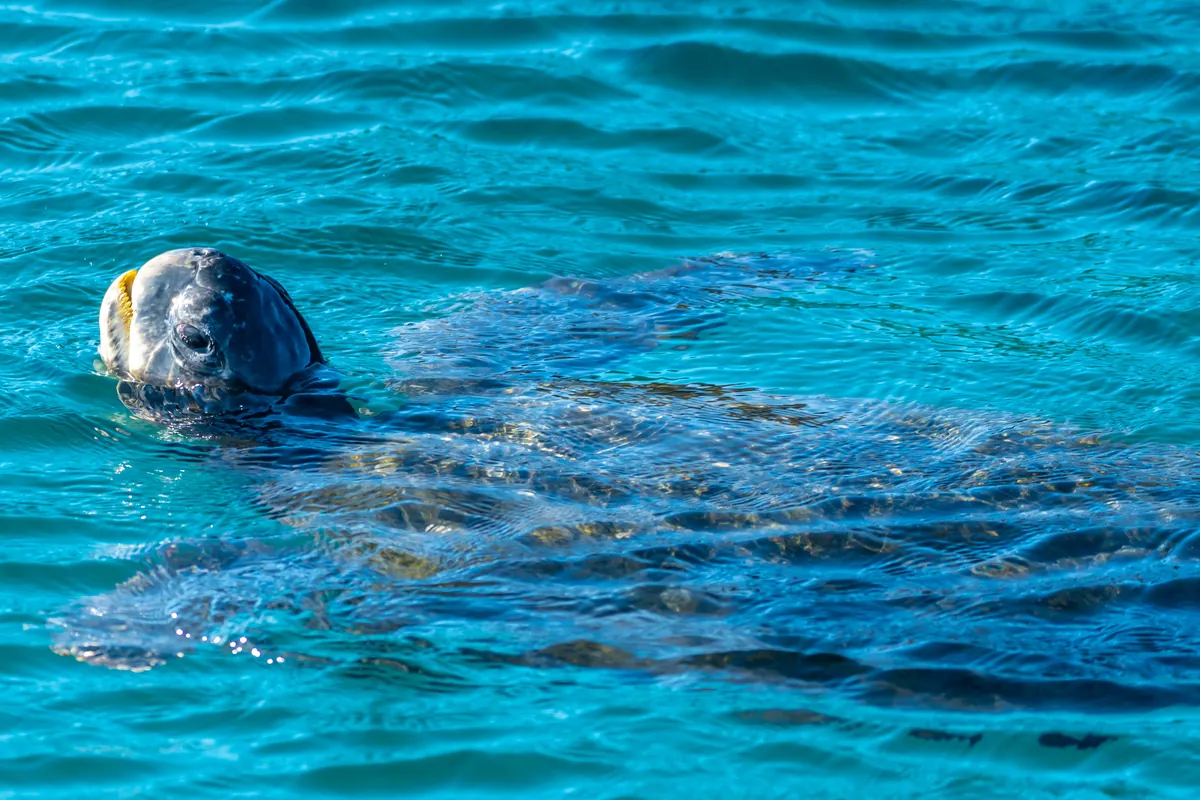
 Photo: Paul and Jill (CC BY 2.0) via Wikimedia Commons
Snorkeling is the single best value activity in Galápagos. Most of the animals people fly here for live at or near the surface: penguins, sea lions, turtles, whitetip sharks, schools of rays. This page covers where to get in the water, when the water behaves, what it costs, and the park rules that decide where you can swim at all.
Why snorkeling here is different
The animals show no fear. Sea lions come over to look at you, penguins torpedo past, turtles surface next to your mask, and juvenile sea lions in November famously play alongside swimmers at Champion islet off Floreana. The park rule that makes this work is a two-metre minimum distance from all wildlife, and a ban on touching or feeding anything. Keep the distance and the animals close it for you.
The shark question comes up every time. Fewer than a handful of incidents have ever been recorded in the archipelago, and the species you will actually meet while snorkelling, whitetip reef sharks and the occasional hammerhead at depth, want nothing to do with you. We tell guests to worry about sunburn, not jaws.
Long sessions beat quick dips
There is a pattern every guide knows. In the first half hour your brain is busy cataloguing: fish, turtle, ray, repeat. In the second you start noticing behaviour, the parrotfish grinding coral, the sea lion tracking your group out of curiosity. The reef hands over its real stories only after that: the hunting sequence, the territory dispute, the resting turtle that finally decides to move. If your trip offers one long, unhurried session instead of three short ones, take it. The species list stays the same, but what you understand triples.
When to go
The two seasons change the experience more than any site choice does:
- Warm season, December to May: water of 23–26 °C, calm seas and visibility at its best, often 18–30 m in good conditions. This is the easy snorkelling.
- Dry season, June to November: the Humboldt current drops the water to 19–22 °C and stirs the surface. Visibility falls to roughly 9–18 m as plankton-rich currents move in, but that same plankton drives the feeding activity (penguins, diving birds, sharks). You will want a 3 mm wetsuit for sessions longer than half an hour.
The sea is at its roughest from July to October, peaking August–September. Day tours to exposed sites get cancelled in that window; November is when the water settles and clarity comes back. If snorkeling is your priority, February to May is the sweet spot. Our month-by-month guide breaks this down further.
The best sites, by island
Santa Cruz. Tortuga Bay is the classic free option: a 2.5 km paved walk from Puerto Ayora, open 6:00–17:00 with last entry at 15:30. The open beach (Playa Brava) is too rough for swimming; the protected lagoon, Playa Mansa, is where you snorkel among whitetip sharks, rays and turtles. Kayaks rent by the hour there. Las Bachas, on the north shore, is a turtle nesting beach with a flamingo lagoon behind the sand. Boat day tours reach Borrero Bay (sea lions, sharks, penguins), Isla Eden (open-water snorkel, no landing) and Mosquera.
San Cristóbal. Kicker Rock is the headline: a 150 m volcanic wall with a channel you snorkel through, usually combined with Isla Lobos and a beach stop. Tours run 4–5 hours and cost from around $160–200. For free options, Playa Mann and La Lobería both have resident sea lion colonies a short walk or taxi from town, and Puerto Chino pairs a beach with snorkelling.
Isabela. Las Tintoreras is the half-day classic (around $80 for a 3-hour tour): a lava channel full of resting whitetip sharks, plus penguins and marine iguanas. Los Túneles, the lava-arch labyrinth, is the island’s standout and is sold as a combined tour with Kicker Rock from around $150.
Floreana and the far sites. Devil’s Crown, the drowned crater off Floreana, is the best coral snorkeling in the archipelago, with real current and surge, so it suits confident swimmers. Champion islet adds playful sea lions and the chance of the rare Floreana mockingbird from the boat. Note the adjacent Cormorant Point coral beach is a no-snorkel zone. Genovesa (Darwin Bay), Punta Vicente Roca (penguins, and sunfish if you are lucky) and Cabo Douglas (penguins and flightless cormorants hunting) are reached only on cruise itineraries.
Day tours or cruise?
Both work. Cruise snorkelers wake up at the site and often get two sessions a day; land-based travellers pay per tour, roughly $80 for a half-day trip like Tintoreras up to $160–200 for Kicker Rock, plus $50 per inter-island ferry leg if you island-hop (tourist fare since August 2026). Gear is included on nearly all cruises and on day tours; the stronger boats run serious programs, with shorty and full wetsuits and a naturalist in the water. Bringing your own mask saves the rental and fits better. See our packing list for the short version.
If snorkeling time is the point of the trip, the boat choice matters as much as the route. The best snorkel programs on the 16-guest boats (Sea Star, Galaxy Sirius, Endemic, Horizon, Ocean Spray among them) mean both shorty (3 mm) and full (5 mm) wetsuits on board and a naturalist who actually swims with the group; ask us which yachts carry full wetsuits on your dates. Land-based snorkellers should weigh a different trade: day tours to Bartolomé or Santa Fe leave early and take most of the day, so a trip built on free sites plus one or two paid tours swims less but spends far less. Neither is wrong; decide which you are before you book.
A note on expectations. Penguins are a bonus, not a guarantee: the population is under 2,000 birds, concentrated around Isabela and Fernandina, and even west-route boats find them patchy. Sea lions, turtles, rays and reef sharks, on the other hand, are near-certain at the right sites in any season. Build the week around the reliable list and treat the penguin as the lottery ticket.
Rules that matter in the water
- Stay two metres from every animal, and that includes your camera.
- No flash photography; professional and drone work needs separate park authorization.
- Sunscreen: the park restricts products containing oxybenzone and octinoxate. Use a mineral blocker or a rash guard.
- No touching, feeding or chasing. Guides enforce this and the park fines operators who let it slide.
- Do not take shells, sand or coral, and carry your rubbish out.
Is it safe for kids and weak swimmers?
Yes, with the right site. Calm-water lagoons (Playa Mansa, Bachas, the Tintoreras channel) are shallow and sheltered; exposed sites like Kicker Rock and Devil’s Crown need swimming strength. Most family-oriented boats carry shorty wetsuits and float aids, and guides get in the water with children. Our Galápagos with kids guide covers ages and sites in detail. For time on the water without a mask, see the kayaking and paddleboarding and surfing guides.
Frequently asked questions
Where is the best snorkelling in Galápagos?
Devil’s Crown off Floreana for coral and current, Kicker Rock for sharks and rays, Los Túneles and Las Tintoreras on Isabela for calm water with whitetips, and Tortuga Bay’s lagoon for a free session from Puerto Ayora.
Do I need a wetsuit to snorkel in Galápagos?
From June to November, yes for sessions longer than half an hour, when water runs 19–22 °C. From December to May most people snorkel without one; the water sits at 23–26 °C.
How much does a snorkel tour cost?
Roughly US$80 for a half-day trip like Las Tintoreras, US$160–200 for Kicker Rock and around US$150 for Los Túneles. Gear is included on nearly all tours; check current rates.
Sources
- Visiting rules, Galápagos National Park Directorate
- General visiting rules, Resolution 0000007 (Official Register 515), full text (PDF)
- Galápagos weather and seasons, International Galápagos Tour Operators Association (IGTOA)
- Inter-island ferry fares from 11 August 2026 (Ministry of Transport resolution), Bitácora EC
Last verified: October 2026