
Travel guide · Islands
Española Island: the albatross, Gardner Bay and the oldest island in the south
Española Island, Galápagos: the waved albatross colony at Punta Suárez, Gardner Bay's beach and sea lions, the blowhole, the albatross calendar (April…
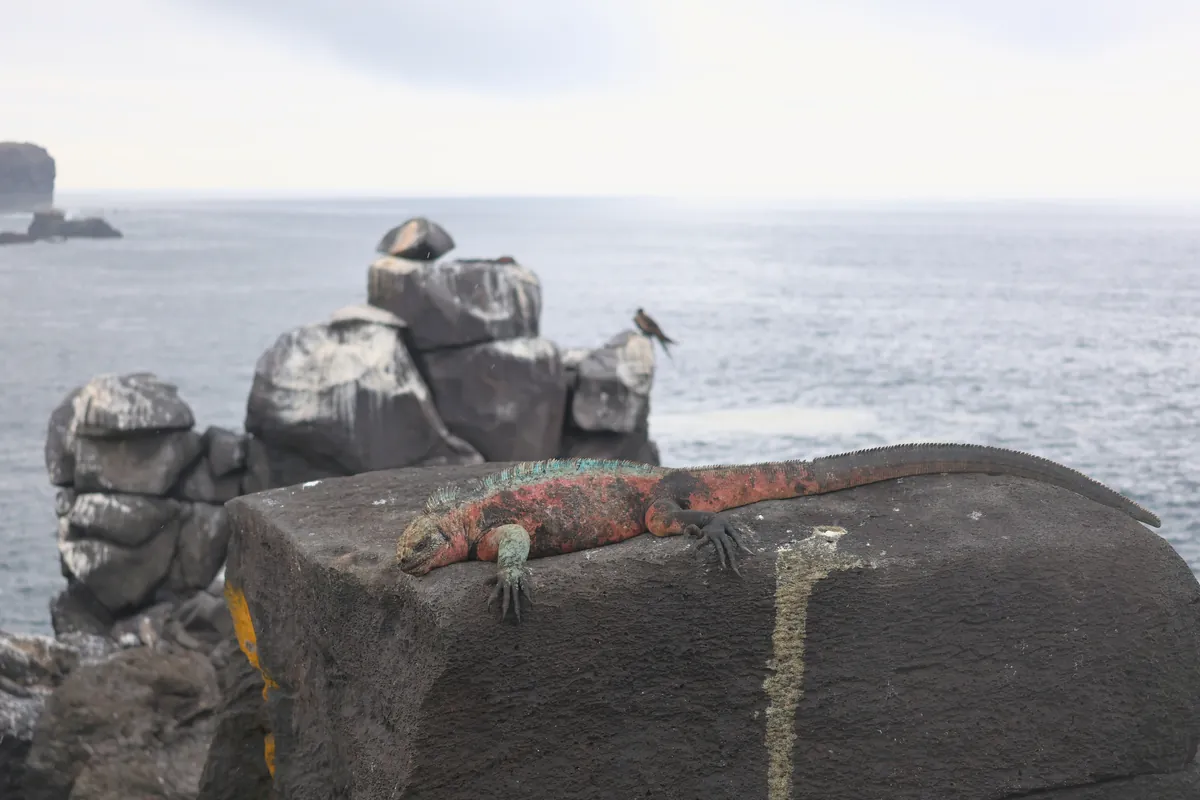 Photo: David Brito
Española is the southernmost island in Galápagos and one of the oldest: four million years of isolation have produced species found nowhere else on Earth. Its headline act is the waved albatross, whose entire world population comes ashore here to breed, and its white-sand Gardner Bay is the most photographed beach in the archipelago. There is no town, no hotel and no ferry. Española is visited on cruises, which keeps it quiet, and the albatross calendar decides when to go.
Key facts
| Where | The far south-east of the archipelago, a long overnight sail from the central islands |
| Size | About 60 km², flat and low; highest point 206 m |
| English name | Hood, after Admiral Samuel Hood |
| Age | Around 4 million years, among the oldest islands, eroded flat by time |
| Only here | The waved albatross’s only breeding colony; the Española mockingbird; the Española lava lizard; the Española giant tortoise, back from 15 survivors |
| Visitor sites | Punta Suárez (the wildlife walk and the blowhole) and Gardner Bay (the beach); Osborn and Gardner islets for snorkelling |
| How to get there | Cruise only, on southern and eastern itineraries: 1,082 departures on 27 yachts in our live schedule, from US$1,557 per person |
The albatross calendar
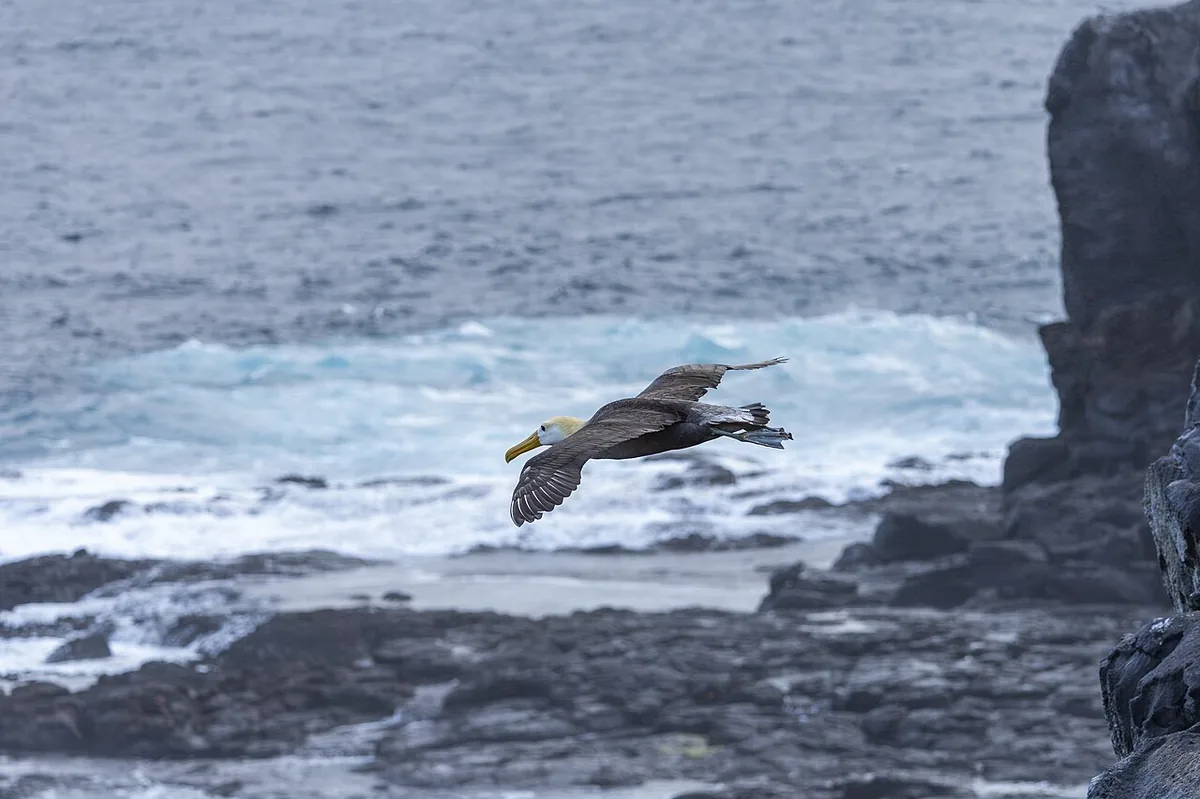
Season matters more on Española than on any other island. The waved albatross spends the first months of the year at sea off Peru and returns to this one island to breed.
| Months | What the albatross are doing |
|---|---|
| Late March to April | The adults arrive and pairs reunite with the courtship dance: bill-circling, clacking, sky-pointing |
| Mid-April to late June | Eggs laid, one per pair, incubated on bare ground |
| July to November | Chicks hatch and grow; the colony is at its fullest and noisiest |
| December to early January | The fledglings leave; by mid-January the island is empty of albatross |
| January to March | No albatross. The island still has boobies, iguanas and sea lions, but not the headline act |
If the albatross is the reason you are going, book a cruise that reaches Española between April and December, and the later months give you chicks as well as adults. Our waved albatross guide has the species in full, and best time to visit places it in the archipelago’s calendar.
The visitor sites and what you do at each
| Site | Landing | What you do | Cruises in our schedule |
|---|---|---|---|
| Punta Suárez | Dry, onto rocks | A loop trail of about 2 km and two hours through booby colonies, albatross nests and marine iguanas to the blowhole | 1,082 departures, 27 yachts |
| Gardner Bay | Wet, onto white sand | Beach, sea lions, swimming and snorkelling off the rocks | 1,082 departures, 27 yachts |
| Gardner and Osborn islets | No landing | Snorkelling from the panga: turtles, rays, reef fish, sea lions | 300 and 335 departures |
Punta Suárez
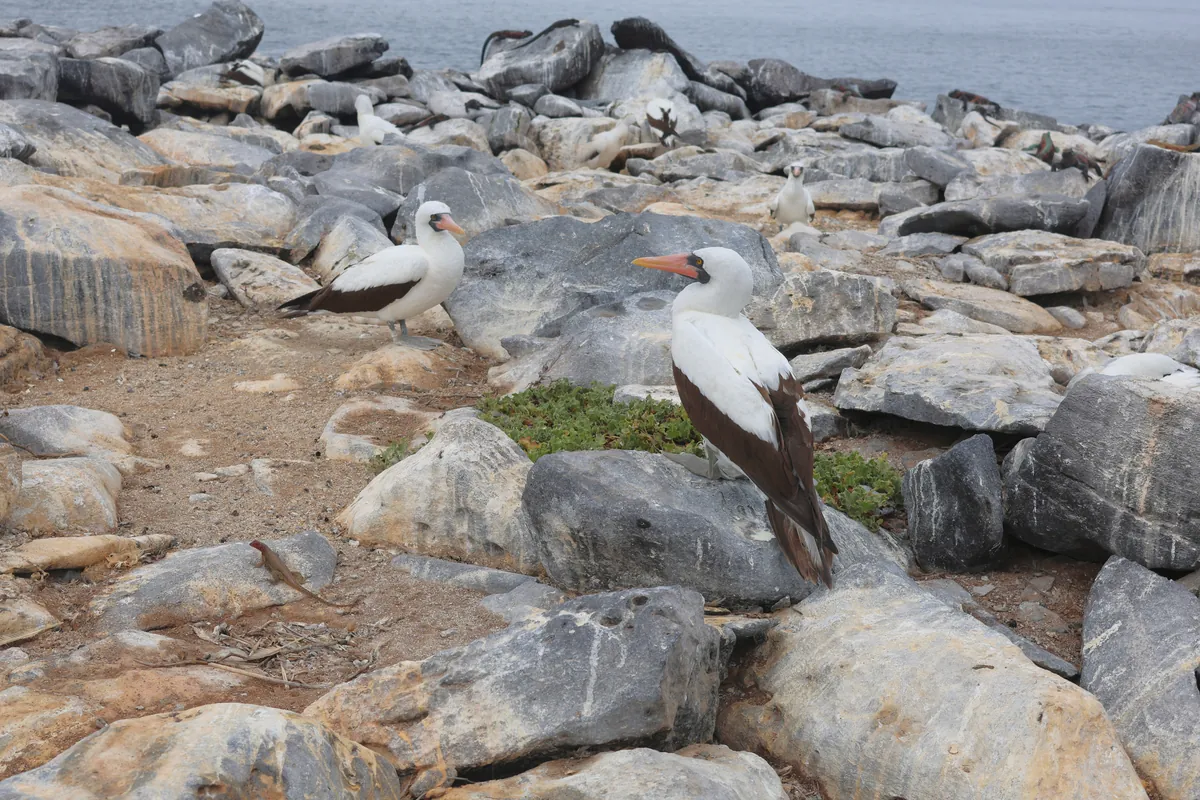
The best wildlife walk in Galápagos, and we do not say that lightly. The trail starts among sea lions and marine iguanas, which on Española turn red and turquoise in the breeding season from January to March, and passes through one of the largest blue-footed and Nazca booby colonies in the islands. Nazca boobies nest from November to February, and you may see their siblicide: two eggs, and the elder chick pushes the younger out of the nest. The trail then climbs through the albatross colony to the cliffs, where red-billed tropicbirds and swallow-tailed gulls nest in the crevices and the soplador, a blowhole, fires sea spray 20 metres and more into the air when the swell is running. The cliff edges are real. Stay on the marked trail.
Gardner Bay
A wide white beach on the north coast with a wet landing: swimming, a large sea lion colony dozing on the sand, and snorkelling off the rocks at the point, where sea lions come to play. The beach doubles as a nursery: green turtle hatchlings emerge here from April to June. No trails, no shade, so it is a beach stop and a good one after the morning’s walk. Hood mockingbirds, the tamest in the islands, will investigate your bag.
Wildlife highlights
The waved albatross is the reason boats come: a 2.3-metre wingspan, a courtship dance that circles and clacks, chicks that fledge and then spend up to six years at sea before returning, and a world population that breeds almost entirely on this one island. Around it: the Española mockingbird, which approaches visitors rather than fleeing; marine iguanas in breeding colours; Nazca and blue-footed boobies; swallow-tailed gulls; Galápagos hawks; and the Española giant tortoise, rebuilt from 15 survivors through the breeding programme at the Charles Darwin Research Station to more than 2,000 animals on the island, though they live inland, away from the visitor sites.
How Española is visited
By cruise, on southern and eastern itineraries, typically as a full day: Punta Suárez in the morning, Gardner Bay after lunch, with snorkelling at the islets between. Because the island is far from the central cluster, it appears on the longer routes; many 4- and 5-day itineraries skip it. Some San Cristóbal day boats run long trips to Española in season; expect two hours each way and confirm that the albatross are in residence for your dates.
Costs are the standard set: the US$200 park entry for foreign adults, paid on arrival, and the US$20 TCT card before your flight, both in the entry fee guide. Since Española requires a boat, the cruise vs land guide is the right next read if you have not chosen a style yet, and how many days shows which trip lengths reach the south.
Who Española is for
- Birders: the albatross colony is a single-island, single-species, world-only event. If it is on your list, this is the only address.
- Photographers: the blowhole, the booby colonies and the albatross dance in one loop, with the light of the south.
- Beach and sea lion people: Gardner Bay is the archipelago’s postcard beach, with the colony to prove it.
- Not for: land-based travellers, short cruises, or anyone unwilling to let the albatross season (April to December) set the date of the trip.
Frequently asked questions
When can you see albatross on Española?
From late March or April, when the adults return, to December, when the last fledglings leave. July to November gives you both adults and chicks. From January to March there are no albatross on the island.
Can you visit Española Island without a cruise?
Not in practice. There is no ferry, hotel or town. A few San Cristóbal day boats run long trips in season, with two hours of open water each way; cruises on southern and eastern routes are the normal way.
What is the blowhole at Punta Suárez?
A fissure in the lava shelf at the end of the trail where incoming swell is forced through a gap and shoots upward as a column of spray, often more than 20 metres high in the cool season when the sea is up.
Are there giant tortoises on Española?
Yes, more than 2,000, descended from 15 survivors bred for decades at the Charles Darwin Research Station. They live in the island’s interior and are not seen on the visitor trails.
Which cruises go to Española?
Southern and eastern itineraries, usually of five days or more. In our live schedule 1,082 departures on 27 yachts include the island; filter the cruise finder by Española to see the dates.
Related reading
The species that defines the island is in the waved albatross guide; the two boobies of the trail are in the Nazca booby and blue-footed booby guides; and the mockingbird family is in the Galápagos mockingbird guide.
Sources
- Española Island, Galápagos Conservancy
- Waved albatross, Galápagos Conservancy sea birds
- Visitor sites, Galápagos National Park Directorate
Last verified: October 2026