
Travel guide · Wildlife
Galápagos giant tortoise
Where to see Galápagos giant tortoises in the wild and at breeding centers, when they mate and nest, the real population numbers and how the recovery works.
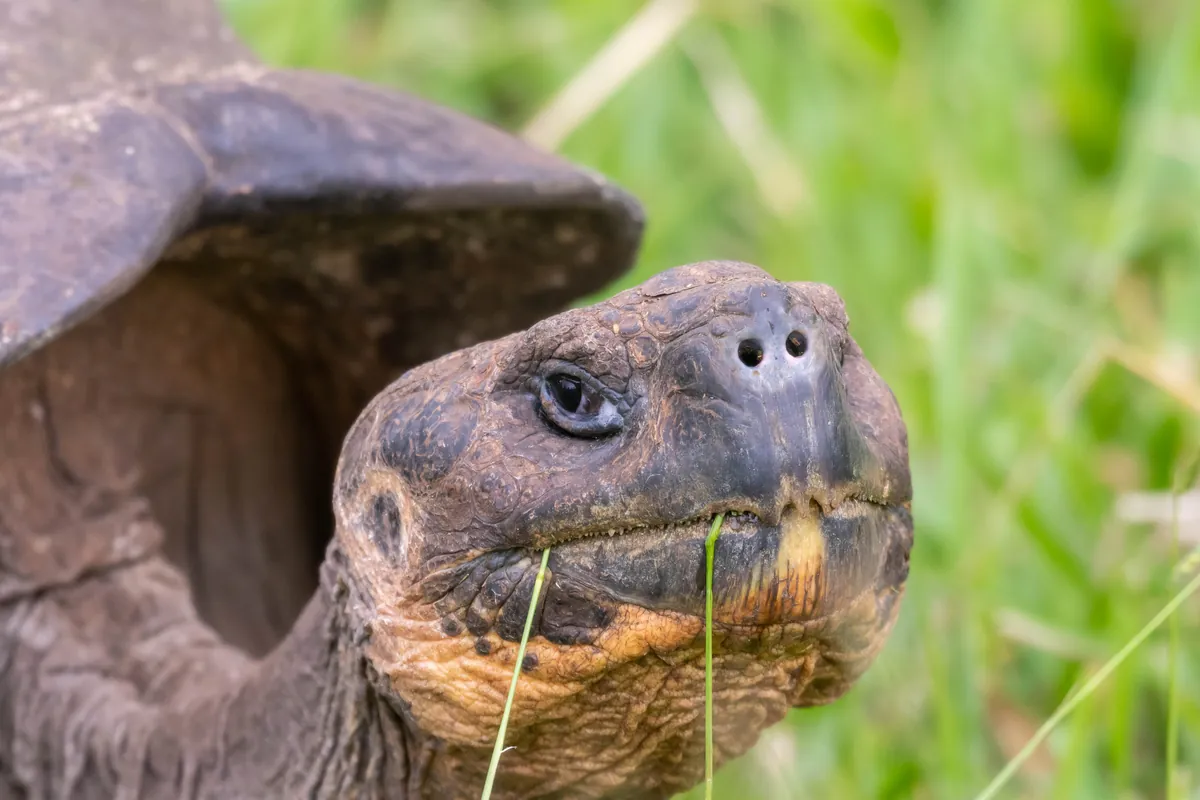 Photo: David Brito
The animal the islands are named after, and the longest-lived wild creature most visitors will ever stand next to. It came close to being the story of an extinction instead: whalers and pirates cut a population of 200,000–300,000 down to a fraction of that before anyone started counting. This page covers where to see tortoises, when to time a visit, and what the recovery actually looks like on the ground.
Where to see them
Wild tortoises live in the humid highlands, so your options split between wild encounters and breeding centers:
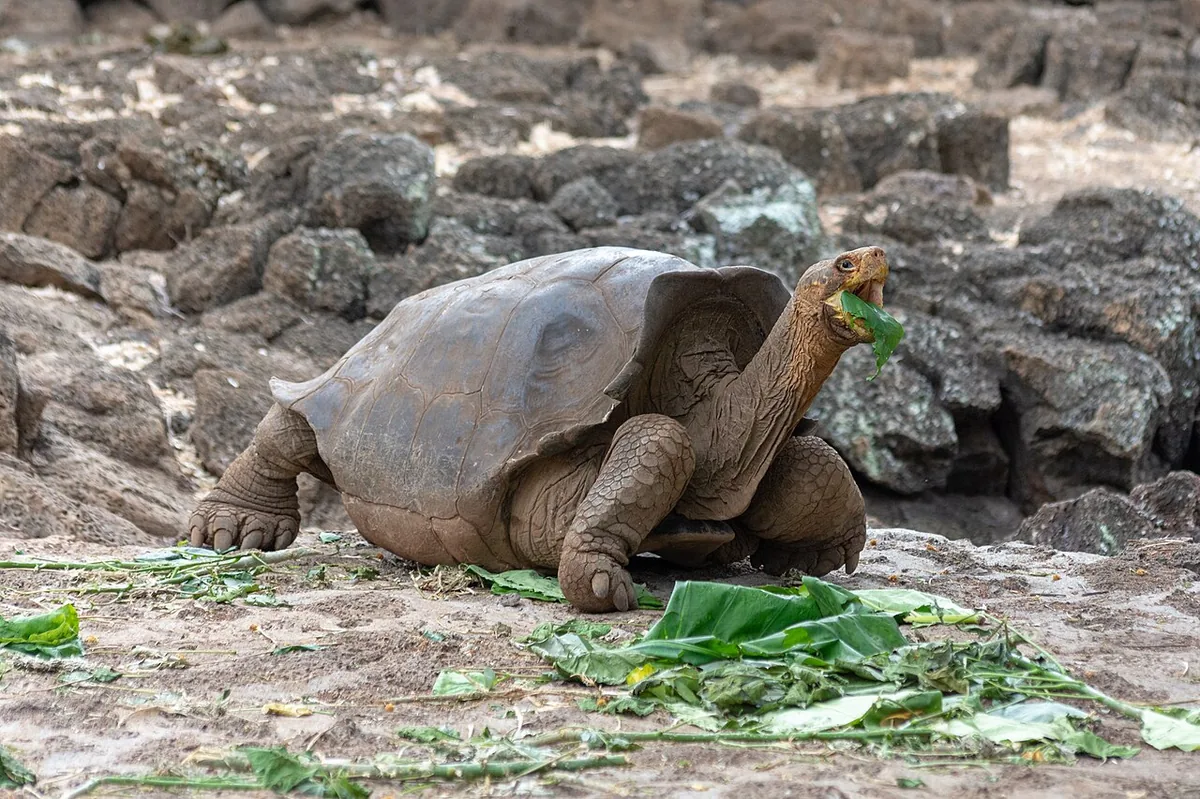
- Santa Cruz highlands. Reserva El Chato, about 22 km from Puerto Ayora (roughly 20 minutes by taxi), has two zones, La Caseta and Cerro Chato, with mud-wallow ponds where the tortoises gather, fullest after the rains and busiest with adults in the cool season. The neighboring Rancho Primicias offers the same setup, and both sit beside explorable lava tunnels. This is the easiest wild-tortoise visit in the archipelago.
- Breeding centers. The Charles Darwin Research Station in Puerto Ayora has run the program since 1965. Isabela’s Arnaldo Tupiza center, a 1.5 km walk from Puerto Villamil, holds five species native to the island’s volcanoes. San Cristóbal’s Cerro Colorado center opened in 2003 and works with that island’s own lineage.
- The wild strongholds. The largest wild population lives on the slopes of Wolf Volcano in northern Isabela, several thousand animals (recent estimates of 1,000–2,000), with no visitor access. Española holds the second-biggest single-site population, 900–1,000 animals.
Whether you reach the highlands by cruise itinerary or on a land-based day, both work; the trade-offs are in our cruise vs land guide.
When to see them
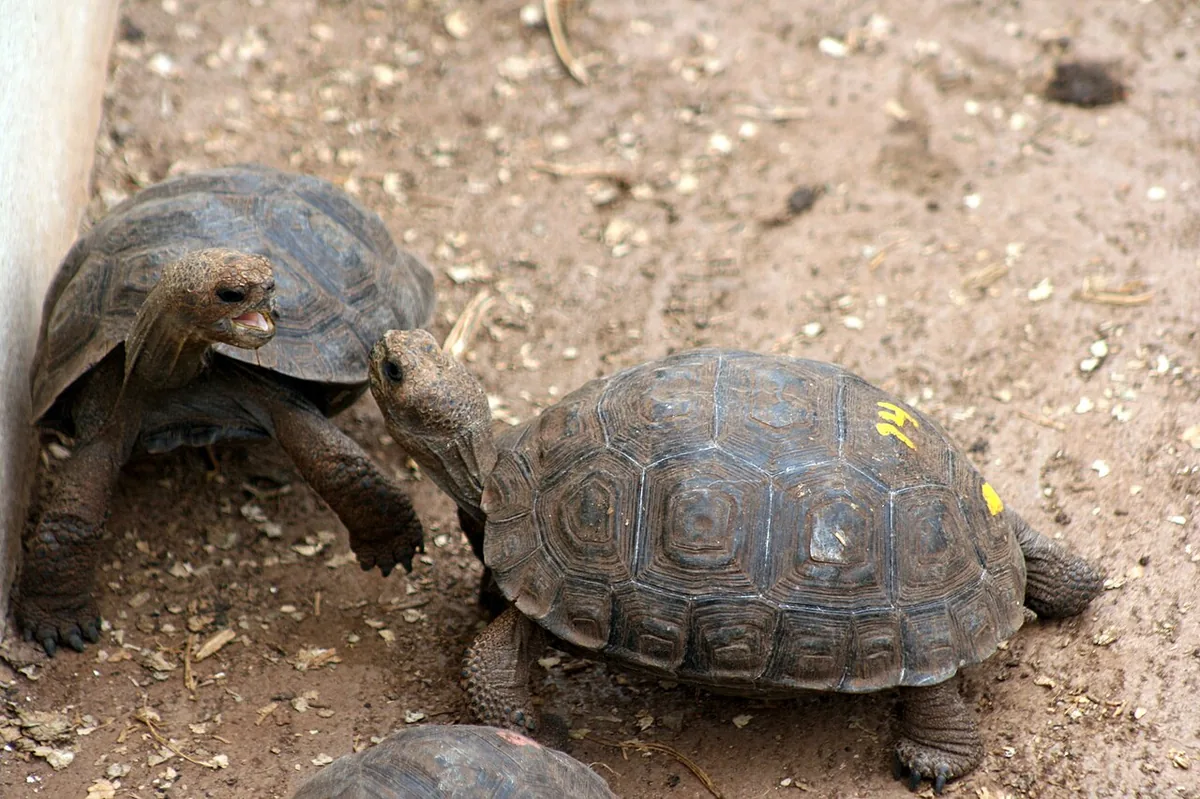
Mating runs January to May, peaking March–May. After mating, females make their own slow migration down to nest: on Santa Cruz they descend to the lowland plains in June, and nesting continues from November. Eggs incubate four to eight months and hatch December to April; a hatchling is about 6 cm long and spends its first 10–15 years in the lowlands before climbing to the highlands like its parents. For the wider seasonal picture, see the best time to visit Galápagos; the June descent is covered in our June page.
At the reserves and centers, it is tortoise season all year.
The population, in real numbers
Census numbers vary by source and year, because counting tortoises across eleven volcanoes is hard. The honest range in our data: field estimates run from 15,000–20,000 up to around 30,000; the long-standing baseline is 20,000–25,000 wild tortoises (galapagos.org), and Galápagos Conservancy’s 2026 annual report cites more than 35,000 across the archipelago. Galápagos Conservancy counts 15 identified species, of which 12 survive (six Critically Endangered, three Endangered, three Vulnerable, two extinct on the IUCN Red List). What survives is 10–15% of the historical population of 200,000–300,000.
Per-species figures make it clearer:
- Wolf Volcano tortoise: several thousand animals (recent estimates 1,000–2,000), listed Vulnerable.
- Eastern Santa Cruz tortoise: around 250 at description (2015); a 2018 census estimated ~500, Critically Endangered.
- Española tortoise: 900–1,000, rebuilt from just 14 survivors by captive breeding.
How the recovery works
Teams collect eggs from vulnerable populations (Pinzón, Santiago and Santa Cruz among them), incubate them artificially, and keep the young protected until about five years old, when they can survive rats and hawks. Pinzón had fewer than 100 tortoises left when the National Park was created; its program was one of the first, and the island’s tortoises breed unaided again today.
The current frontier is Floreana. That island’s tortoise was hunted out by the 1840s, but DNA work found its descendants mixed into the Wolf Volcano population (86 animals identified in 2008); a 2015 expedition to Wolf Volcano identified 23 founders by DNA, and selective breeding began in 2017 at the Santa Cruz breeding center, producing by 2025 a cohort numbering in the hundreds (galapagos.org). In February 2026, 158 Floreana-lineage tortoises (aged 12–14 years, raised at the Santa Cruz breeding center) were released onto Floreana, where rats and feral cats are expected to be fully eradicated before the tortoises reach reproductive age in 15 to 20 years. Fernandina’s species, written off for 112 years, resurfaced in 2019 as a female nicknamed Fernanda.
Not every story ends well. Lonesome George, the last Pinta tortoise, was found alone in 1971 and died in 2012 with no offspring. And volcanoes keep the pressure on: after a 1998 eruption on Cerro Azul, rangers rescued 21 tortoises, 11 of them airlifted out by helicopter.
Details worth knowing
- Adults weigh up to 420 kg (919 lb) and commonly pass 100 years in the wild; records run to 152 years, and captive animals have neared 170.
- A big tortoise eats up to 80 lb of vegetation a day. Juveniles eat roughly a sixth of their body weight daily.
- They hiss when they pull the head in. It is expelled air, not temper.
- Shell shape follows food: domed in the humid highlands, saddleback with a long neck opening on dry cactus islands.
- Tortoises are buoyant and can go months without food or water, which is how the lineage arrived: a continental relative (of the Chaco tortoise of Argentina and Paraguay) drifted across more than 1,000 km of ocean 2–3 million years ago, possibly a single pregnant female. One captive male, Diego, has since sired an estimated 800 offspring.
Frequently asked questions
Where is the best place to see giant tortoises in the wild?
The Santa Cruz highlands: the El Chato reserve and Rancho Primicias, about 20 minutes by taxi from Puerto Ayora, where tortoises gather in the mud wallows, most of all after the rains.
How many giant tortoises are left in Galápagos?
Estimates range from 15,000 to more than 35,000 depending on the source and year; the long-standing reference is 20,000–25,000 wild animals. Fifteen species have been identified, of which twelve survive.
How long do Galápagos tortoises live?
Regularly past 100 years in the wild, with records of 152 years, and captive animals approaching 170. Adults can weigh up to 420 kg.
Sources
- Giant Tortoise Restoration Initiative, Galápagos Conservancy
- Floreana giant tortoise release, Galápagos Conservancy (February 2026, PDF)
- Biodiversity of Galápagos, Galápagos Conservancy
Last verified: October 2026