
Travel guide · Activities
Diving in Galápagos: day trips, liveaboards and the Wolf–Darwin circuit
Galápagos diving explained: day trips from Santa Cruz and San Cristóbal vs the Wolf and Darwin liveaboard circuit, sites, conditions, costs and park rules.
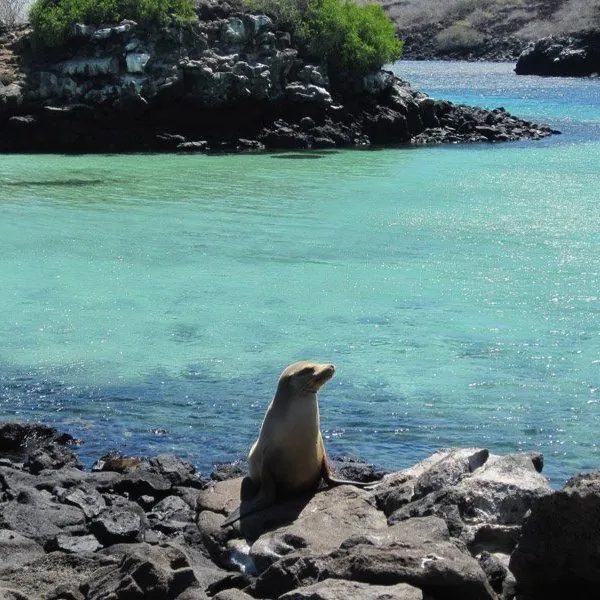
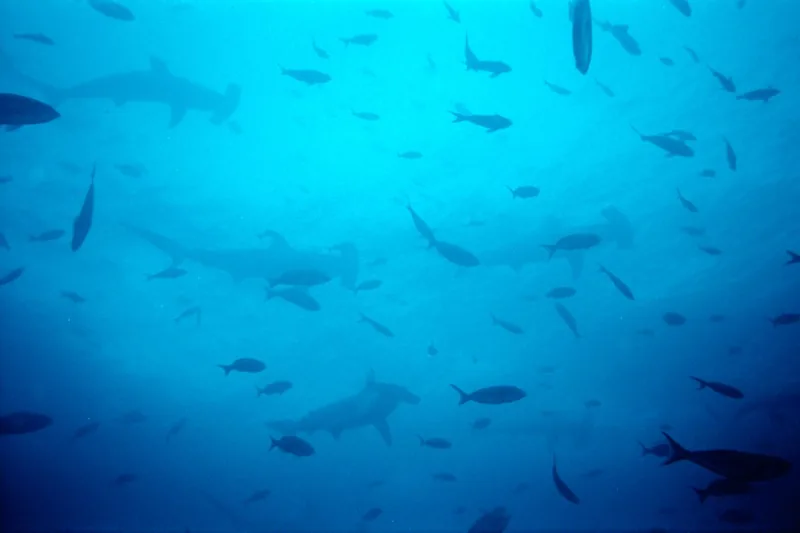
Galápagos is a current-driven, big-animal dive destination: schools of scalloped hammerheads, Galápagos sharks, manta rays, penguins and, in season, whale sharks. The marine reserve is one of the best places in the world to see hammerheads. But the diving splits into two completely different trips, and choosing wrong is an expensive mistake. This page separates them.
Day trips vs liveaboard: the fork in the road
Day trips run from the inhabited islands: Santa Cruz for the central sites and San Cristóbal for Kicker Rock. You sleep in a hotel, dive by day, and reach genuinely good sites within a 1–2 hour boat ride. Costs run from around $150 per diver per day with lunch; a guided snorkel tour on the same boat is roughly $100.
Liveaboards are dive cruise boats that never come back to port. They are the only vessels allowed to reach Darwin and Wolf, the two remote northern islands where the archipelago’s most famous diving happens. If Darwin and Wolf are the reason you are coming, no amount of day trips substitutes.
Everything else about the choice follows from that: day trips cost a fraction, let you mix dive days with land activities, and suit divers travelling with non-divers. Liveaboards cost cruise money, require you to be a confident diver, and put you in the water with the schools of hammerheads people write books about.
The day-trip sites
- Kicker Rock (San Cristóbal): the 150 m tuff cone with a split channel. Maximum depth around 27 m (88 ft), best visibility over 12 m. Hammerheads, Galápagos sharks, eagle rays, turtles.
- Cousins Rock (off Santiago): 3–27 m deep with 9–18 m visibility, moderate current and surge in the shallows. An advanced wall dive with black coral, seahorses, octopus and hammerheads.
- Mosquera (between Baltra and North Seymour): sandy bottom at 15–18 m scattered with garden eels, a wall running into the deep, depths 6–27 m and visibility averaging 12–15 m. Hammerheads patrol here.
- Pinzón: for experienced divers there is a deep drop-off wall with sharks, manta and stingrays, lobster and seahorses.
- Albany Rock and Roca Blanca (Santiago area): Albany maxes around 30 m with 12–21 m visibility; Roca Blanca, open to divers only since 2012, is rarely visited and known for encounters with six shark species, mantas, eagle rays and sea lions.
- Cabo Marshall / “Ciudad de las Mantas” (northeast Isabela): plankton-rich water where giant mantas feed; depths to 40 m, visibility 6–21 m, always a drift dive along the coast.
- Punta Vicente Roca (west Isabela): the classic sunfish site, plus penguins diving around you.
Fondeadero, near Santa Fé, is one of the very few night-dive sites in the archipelago: protected from wind and current, with fluorescent plankton and curious fur seals.
Certifications, experience and what “advanced” means here
Be honest with yourself about the numbers. Most Galápagos day-trip sites run deeper than tropical-resort reefs (25–30 m at Kicker Rock), with current that moves you along the wall and thermoclines that cut visibility in a few metres of depth change. Day operators typically want open-water certification plus recent experience; liveaboards to Darwin and Wolf expect dozens of logged dives, comfort in current and blue water, and a guide who stays within arm’s reach. Dive insurance is expected, not optional, and the park’s one-guide-per-eight-divers ratio exists precisely because conditions here are demanding.
Timing matters as much as paperwork. The cool season (June–November) brings the big-animal aggregation: whale sharks at the northern islands, hammerheads in force, 19–22 °C water and the strongest thermoclines. The warm season (December–May) is calmer and clearer, with 23–25 °C water, but fewer pelagics in the north. Divers who want both schools and comfort split the difference in the shoulder months. September is the coldest and roughest; it is also, not coincidentally, when the shark action at the northern islands peaks with the Humboldt.
Darwin and Wolf: the liveaboard only zone
Darwin and Wolf sit more than 160 km northwest of Isabela, tips of extinct undersea volcanoes that rise from deep water. No landings are allowed on either island; the land is for birds (the vampire finch lives only on Darwin and Wolf), and the diving is why boats make the long sail north.
- Whale sharks pass the northern waters from June to November, with the Humboldt current; females reach up to around 14 metres.
- Darwin’s towers (the famous Darwin’s Arch collapsed in 2021) sit off the southeast tip of Darwin in 9–37 m of water, with 12–24 m visibility and always a moderate to heavy current.
- El Arenal, below the former arch, is a sandy slope at roughly 14–37 m with cleaning stations: hammerheads, whale sharks, Galápagos and blacktip sharks, dolphins and walls of jacks.
- Wolf’s sites are named for what they do: Punta Shark Bay (hammerheads and Galápagos sharks; one of the best dive sites in the world), El Derrumbe (gentle slopes), The Cave (walls and swim-throughs) and La Banana (caverns and tunnels from 9 to 37 m).
- Conditions are challenging: current, swell and limited visibility at some sites. These dives are not suitable for beginners; Wolf’s dives are rewarding but demanding.
What the park requires
The rules matter because they shape your trip:
- One certified dive guide per 8 divers, maximum, is mandatory.
- Daily dive boats are capped at 12 passengers per permit.
- Diving must finish by 17:00; night dives run 18:00–22:00 only at designated sites.
- All diving is with licensed operators; the two-metre wildlife rule and the no-flash rule apply underwater too.
What it costs
A day of diving with two tanks and lunch runs from about $150 from Santa Cruz or San Cristóbal. Liveaboards are priced like cruises, because that is what they are: 7-night dive itineraries run from roughly $5,200 to $7,400 per person (the Aqua, which we book, sits at the lower end), and remember flights, the $200 park fee, the $20 transit card and tips sit on top. Liveaboard guests often use the fixed-price flight packages the dive operators sell with Avianca (roughly $525–575 round trip in 2026). Water runs 19–25 °C depending on season; bring or rent a 5 mm wetsuit, 7 mm if you feel the cold, because there are real thermoclines.
If you are not sure which side of the fork you are on, tell us your certification level and dates and we will say plainly which trip makes sense. Our snorkeling guide covers the surface-side option, and the hammerhead page explains what the northern schools are doing down there.
Frequently asked questions
Do I need to be an advanced diver for Galápagos?
For day trips, open-water certification plus recent experience is usually enough, though sites run deeper and with more current than tropical reefs. For Darwin and Wolf liveaboards, expect Advanced Open Water, dozens of logged dives and comfort in strong current.
How much does diving cost in Galápagos?
Day trips from about US$150 with two tanks and lunch from Santa Cruz or San Cristóbal. Seven-night dive liveaboards run roughly US$5,200–7,400 per person, plus flights, fees and tips.
When is the best time to dive in Galápagos?
June to November for big animals: whale sharks, dense hammerhead schools, 19–22 °C water and thermoclines. December to May is calmer and clearer with fewer pelagics in the north.
Sources
- Special Regulation for Tourism in Protected Areas (RETANP), Ministry of Environment (PDF)
- General visiting rules, Resolution 0000007 (Official Register 515), full text (PDF)
- Visiting rules, Galápagos National Park Directorate
Last verified: October 2026