
Travel guide · Islands
Darwin and Wolf: the dive-only islands at the top of the map
Darwin and Wolf guide: dive-only northern islands, whale sharks and hammerhead schools, the 2021 Darwin's Arch collapse, and what a liveaboard requires.
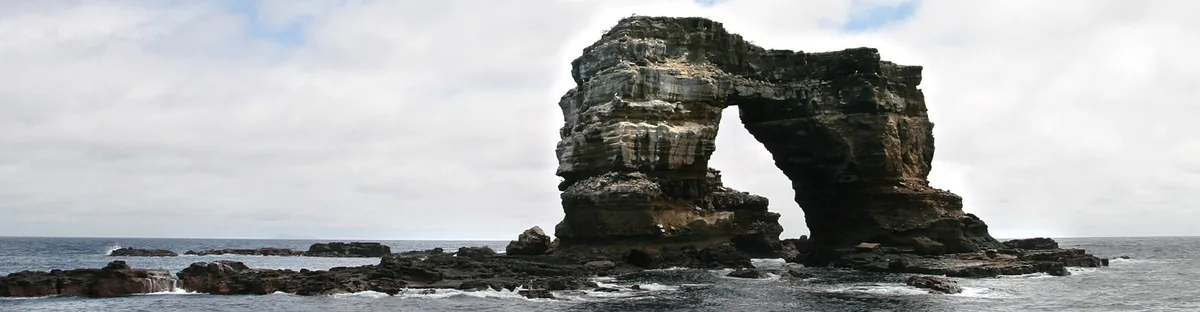
Darwin and Wolf sit in the far north of the archipelago, more than 100 miles northwest of Isabela, and they host the most celebrated diving on the planet: enormous schools of scalloped hammerheads, whale sharks in season, Galápagos sharks, dolphins and pelagics in numbers that no other site on Earth reliably matches. They are also the most restricted islands in Galápagos. No landings are permitted, and no regular cruise goes there. Only dedicated dive liveaboards reach them, and only certified, experienced divers.
Key facts
- Darwin is the archipelago’s northernmost island, the tip of a huge extinct underwater volcano that rises roughly 1,000 meters (over half a mile) from the seafloor. Wolf is the remains of another, rising more than 3,200 feet from the seabed. Both are uninhabited.
- No land visits are permitted under park policy. The islands are closed to non-diver visitors, and even divers never set foot ashore.
- Access is by dive liveaboard only: 7- to 8-night itineraries that sail about 14 hours northwest from Baltra or San Cristóbal and run 3 to 4 dives per day.
- Requirements are real: Advanced Open Water certification, typically 50+ logged dives, and a Nitrox endorsement. Currents are strong and surface conditions can be heavy.
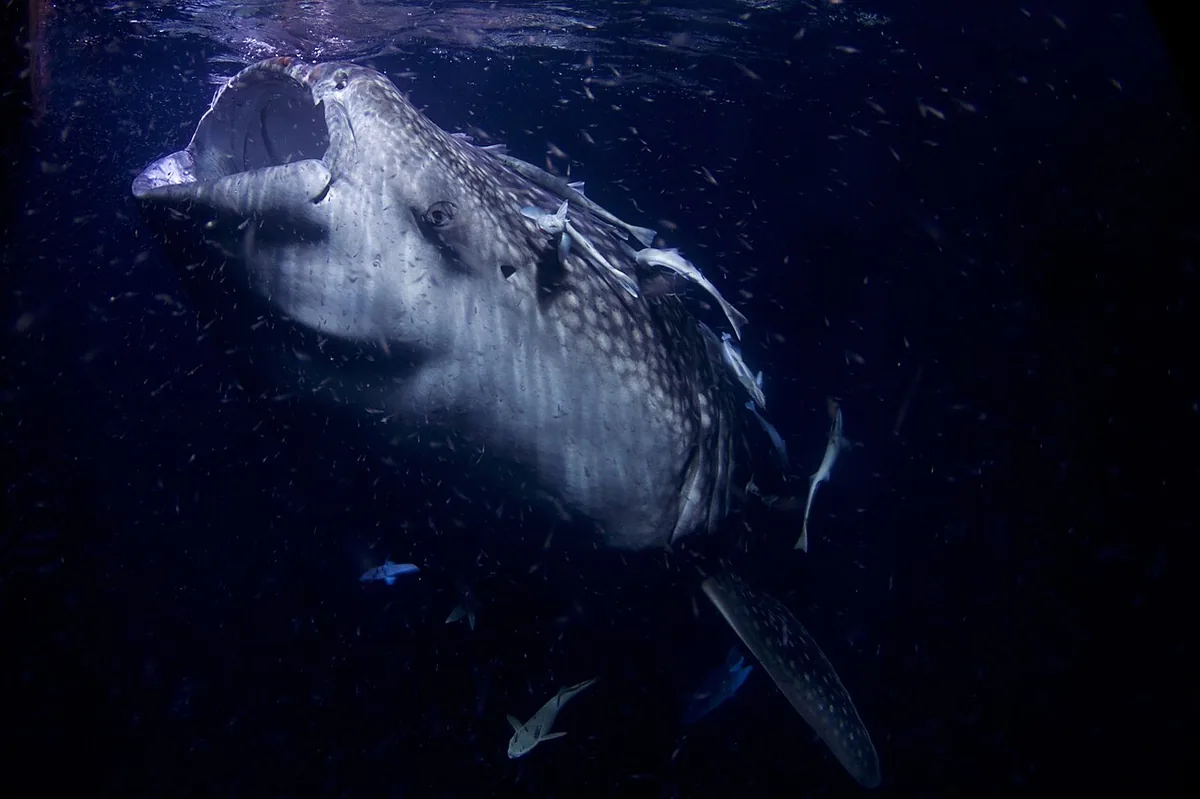
- Whale shark season runs roughly June through November, peaking in August and September, when female whale sharks aggregate off Darwin.
Why the diving is special
Darwin and Wolf are tips of long-extinct undersea volcanoes positioned in the path of warm surface currents, and the concentration of marine life around them has reasons scientists still debate: the schools of hammerheads that gather at Darwin’s underwater towers are so large and so consistent that their gathering remains only partly explained. What is known is that the combination of remote position, nutrient-rich current and cleaning stations holds predators in numbers found nowhere else.
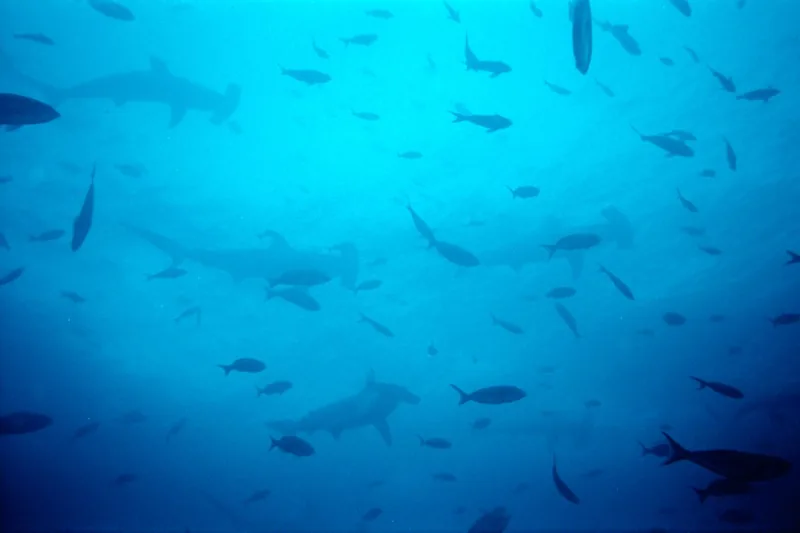
The archipelago’s most wanted animals are here. Whale sharks, the largest fish in the sea, aggregate at Darwin in the cool season, hammerheads school in the hundreds, and the site list reads like a diving legend: El Arenal, the sandy slope below the former arch, where whale sharks and dolphins pass; the North Islet wall with 30 to 120 feet of depth and excellent visibility; and on Wolf, Shark Bay, El Derrumbe (“the landslide”), The Cave with its swim-throughs, and La Banana, with caverns from 30 to 120 feet deep. Currents have earned nicknames like “the washing machine” — divers do not choose these islands for an easy week.
Darwin also holds the world’s only known breeding ground of the sooty tern, and Wolf’s dry climate produced one of evolution’s strangest characters: the vampire finch, a sharp-beaked ground finch that drinks blood from Nazca and blue-footed boobies and rolls their eggs until they break.
Darwin’s Arch collapsed in 2021
The stone arch off Darwin’s southeast tip, the island’s most photographed feature, collapsed in 2021, leaving two free-standing pillars now called Darwin’s Towers or Darwin’s Pillars. The dive sites did not go with it: the underwater topography that made the site famous remains, and the whale sharks still aggregate at Darwin. Divers and operators kept the old name, so if you see “Darwin’s Arch” on a 2026 dive itinerary, it refers to the site, not the arch. The collapse changed the postcard, not the dive.
What a liveaboard trip involves
Five dedicated dive vessels operate these routes in Galápagos, among them the Aqua, Sky, Calipso, Humboldt Explorer and Aggressor III, carrying dive guides and running up to four immersions a day. Expect:
- Seven nights minimum; the northern transit eats the first and last day.
- Costs from around $5,200 to $7,400 per person for 7-night dive itineraries (the Aqua, which we book, sits at the lower end; check current rates) plus the standard fixed fees: $200 park entry for foreign adults and $20 transit card, detailed in the entry fee guide.
- Conditions for experienced divers only: strong currents, deep walls, surface swell. This is not the trip to learn on, or to bring a non-diving partner, since non-divers are not accepted.
- Whale shark odds that swing with the season: peak success rates in August and September, lower at the June opener.
Our diving guide compares the liveaboards in detail, and the best time to visit guide maps the season month by month. If you are deciding whether the dive trip or a standard cruise suits you, cruise vs land frames the choice.
Why you cannot see them any other way
No ferry serves the northern islands, no hotel base reaches them, and the park does not permit landings. The wildlife payoff, whale sharks and hammerhead schools among them, is reserved for divers willing to pay in skill and sea time. Everyone else sees the Galápagos these islands guard only in documentaries, which is part of what makes the trip worth training for.
Frequently asked questions
Can I land on Darwin or Wolf?
No. The park allows no landings on either island. The only way to visit is a dive liveaboard, and even divers never set foot ashore.
What certification do I need to dive Darwin and Wolf?
Advanced Open Water, typically more than 50 logged dives and comfort in strong current; many operators also ask for Nitrox. These are not sites for new divers.
When is whale shark season at Darwin and Wolf?
Roughly June to November, peaking in August and September, when large females aggregate off Darwin. Hammerhead schools are present year-round.
Sources
- The islands, Galápagos Conservancy
- Visitor sites of the Galápagos National Park, Galápagos National Park Directorate
- Special Regulation for Tourism in Protected Areas (RETANP), Ministry of Environment (PDF)
- General visiting rules, Resolution 0000007 (Official Register 515), full text (PDF)
Last verified: October 2026