
Travel guide · Sites & Towns
Kicker Rock: the sleeping lion of San Cristóbal
Kicker Rock off San Cristóbal: the split lava wall, the snorkel circuit with hammerheads, dive options, cost, season and how to plan the day.
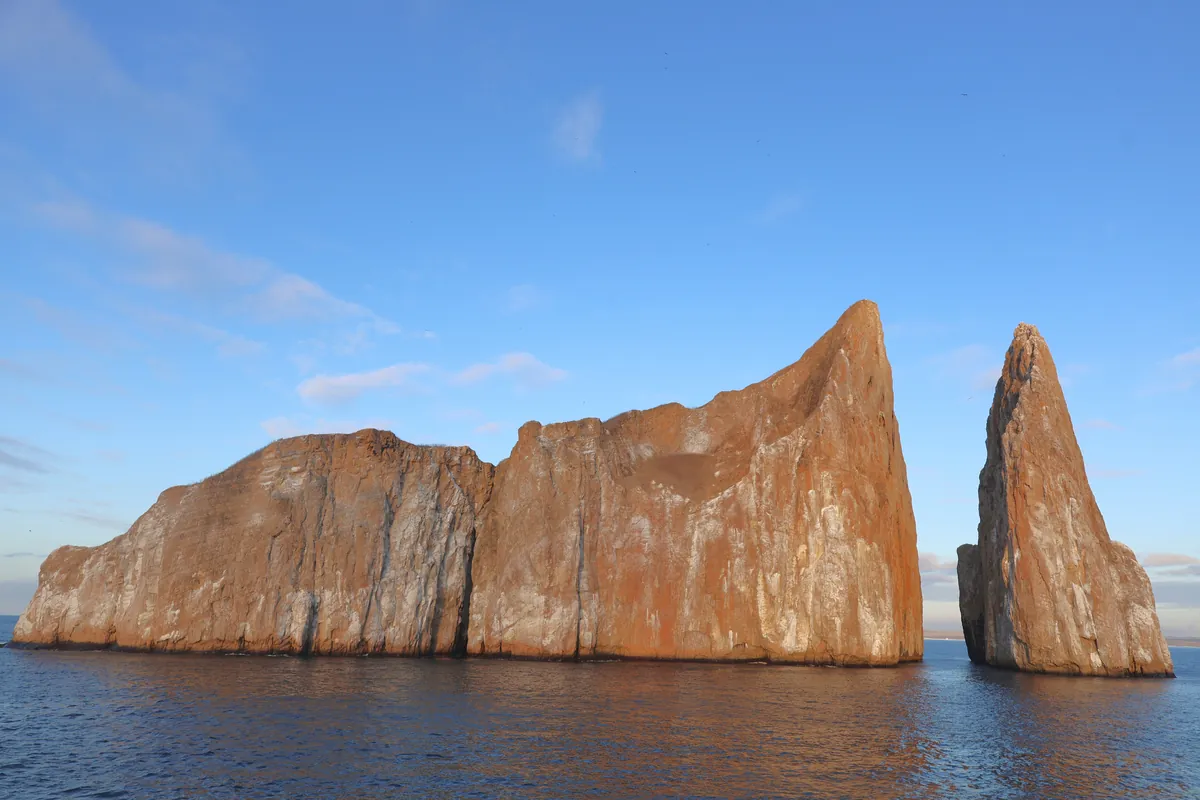 Photo: David Brito
Kicker Rock, León Dormido in Spanish, “sleeping lion” to everyone on the island, is a 150-metre lava tuff cone rising straight out of the sea off San Cristóbal’s west coast. Erosion split it into two walls with a channel between them, and boats sail through the gap on their way in. It is the signature day trip of Puerto Baquerizo Moreno, and one of the two or three best snorkel sites in the whole archipelago.
What it is
The rock is the remnant of a volcanic tuff cone; the split lets small boats pass completely through, and the walls drop clean into deep water. No landing happens here: the visit is all water, circling the formation and snorkelling or diving along the channel. From the boat deck alone it is one of the most photographed shapes in Galápagos, second perhaps to Bartolomé’s Pinnacle Rock.
The wildlife
The deep water next to vertical walls is what concentrates the animals:
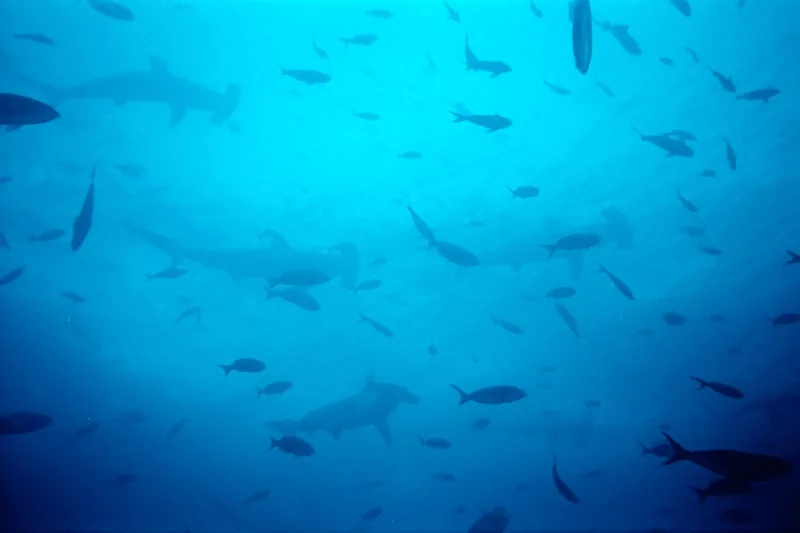
- Scalloped hammerhead sharks, sometimes in schools, cruising the channel below the snorkel line. Seeing them from the surface, shadow-sized, is the trip’s signature moment.
- Galápagos sharks and silky sharks in deeper water.
- Spotted eagle rays and golden rays in flight below you.
- Green and hawksbill turtles, sea lions that come up to look at the strange mammals, and a bird chorus of frigatebirds and boobies overhead.
The water runs cool here even in the warm season, because deep water wells up against the rock; a wetsuit is worth it in the garúa months. Conditions and seasons are in our best time guide; currents are real at Kicker Rock, which is why the trip is run with guides in the water and is not the site for a first-time snorkeller.
Snorkel trip or dive trip?
Most visitors do the snorkel circuit: a four to five hour trip, typically $160-200 per person (check current rates), with two in-water passes along the channel and the through-the-rock boat ride. Divers treat Kicker Rock as San Cristóbal’s signature dive, with the walls dropping to around 27 metres and the chance of open-water species; dive trips cost more and require certification. If hammerheads are the dream and one day is all you have, the snorkel trip gives you a real chance of them without the certification.
Planning the day
- Boats leave from the main dock in Puerto Baquerizo Moreno, mostly in the morning when the sea is calmest.
- Take seasickness medication 30 minutes before if you are prone; the run out crosses open water. Our seasickness guide has the specifics.
- Most operators include gear and a wetsuit in the cool season; bring reef-safe sunscreen and a dry shirt.
- Book a day or two ahead in season; the better boats fill first.
Kicker Rock fits a San Cristóbal stay of two or three nights: rock trip one day, the free sites (Las Tijeretas, Playa Mann, the Interpretation Center trail) and the highlands loop (El Junco, La Galapaguera, Puerto Chino) on the others. Our Puerto Baquerizo Moreno guide assembles the days, and the 7-day itinerary shows where San Cristóbal sits in a full trip.
For boats, dive trips and land tours across every budget, Galapagos Dana Tours works with every major operator in the islands. And when the trip winds down, Las Terrazas de Dana Boutique Lodge & Spa, our lodge in Mindo Cloud Forest, is the quiet chapter after the salt; see combining Galápagos and Mindo.
What the trip looks like, hour by hour
A typical Kicker Rock day leaves Puerto Baquerizo Moreno between 8 and 9 in the morning. The boat runs north-west for about 45 minutes to an hour, usually with a stop at Isla Lobos or a beach on the way out for a warm-up snorkel with sea lions, then reaches the rock mid-morning, when the light is on the channel. The first pass follows the outside wall, where the water is deepest and the sharks and rays hang below; the second goes through the channel itself, 20 metres wide between the two walls, with the guide in the water and the panga shadowing the group. Expect 40 to 60 minutes in the water in total, in two sessions, with a rest on the boat in between.
Lunch is on board, and most tours add a beach stop on the return, Puerto Grande or Manglecito, for a final swim in calm water. You are back at the dock by 3 or 4 in the afternoon. The water at the rock is colder than the beaches, because deep water wells up against the walls, so the wetsuit the operator hands you is worth wearing even in the warm season.
Frequently asked questions
Can I snorkel at Kicker Rock without being a diver?
Yes. Most visitors do the snorkel circuit, with two passes along the channel and guides in the water. It is not a site for first-time snorkellers because of the current, but confident swimmers manage it.
How much does a Kicker Rock tour cost?
Typically US$160–200 per person for the four- to five-hour snorkel trip, with gear included; dive trips cost more and require certification. Check current rates.
Will I see hammerheads at Kicker Rock?
Often. Hammerheads cruise the channel below the snorkel line and are the trip’s signature sighting, but they are wild animals and no tour guarantees them.
Sources
- Visitor sites of the Galápagos National Park, Galápagos National Park Directorate
- Visiting rules, Galápagos National Park Directorate
- Biodiversity of Galápagos, Galápagos Conservancy
Last verified: October 2026