
Travel guide · Month by Month
Galápagos in July
Galápagos in July: dry-season days near 24 °C, the first choppy seas of the year, cormorants nesting on Fernandina, whales off Isabela and peak-season…
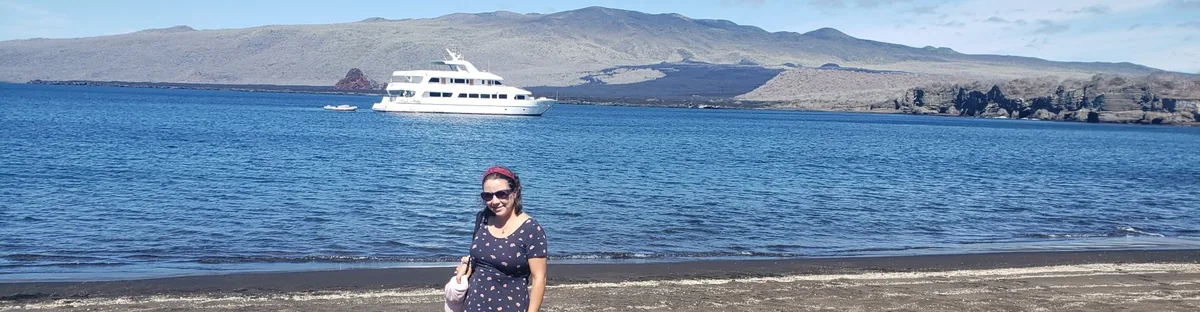
July is the month the dry season stops being a technicality. Air temperatures drop, the garúa mist parks itself over the highlands, and the first choppy seas of the year start to build. It is also one of the busier months in the islands. The wildlife calendar does not care about crowds: this is when some of the most specialised animals in Galápagos get down to breeding.
The two things to know before booking July are that the good boats sell out months ahead, and that the cold water which makes the sea chilly is the same water that makes the wildlife rich.
July at a glance
| July | |
|---|---|
| Air | 24 °C by day, 20 °C at night |
| Water | about 22 °C (operators’ average), 23.5 °C at the surface (satellite) |
| Rain | minimal; garúa mist over the highlands |
| Sea | picking up; not yet the roughest stretch |
| Wildlife | flightless cormorants courting, boobies at every nesting stage, humpbacks, tortoises laying |
| Crowds | high; peak family-travel season |
| Cruises sailing | 254 departures on 23 yachts, from US$2,450 per person |
Weather in July
Days average around 24 °C and nights fall to about 20 °C. After the wet season’s heat the change is real: you will want a light layer for mornings on the water, and the highlands of Santa Cruz stay wrapped in mist for much of the day. This is the Humboldt current at work. It drags cold water up the coast, the air cools with it, and the fine drizzle locals call garúa keeps the upper slopes green through the dry months. On the coast, grey mornings often give way to bright afternoons. Rain is minimal; the arid lowlands stay exactly that, arid.
The sea in July
July is when the sea starts to pick up. It is nowhere near the roughest stretch, which runs August through October, but longer crossings begin to feel it. Water temperature drops to around 22 °C by operator averages; satellite readings of the sea surface at Puerto Ayora run a bit warmer, near 23.5 °C. Either way, the difference from February is something you feel within minutes of jumping in.
We tell guests to rent a wetsuit for snorkelling from June through November. A shorty is usually enough in July. You will still swim comfortably, just not indefinitely. Divers get the start of the richest season: cold water, plankton and the pelagics that follow it, which our diving guide covers.
Wildlife in July
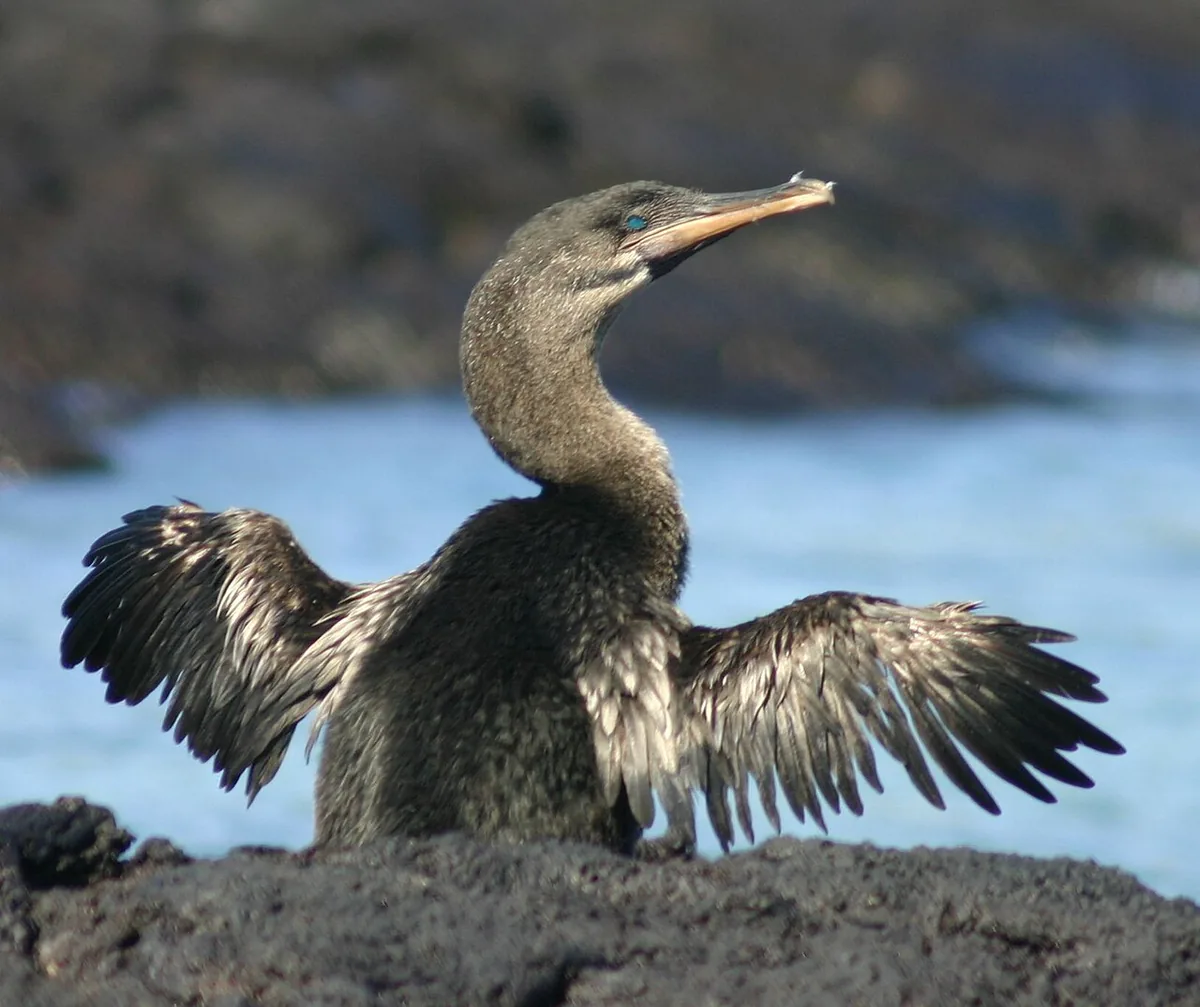
July’s headline act is the flightless cormorant. On Fernandina and the west coast of Isabela they court and nest now, and with roughly 1,600 adults in existence, catching them in courtship is a genuine privilege rather than a given.
Worth planning around as well:
- Blue-footed boobies on Española are nesting in four different stages at once, so courtship displays, eggs, small chicks and near-fledged young can all appear on a single walk.
- Humpback whales are in the Bolívar Channel between Isabela and Fernandina; their season runs June through September.
- Oystercatchers nest on Santiago, loudly.
- Lava lizards are in courtship display and will stay at it until November.
- Giant tortoises are down in the lowlands laying eggs, a pattern that runs June to November.
- Whale sharks build at Darwin and Wolf for liveaboard divers.
Marine iguanas, sea lions and the year-round residents take no season off, so no monthly list is ever complete.
Where to go in July
West, if you can: Fernandina and Isabela hold the cormorants, the whales and the penguins, and July is their month. Española for the booby colony at every stage. For divers, Darwin and Wolf. Central day tours from Santa Cruz still work well, but the sea is livelier, so morning departures matter more than in the warm season. The Fernandina guide and cruise itineraries explained show which routes commit to the west.
Crowds, prices and departures in July
July is high season. Northern-hemisphere school holidays bring families, boats run near full, and flights sit at the top of their US$400–550 range. Last-minute deals are rare, and the yachts left in the last-minute market tend to be the ones nobody wanted.
In our inventory, 254 departures on 23 yachts sail in July, from US$2,450 per person, with a median fare of US$5,995. The full list is on our July departures page. Book early: the good boats fill first for July, often months out.
Budget the fixed costs too: the park entrance fee is US$200 for foreign adults and the transit card costs US$20 before you fly, both in our entry fee guide.
What to pack for July
A fleece and a windproof layer for deck and panga, long trousers for the misty highlands, a 3 mm wetsuit or a plan to rent one, closed shoes with grip for wet lava, hat and reef-safe mineral sunscreen, and a dry bag. The full dry-season list is in our packing guide.
Who July suits, and who should wait
July works well if you want active breeding behaviour and do not mind cool water and brisker seas. It is a strong month for divers and for snorkellers who accept a wetsuit, because the cold, nutrient-rich water that makes it chilly is the same water that feeds the marine life. Families tied to school holidays get the full wildlife show, with the cost of company.
It is a poor fit if your priority is warm, glassy snorkelling; wait for November or the warm season. And if crowds bother you, know that school-holiday demand makes July one of the fuller, pricier months in the islands. June explains how the switch begins, August goes colder and rougher still, and best time to visit Galápagos compares all twelve months.
Frequently asked questions
Is July a good month for Galápagos?
Yes, for wildlife: cormorants courting, boobies at every nesting stage, humpback whales and the start of whale shark season. The trade-offs are cooler water, livelier seas and high-season prices and crowds.
How cold is the water in July?
About 22 °C by operator averages, a few degrees warmer at the surface. Comfortable for short swims; a 3 mm shorty wetsuit makes a 45-minute snorkel pleasant. Divers wear 5 mm or more.
Is the sea rough in July?
It is starting to move. July is choppier than the warm season but calmer than August to October, which is the roughest stretch. Catamarans and midship cabins help if you are sensitive.
Can I find last-minute cruise deals in July?
Rarely. July is peak season, so most boats sell out well in advance and the few late cabins are on the boats with the least demand. Book early for July; look to September to November for deals.
Sources
- Galápagos weather and seasons, International Galápagos Tour Operators Association (IGTOA)
- Monthly sea surface temperature at Puerto Ayora (NOAA satellite data)
- Sea birds of Galápagos, Galápagos Conservancy
- How to get to Galápagos, Ecuador Travel (Ministry of Tourism)
Last verified: October 2026