
Travel guide · Month by Month
Galápagos in August
Galápagos in August: the coolest, windiest month, sea lion pups arriving on the beaches, the strongest currents of the year and peak-season demand. What to…
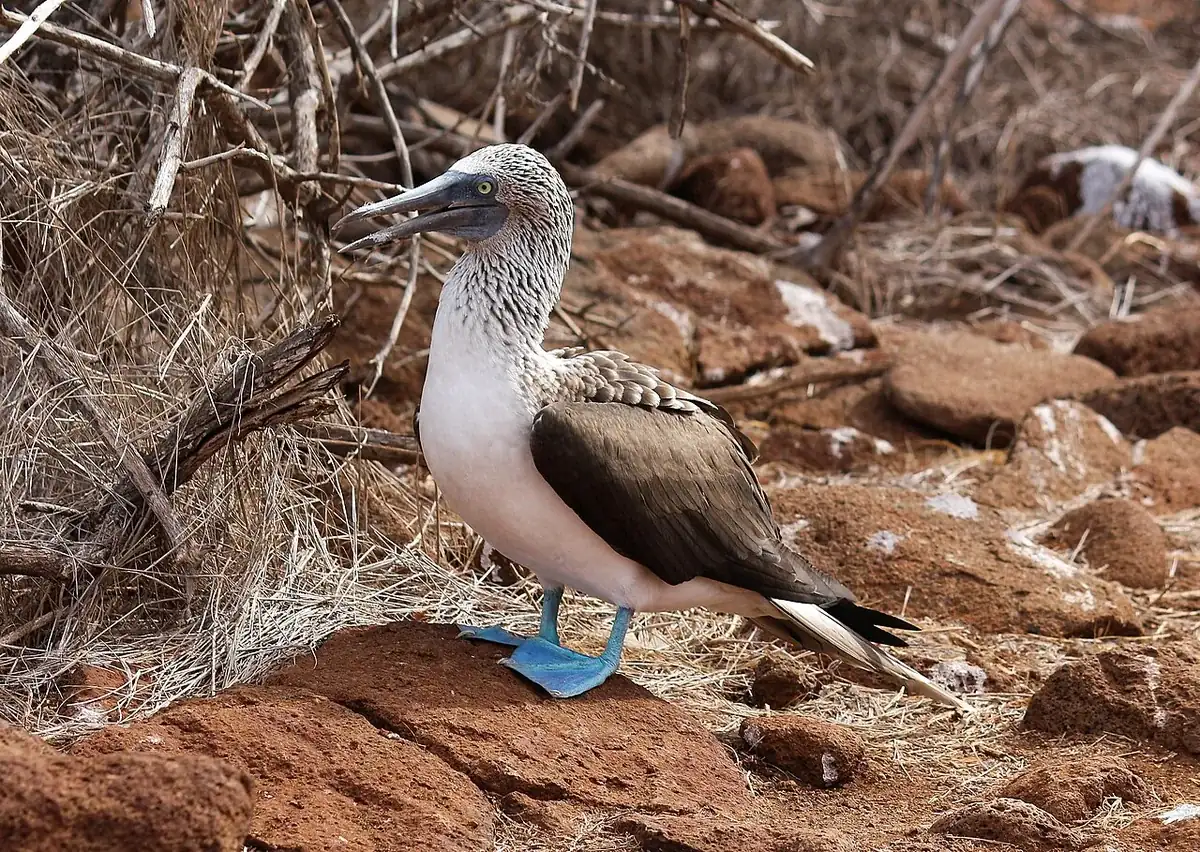 Photo: Bernard Gagnon (CC BY-SA 3.0) via Wikimedia Commons
August is the rawest month in Galápagos. It has the coolest air of the dry season, the strongest currents of the year, and swell on the exposed coasts. None of that scares off travellers: this is peak season, and the beaches answer with something worth the wind. Sea lion pups start arriving.
August is the month that most divides our guests. Divers and wildlife-first travellers call it the best of the year; warm-water swimmers wish they had come in April. Both are right, which is why the choice is about you, not the islands.
August at a glance
| August | |
|---|---|
| Air | 23 °C by day, 19 °C at night, the coolest with September |
| Water | 19–20 °C (operators’ average), 23.7 °C at the surface (satellite) |
| Rain | near the annual minimum |
| Sea | strongest currents of the year; swell on west- and south-facing coasts |
| Wildlife | sea lion pups born, hawks courting, Nazca boobies and swallow-tailed gulls nesting on Genovesa, humpbacks |
| Crowds | high; peak of the northern summer |
| Cruises sailing | 191 departures on 21 yachts, from US$2,145 per person |
Weather in August
Days average about 23 °C, nights around 19 °C, the coolest combination of the year together with September. The garúa keeps the highlands green and frequently overcast, while the coasts see sun between mists. Pack a fleece for early navigations; out on deck, the wind makes 23 °C feel closer to 15. Rain is close to its annual minimum. You may go a week without seeing anything more than drizzle.
The sea in August
This is the month to take the sea seriously. Currents reach their annual maximum and west- and south-facing coasts get swell, which is exactly where Fernandina, Isabela and parts of Española sit. Landings stay manageable because guides work the lee sides, but some snorkel sites get rescheduled or swapped.
Water is at its coldest: 19–20 °C by operator averages, with satellite surface readings at Puerto Ayora averaging about 23.7 °C. The gap between the two numbers is the difference between surface and swim depth. Rent the wetsuit, and if you dive, take the thick one. If seasickness is a concern, our seasickness guide and the catamaran comparison are the two pages to read before choosing a boat.
Wildlife in August
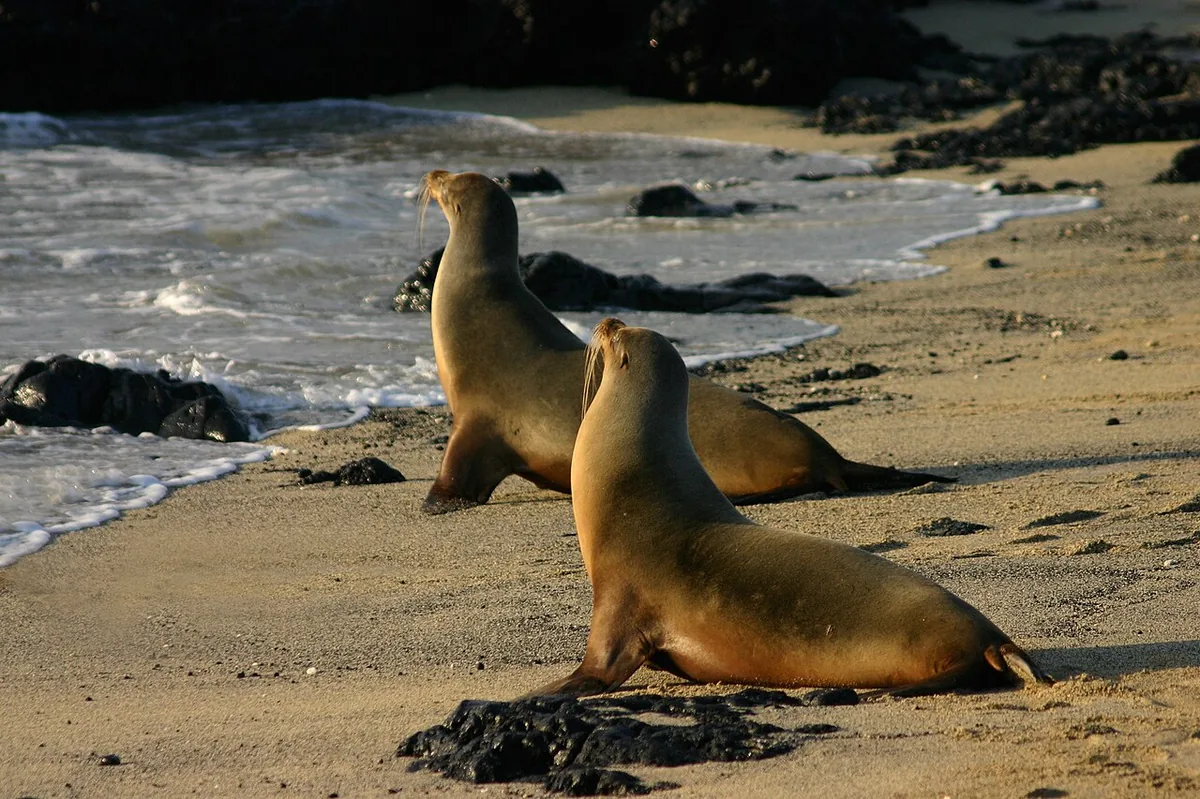
August belongs to the sea lions. Pups are born from August through November on the western and central islands, and the rookeries turn into nurseries: males barking, females commuting, newborns finding their feet on the sand.
Also in progress:
- Galápagos hawks are in courtship over the arid zones.
- Nazca boobies and swallow-tailed gulls nest on Genovesa, one of the densest seabird shows in the archipelago.
- Giant tortoises climb back to the green highlands after nesting in the lowlands.
- Migratory shorebirds begin arriving from the Arctic and stay through March, picking across the lava at the waterline.
- Humpbacks remain in the Bolívar Channel through September, and whale sharks are at their peak at Darwin and Wolf.
Where to go in August
Genovesa for the seabird density, the western islands for whales and the cold-water specialists, and any central island with a sea lion rookery for the pups. Darwin and Wolf for divers, who get the richest weeks of the whale shark season. If swell worries you, lean toward the central and eastern routes, where more landings sit in the lee. The Genovesa guide and the cruise itineraries explained page show the options.
Crowds, prices and departures in August
August is high season, and the boats that suit it best sell out furthest in advance. Flights sit at the top of their US$400–550 range, the ferries fill days ahead, and day tours in Puerto Ayora are booked rather than walked into.
In our inventory, 191 departures on 21 yachts sail in August, from US$2,145 per person, with a median fare of US$5,450. The full list is on our August departures page. Book early rather than hoping for a deal; late availability in peak months is real but skewed.
Remember the fixed costs on arrival: US$200 park fee for foreign adults plus the US$20 transit card, all covered in our entry fee guide.
What to pack for August
The full dry-season kit: fleece, windproof shell, beanie for deck time, long trousers for the highlands, a 5 mm wetsuit if you bring your own or a plan to rent, closed shoes with grip, hat and reef-safe mineral sunscreen (the overcast is deceptive), motion-sickness remedy and a dry bag. The full list is in our packing guide.
Who August suits, and who should wait
August suits travellers who want peak wildlife drama and can accept peak conditions alongside it: cool water, firm currents, some bumpy crossings. Divers get the richest season of the year, because cold water here means nutrients, and nutrients mean everything else.
If you are prone to seasickness, think hard before choosing August for a long cruise; talk to us about itineraries with shorter crossings. If warm-water snorkelling is the whole point of your trip, this is the wrong month. And if you want empty trails, August is the opposite of that. July is where the cold-water season starts, September keeps the cold water but empties out the boats, and best time to visit Galápagos compares the whole year.
Frequently asked questions
Is August the coldest month in Galápagos?
With September, yes. Air is around 23 °C by day and 19 °C at night, and the water is at its coldest, 19–20 °C by operator averages. It is cool rather than cold, but on deck with wind it feels colder.
Can I see sea lion pups in August?
Yes. Births begin in August and continue through November on the western and central islands, and the rookeries fill with newborns. By October and November the pups are swimming and at their most playful.
How rough is the sea in August?
August and September are the roughest months, with the strongest currents and swell on exposed coasts. Guides adjust landings to the sheltered sides, and catamarans ride more comfortably than monohulls. Take motion-sickness medication before long crossings.
Is August worth the high-season prices?
For divers and wildlife-first travellers, usually yes: whale sharks at their peak, humpbacks, pups, dense seabird colonies. For warm-water snorkellers and crowd-averse travellers, May or November gives more comfort for less money.
Sources
- Galápagos weather and seasons, International Galápagos Tour Operators Association (IGTOA)
- Monthly sea surface temperature at Puerto Ayora (NOAA satellite data)
- Sea birds of Galápagos, Galápagos Conservancy
- How to get to Galápagos, Ecuador Travel (Ministry of Tourism)
Last verified: October 2026