
Travel guide · Month by Month
Galápagos in May
May is Galápagos' transition month: blue-footed booby courtship on North Seymour, albatross on eggs, green turtle hatchlings on the beaches and the last…
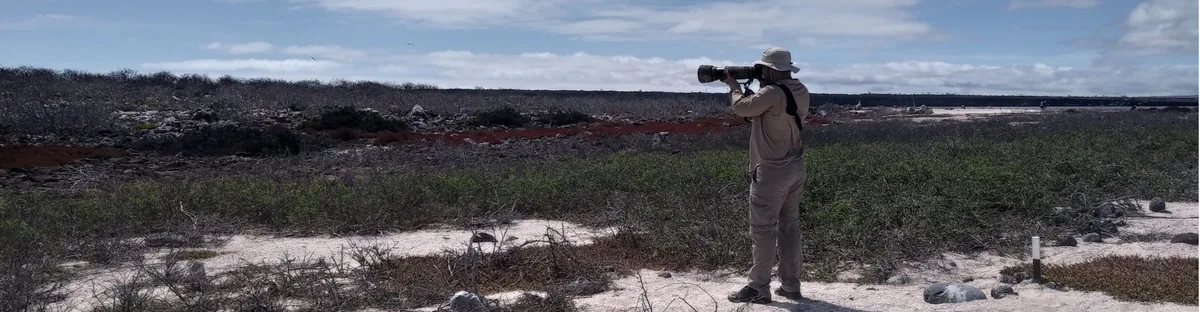
May is the hinge between Galápagos’ two seasons. The warm season is winding down, the dry season has not quite arrived, and the wildlife calendar bridges the two: blue-footed boobies start their courtship on North Seymour, waved albatross settle onto eggs on Española, and green turtle hatchlings pour out of the sand on the main beaches. Air and water cool off a notch from April, and the month is one of the most balanced in the whole year for wildlife plus comfort.
It is also the value pick of the first half of the year: regular demand, good availability, and the last stretch before the June to August high season pushes prices up.
May at a glance
| May | |
|---|---|
| Air | 28 °C by day, 22 °C at night |
| Water | about 23 °C (operators’ average), 25.5 °C at the surface (satellite) |
| Rain | fading; the first garúa mist can touch the highland tops late in the month |
| Sea | calm |
| Wildlife | blue-footed booby courtship, albatross on eggs, turtle hatchlings, flamingo chicks |
| Crowds | moderate; the last quiet month before high season |
| Cruises sailing | 199 departures on 24 yachts, from US$1,800 per person |
Weather in May
Air averages 28 °C high and 22 °C low, a step cooler than April, and noticeably less rainy as the warm season fades. You will still catch sunny, warm days, but the light changes: the first garúa mist can appear on the highland tops late in the month, and mornings on the water start to feel fresh. Rain gear becomes a just-in-case item rather than a daily one.
The sea in May
Calm sea continues, and the water is still warm: around 23 °C by operators’ averages, with satellite surface readings at Puerto Ayora averaging 25.5 °C. Most visitors snorkel without a wetsuit in May. Visibility remains good from the warm season, though the very clearest water was earlier in the year; as the month runs, conditions begin the slow drift toward the dry-season pattern. No swell concerns: May sits in the calm stretch between the north swells of March and the south-east chop that arrives with the trade winds in June.
Wildlife in May
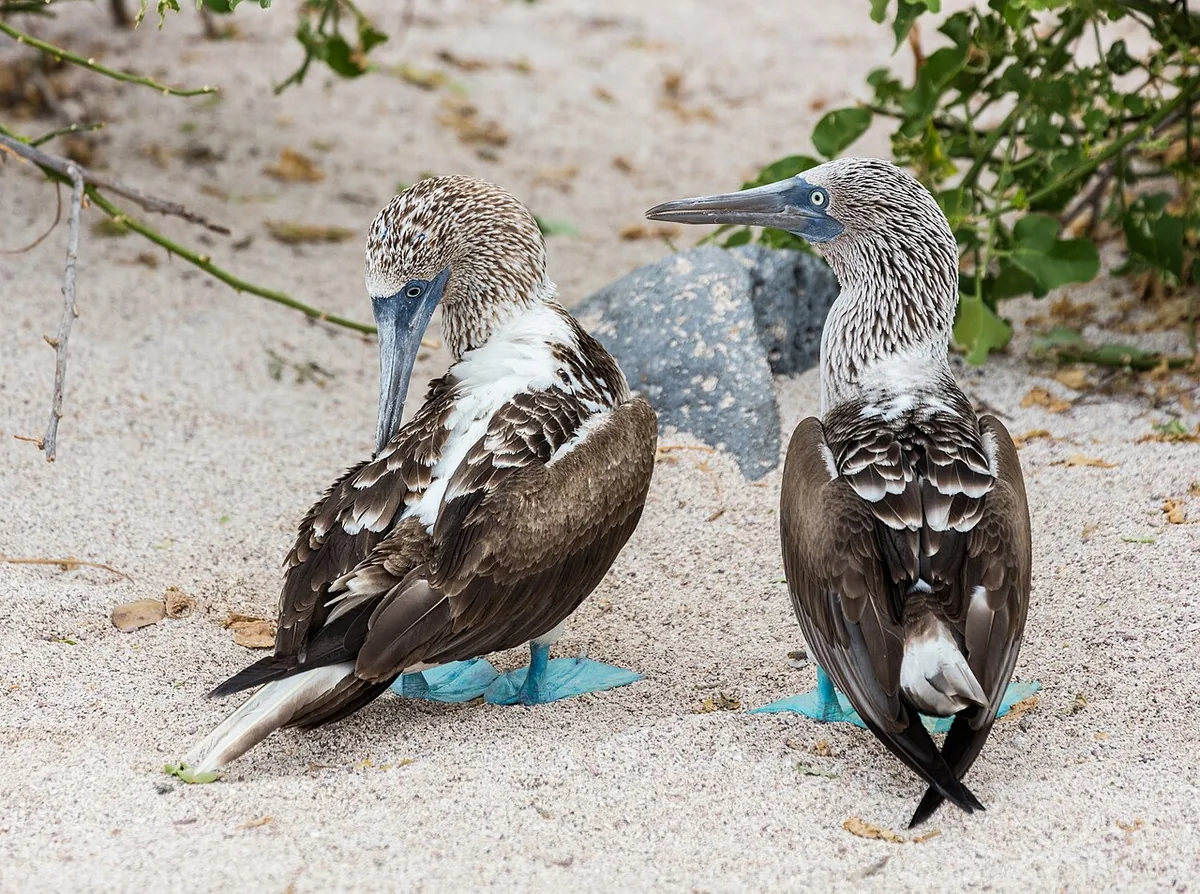
- Blue-footed booby courtship on North Seymour. The famous sky-pointing dance starts up in May and June, and North Seymour is the most accessible big colony for it. This is the month most people picture when they picture Galápagos; the booby page explains the dance.
- Waved albatross lay their eggs. The colony on Española is complete and settled into nesting: birds are on eggs at Punta Suárez, the species’ only nesting site in the world.
- Green turtle hatching continues (April to June). Hatchlings emerge at Gardner Bay on Española, Punta Cormorant on Floreana and Puerto Egas on Santiago. Early-morning beach walks give you the best odds of catching the dash to the water.
- Storm petrels nest. The first nesting round of the year for the band-rumped storm petrels gets going, which matters for the short-eared owls that hunt them on Genovesa.
- Flamingo chicks become visible. The Floreana chicks from the February and March nesting season now stand in the lagoons with their parents.
- Racer snakes hunt iguana hatchlings on Fernandina. May and June are the window for the famous Punta Espinosa scene; the racer snake page explains it.
Where to go in May
North Seymour for the boobies, which also works as a day tour from Santa Cruz; Española for the albatross on eggs; Floreana for flamingo chicks and turtle hatchlings; and Fernandina, on a western itinerary, for the snake-and-hatchling drama. A central route with North Seymour and Española covers the headline sights in one week. The cruise itineraries explained page shows which standard loops include each island.
Crowds, prices and departures in May
May is regular demand, with no national holiday to spike it. Boats have space, day tours are easy to book, and the ferries are calm. It is the last of this before the June arrivals of northern-hemisphere summer holidays.
In our inventory, 199 departures on 24 yachts sail in May, from US$1,800 per person, with a median fare of US$5,795. The full list is on our May departures page. If you want a specific boat or itinerary, book two to three months out; for last-minute deals, May is one of the better months to find them, and our last-minute page lists the reduced fares live.
Standard entry costs apply on top of any tour: the US$20 transit card before your flight and the US$200 park fee on arrival, in the entry fee guide.
What to pack for May
The warm-season kit plus one light layer for the first fresh mornings: quick-dry clothing, a light rain shell, hat, reef-safe mineral sunscreen, rash guard, a windproof layer for early panga rides and a shorty wetsuit if you run cold. The full list is in our packing guide.
Who May suits, and who should wait
- Travellers who want the booby dance without the peak-season crowds. May is regular demand, the last quiet month before high season.
- Wildlife all-rounders. Albatross on eggs, boobies courting, turtles hatching: a rare three-way overlap.
- Warm-water snorkellers. Still comfortable without a wetsuit for most people.
- Photographers. Courtship displays, hatchlings and a green-but-clearing landscape.
Think twice if you want the full, noisy albatross courtship (strongest in April), the warmest possible water (February to April) or the big marine season of whales and whale sharks, which starts in June. April is the month before, June the month after, and the whole year is in best time to visit Galápagos.
Frequently asked questions
Is May a good time to visit Galápagos?
Yes, and it is one of the best-value months: calm seas, water still warm, blue-footed booby courtship beginning, albatross on eggs, turtle hatchlings, and regular demand before the June to August peak.
Where can I see the blue-footed booby dance in May?
North Seymour has the largest and most accessible colony, reachable on most central cruises and as a day tour from Santa Cruz. Española and other colonies display too; the courtship peaks in June and July and continues into August.
Is May warm or cool season?
Both, which is the point. May is the transition: the warm season’s calm sea and warm water are still there, and the first garúa mist and cooler mornings arrive late in the month. Pack for warm days with one light layer.
Are there last-minute cruise deals in May?
More often than in high season. Demand is regular, so some yachts release reduced fares close to departure. The live list is on our last-minute cruises page; the best cabins on the best boats still sell early.
Sources
- Galápagos weather and seasons, International Galápagos Tour Operators Association (IGTOA)
- Monthly sea surface temperature at Puerto Ayora (NOAA satellite data)
- Sea birds of Galápagos, Galápagos Conservancy
- How to get to Galápagos, Ecuador Travel (Ministry of Tourism)
Last verified: October 2026