
Travel guide · Islands
North Seymour Island: the wildlife-per-step island next to Baltra
North Seymour, Galápagos: the flat 2 km trail with blue-footed booby courtship, the frigatebird colony and land iguanas, the best months, the day tour from…
 Photo: David Brito
North Seymour is the small, flat island just north of Baltra, and metre for metre it delivers more wildlife than almost any trail in Galápagos. Blue-footed boobies nest beside the path, frigatebirds inflate their red pouches overhead, and land iguanas cross between the bushes. Because it sits minutes from the airport and about an hour by boat from Santa Cruz, it is the one big wildlife island you can visit without committing to a cruise. This guide covers what you will see, when to come, how the day trip works and which cruises include it.
Key facts
| Where | Just north of Baltra, in the centre of the archipelago; about 45 minutes by boat from the Itabaca Channel |
| Size | 1.9 km², uninhabited, highest point 28 m |
| Origin | Uplifted seabed, not a volcano: the island was pushed up by magma below, and marine fossils show in the rock |
| Name | After Lord Hugh Seymour, an 18th-century British admiral; one of the few English names that survived the Spanish renaming |
| The visit | A dry landing and a flat loop trail of about 2 km over rock and sand, 90 minutes with a naturalist guide |
| Headline wildlife | Blue-footed boobies, magnificent and great frigatebirds, land iguanas, sea lions, swallow-tailed gulls |
| How to get there | Day tour from Santa Cruz, or on a cruise: 960 departures on 29 yachts in our live schedule include it |
The trail and what you will see
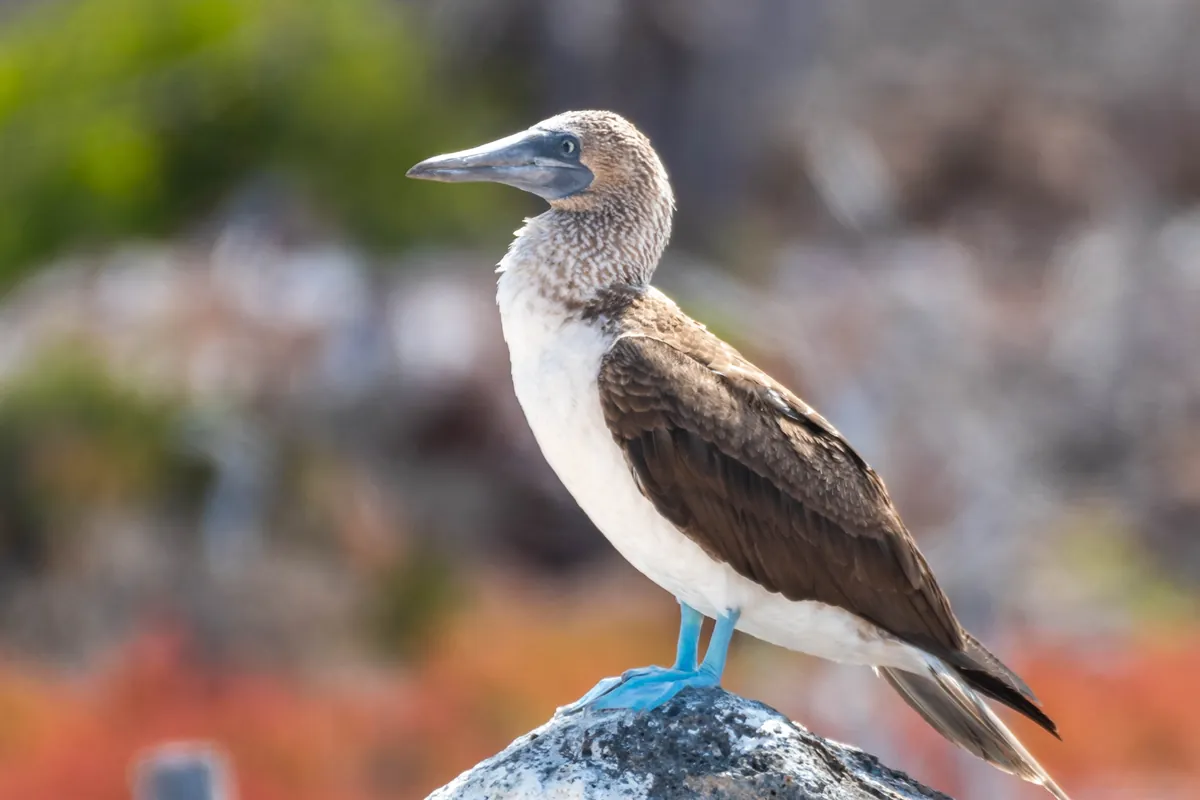
The loop crosses low scrub, palo santo trees and grey saltbush and passes through the nesting areas of the island’s two headline species. Blue-footed boobies nest right against the trail, so the courtship plays out at close range: the male presents a gift, usually a stick or a stone, points his beak at the sky and whistles, then lifts each foot high to show it off. If the female approves she sky-points back, and they finish in unison. The chicks that follow sit in the open, white and oversized, beside your boots.
Frigatebirds nest here in one of the largest colonies in Galápagos, and both species, magnificent and great, are present. The males inflate a scarlet throat pouch the size of a football and hold it for hours to attract a mate passing overhead. North Seymour is also where you are most likely to watch a frigatebird harass a booby in flight until it drops its catch, which the frigatebird steals before it hits the water. Piracy, live.
Add swallow-tailed gulls on the cliffs, brown pelicans, marine iguanas, Darwin’s finches, mockingbirds and Galápagos doves, plus sea lions hauled out around the landing, and the walk earns its reputation. One curiosity your guide may point out: North Seymour’s marine iguanas have been seen eating land plants, which is unusual for a species that feeds on algae.
Land iguanas: a secondhand population that saved the species
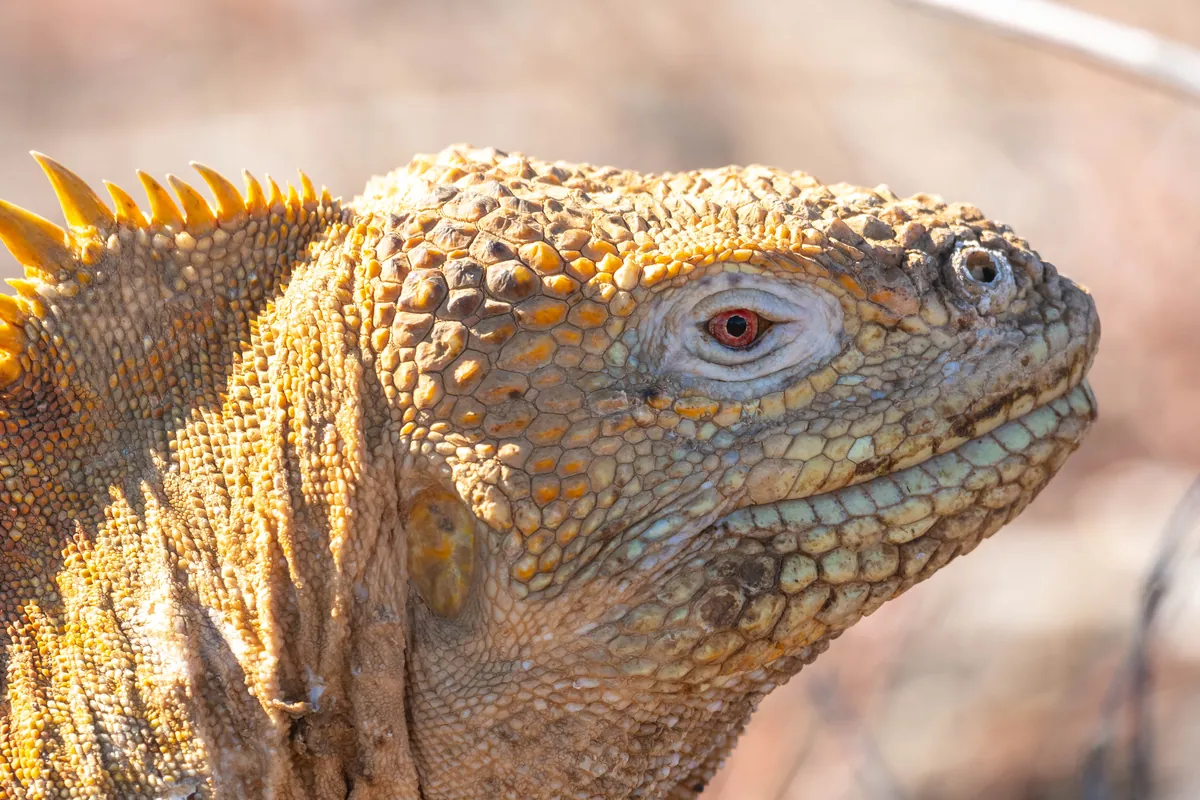
The land iguanas you see here are not native to the island. In the 1930s the American naturalist Allan Hancock moved around 70 of them from Baltra to North Seymour as an experiment, a decision that turned out to be prescient: during the Second World War the soldiers stationed at the Baltra airbase hunted the island’s remaining iguanas to extinction. North Seymour’s descendants repopulated Baltra in the 1950s and beyond.
By the 2010s the island held around 5,000 iguanas and the cactus they feed on was running short. In January 2019 the park moved more than 1,400 of them to Santiago, where Darwin had recorded the species as abundant in 1835 and where none had been seen for a century. Today North Seymour holds more than 2,500, and Baltra more than 3,000. When you walk this trail, you walk through one of conservation’s quieter comebacks.
When to visit
Any month works for the headline species; the calendar changes what you watch.
| Months | What is happening on North Seymour |
|---|---|
| December to March | Warm season: calm crossings, clear water for the snorkel; frigatebirds begin to display |
| March to June | Peak frigatebird courtship, with the most red pouches on show |
| May to August | Blue-footed booby courtship at its best, with the sky-pointing dance along the trail |
| July to October | Booby chicks in the nests; cooler, choppier crossings, richer water for the snorkel |
| August to November | Sea lion pups on the beaches at the landing |
| November | Seas calm again; half-grown booby chicks sit along the trail |
Our best time to visit guide has the full month-by-month calendar for the archipelago.
How to get there
| How it works | Cost | Notes | |
|---|---|---|---|
| Day tour from Santa Cruz | Bus or taxi from Puerto Ayora to the Itabaca Channel (40–45 minutes), then 45 minutes to an hour by boat; the walk, a snorkel stop (often at Las Bachas or Mosquera) and lunch on board; back in town mid-afternoon | US$220–280 per person (check current rates) | Daily departures; book one to three days ahead in high season |
| Cruise | Most central-islands itineraries stop here, often on the first or last day because of the airport | Included | Check the day-by-day: 960 departures on 29 yachts in our schedule include North Seymour |
| Independent | Not possible: the island is a guided visitor site reached only by authorised boats |
The fixed costs are the same as for any trip: the US$200 park entry fee for foreign adults and the US$20 TCT card, both explained in our entry fee guide. Day-trippers should skim the national park rules before landing: stay on the trail and keep two metres from the animals, which here means watching your feet near the booby nests.
Snorkelling and diving
The water around North Seymour is cool for the same reason it is rich: currents bring food, and the food brings animals. Snorkellers on day tours regularly see rays, reef fish, whitetip reef sharks and parrotfish, with occasional hammerheads. Diving happens from dive day boats out of Puerto Ayora, not from the cruise yachts, and the nearby Mosquera islet adds a sandy dive site and one of the largest sea lion colonies in the islands; spotted eagle rays are common on the Seymour side of the channel. Our snorkelling guide and diving guide cover both.
There is no accommodation and no infrastructure of any kind on the island. Nobody stays overnight, and the park intends to keep it that way.
Who North Seymour is for
- First-time visitors with a few days on Santa Cruz: the best-value wildlife day tour in the archipelago.
- Birders and photographers: booby courtship and frigatebird pouches at arm’s length, in good light, on flat ground.
- Families: the trail is short and flat, the landing is dry and the animals do the entertaining. See Galápagos with kids.
- Cruise passengers: usually the first or the last landing, and a strong one; if it matters to you, choose an itinerary that includes it rather than assuming.
Frequently asked questions
Can you visit North Seymour without a cruise?
Yes. Day tours leave the Itabaca Channel on Santa Cruz every morning, with the boat ride, the guided walk, a snorkel stop and lunch, for around US$220–280 per person.
How long is the North Seymour trail?
About 2 km in a loop over flat, rocky ground, which takes around 90 minutes with the guide’s stops. The landing is dry, onto rocks.
When do blue-footed boobies dance on North Seymour?
Courtship peaks from May to August, with chicks in the nests from July to October. Some pairs display in other months too; the island breeds year-round at a lower level.
Are there frigatebirds on North Seymour all year?
Yes. Both species nest here, and males with inflated red pouches are most numerous from March to June, with displays continuing through the warm season.
Which is better, North Seymour or Bartolomé as a day trip?
Different trips. North Seymour is the wildlife walk: boobies, frigatebirds and iguanas at close range. Bartolomé is the landscape: the climb to the viewpoint over Pinnacle Rock and a snorkel with penguins, but a longer boat ride. With two days, do both.
Related reading
The island it shares a channel with is in the Baltra vs San Cristóbal airport guide; the birds in detail are in the blue-footed booby and frigatebird guides; and how a day tour fits a short trip is in how many days in Galápagos.
Sources
- North Seymour, Galápagos Conservancy
- Land iguana reintroduction to Santiago, Galápagos National Park Directorate
- Wildlife seasonality, IGTOA
Last verified: October 2026