
Travel guide · Wildlife
Galápagos penguin
The only penguin north of the equator: about 2,000 birds, 95% on Fernandina and Isabela. Where and when to see them, and why El Niño decides everything.
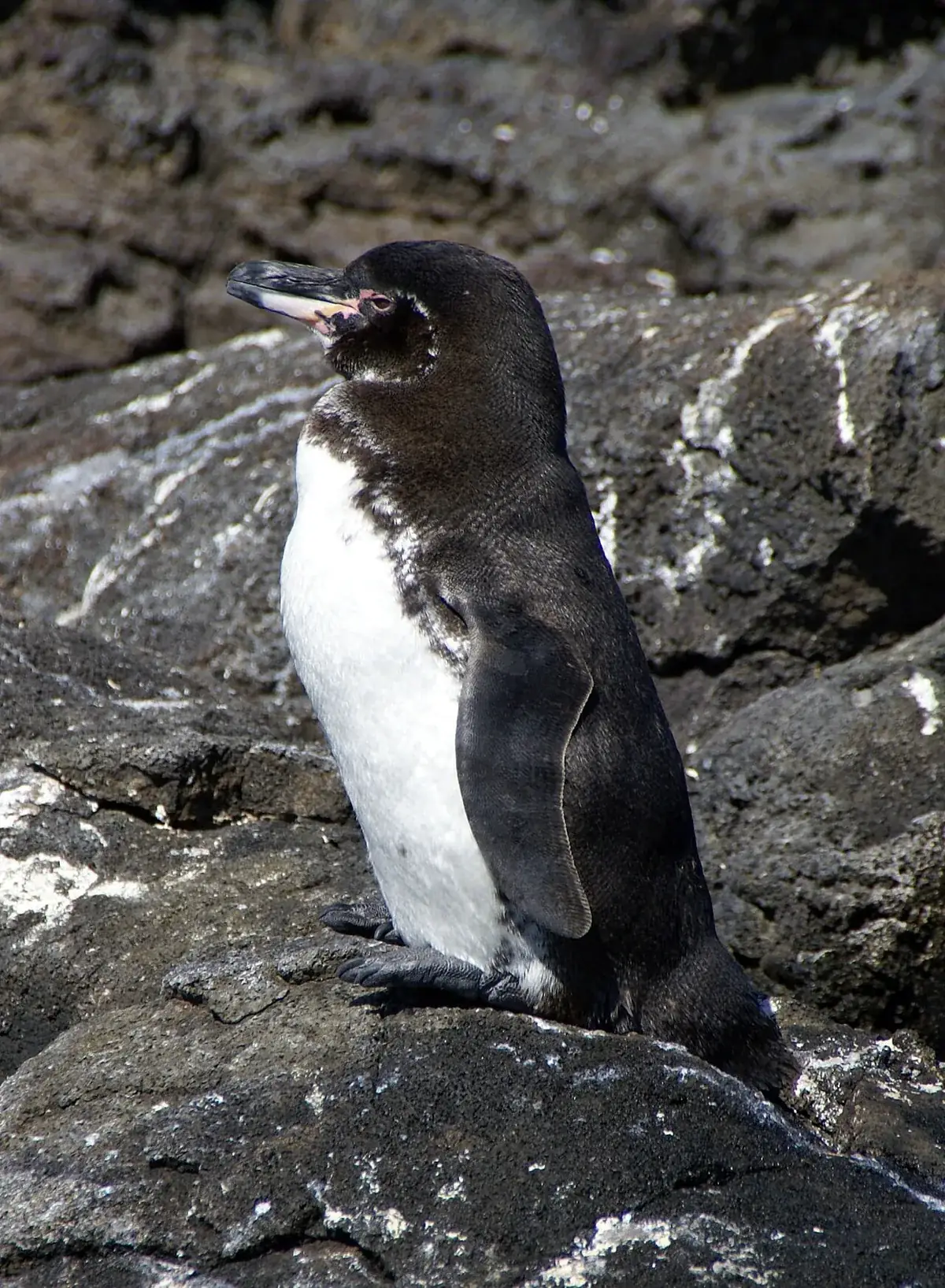 Photo: putneymark (CC BY-SA 2.0) via Wikimedia Commons
The only penguin that lives in the wild north of the equator, and the rarest penguin on Earth: about 2,000 individuals, with 95% concentrated on Fernandina and Isabela (galapagos.org). It is a Humboldt penguin lineage that arrived from Chilean waters roughly 4 million years ago and stayed for the cold, fish-rich upwelling. Seeing one is not guaranteed on any itinerary, which is exactly why people plan routes around it.
Where to see them
- Isabela west coast. The core of the population. Elizabeth Bay, reached only by panga, has the largest colony among the islets (Las Marielas); Punta Vicente Roca and Tagus Cove are the other reliable stops.
- Fernandina, Punta Espinosa. The other 95% partner island; penguins share the lava with the biggest marine iguana colony.
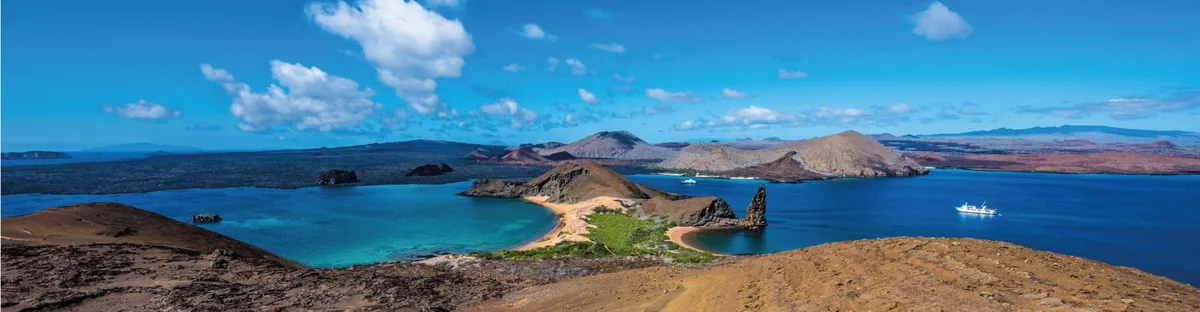
- Bartolomé. A smaller, resident colony at Pinnacle Rock, the easiest penguin sighting for central-island itineraries, and the classic place to snorkel near them.
- Las Tintoreras, off Puerto Villamil. A common land-based sighting from Isabela town.
- Northern Isabela technically puts a few birds in the Northern Hemisphere.
When to see them
Year-round, but the odds shift with the water. The cold, nutrient-rich dry season (June–November) is when they feed best and are most active; September is often cited as the best month to watch them hunt underwater. They pair and nest from May to December, with courtship peaks that vary by island, and there is no fixed breeding season: in good years a pair can raise up to three broods, in bad years none, because nesting tracks food, not calendar. Nests are tunnels and crevices in coastal lava, close to the waterline, which is why they need undisturbed lava shores rather than beaches. El Niño is the axe: the 1982–83 event cut the population by more than half, and numbers have not fully recovered since.
How they live
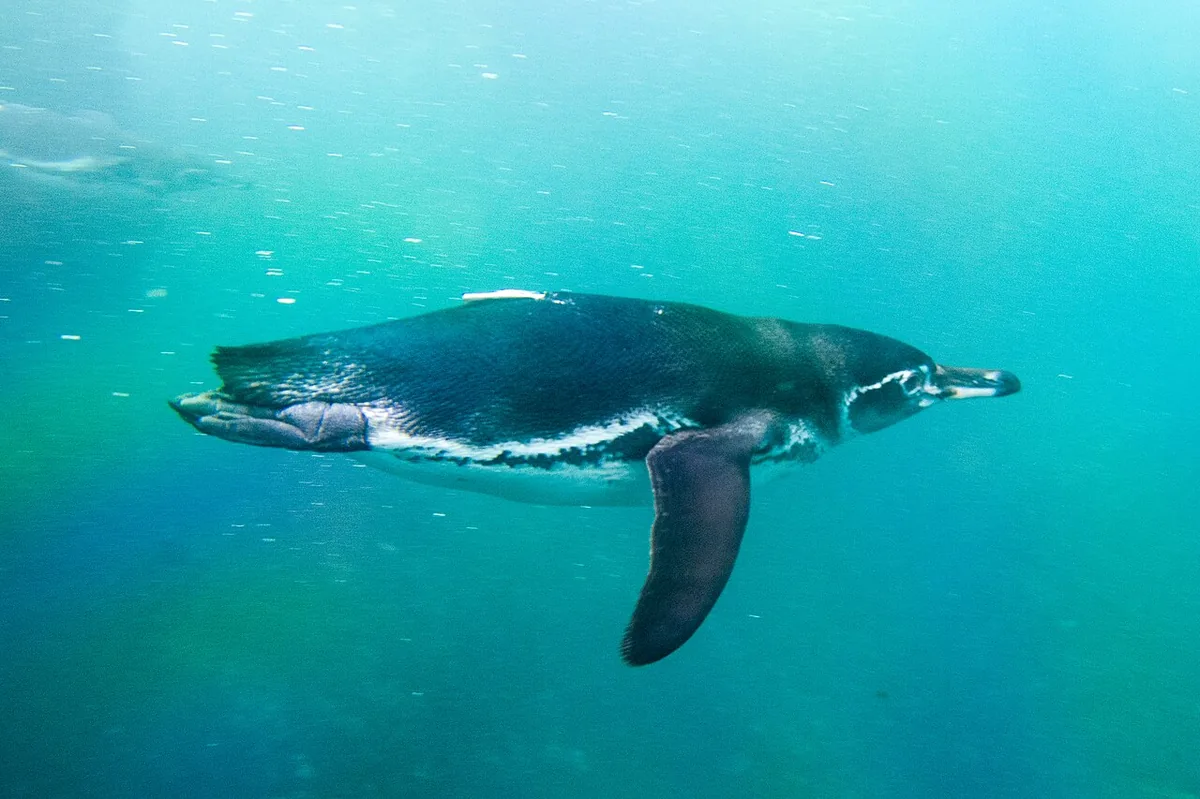
Second-smallest penguin in the world, up to 50 cm and about 2.5 kg on average (4 kg max), with a life expectancy of 15–20 years. They are monogamous with strong pair bonds. Underwater they are torpedoes: over 35 km/h chasing anchovies, sardines and mullet close to shore, which makes them a snorkeler’s highlight wherever they occur. On land the story reverses: they overheat quickly, so they shade their feet, pant, and stay near the water. Molting happens two or three times a year, unusually often for a penguin, and they must fast on land through it.
Conservation
Listed as Endangered, and the numbers explain why: the smallest population of any penguin species, confined to one cold-current corridor. Two threads of work matter. One is monitoring after El Niño events, since recovery depends on breeding success in good years. The other is nest construction: researchers have installed artificial shaded nest sites, and a substantial share of breeding now happens in them, a rare case of direct intervention paying off measurably. On the water, normal park rules apply: keep your 2-metre distance and let them approach you, which they sometimes do (rules here).
Details worth knowing
- They can overheat standing on lava; watch them posture like sunbathers avoiding exactly that.
- They are the only penguin species at genuine risk of sunburn on their feet, and they hunch to shade them.
- Snorkeling with them is best at Bartolomé (June–December dry season) and around Isabela; the site-by-site details are in our Bartolomé and Isabela guides, and the packing list covers wetsuit season.
Snorkelling with penguins
Seeing a penguin on a rock is pleasant; having one shoot past your mask is the moment people describe for years. It happens at a handful of sites, and timing matters more than luck. At Bartolomé the birds fish along the base of Pinnacle Rock in the morning, so a snorkel session straight after the summit walk gives the best odds. At Las Tintoreras, off Puerto Villamil, they rest on the lava between dives and are often in the water near the channel. On the western itineraries, Punta Vicente Roca and Elizabeth Bay put them in the water around the panga.
The rules that apply everywhere matter even more here: do not chase, do not block the route to the rocks, and let the bird choose the distance. A penguin that keeps surfacing beside you is feeding, not posing, and it will leave if the group crowds it. Keep your fins still, float, and watch it hunt; the sardines it is chasing will tell you where it surfaces next. In the cool season, when the water is 19 to 22 °C, the penguins are most active and you will want a wetsuit to stay in long enough to enjoy them.
Frequently asked questions
Where can I see Galápagos penguins?
Mostly on the west coast of Isabela and on Fernandina, which hold 95 percent of the population, plus the small colonies at Bartolomé and Las Tintoreras off Puerto Villamil, the easiest sightings for central and land-based trips.
When is the best time to see penguins?
The dry season, June to November, when the cold water makes them most active; September is often cited as the best month to watch them hunt. Courtship at Bartolomé runs September to December.
How many Galápagos penguins are left?
About 2,000 individuals, the rarest penguin on earth and the only one north of the equator. El Niño events cut the population sharply, and artificial nests have helped breeding recover.
Sources
- Sea birds of Galápagos, Galápagos Conservancy
- Safeguarding Galápagos penguins from climate change, Galápagos Conservancy
- The science behind penguin and cormorant conservation, Charles Darwin Foundation
Last verified: October 2026