
Travel guide · Islands
Marchena, Pinta and the islands tourism never reaches
Why Marchena, Pinta and other Galápagos islands are closed to tourism: science, restoration, and no visitor sites — and what makes each one interesting…
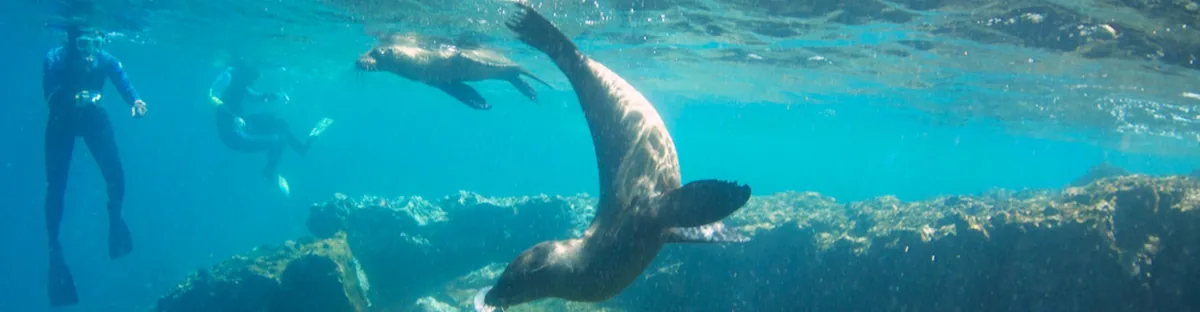
A Galápagos map shows dozens of islands; an itinerary shows maybe ten. The difference is deliberate. Some islands are closed to tourism because science or restoration work needs them undisturbed, some have no visitor infrastructure or landing at all, and some are simply so remote that no operator reaches them commercially. Marchena and Pinta are the two best-known names on the closed list, and their stories explain the whole system.
Marchena (Bindloe)
Marchena is a substantial island, 130 square kilometers rising to 343 meters, that sits in the north of the archipelago with no visitor trail, no dock and no regular boat traffic. It has no land visitor sites, and it is rare even for scientists or park wardens to set foot there, which makes it one of the least human-touched islands in Galápagos.
Three facts give it its reputation:
- The island entered travel-lore darkly: in 1934, the mummified body of one of the Floreana Baroness’s lovers, Lorenz, missing since the Galápagos Affair disappearances of 1934, was found on a Marchena beach, dead of dehydration after a failed open-boat crossing.
- Its waters hold excellent dive sites: Punta Mejía is rated among the archipelago’s best, with mantarrayas, Galápagos and hammerhead sharks and garden eels, and Playa Negra adds black volcanic sand, bottlenose dolphins and Galápagos sharks. Reaching them means liveaboard or special arrangements, not a scheduled visit: Marchena appears on some dive itineraries in the north, and dive-only access is the rule.
- An invasive little fire ant has been under control measures on the island since 1988, one of the longer-running control programs in the park.
Pinta (Abingdon)
Pinta is where Lonesome George came from, and that is the story most people know. The island’s giant tortoises were devastated by whalers and pirates, and by the 20th century a single survivor remained. George was relocated in 1972, became the most famous conservation icon on Earth, and died in 2012 without producing offspring; his subspecies ended with him, and his taxidermy now stands in the Charles Darwin Research Station.
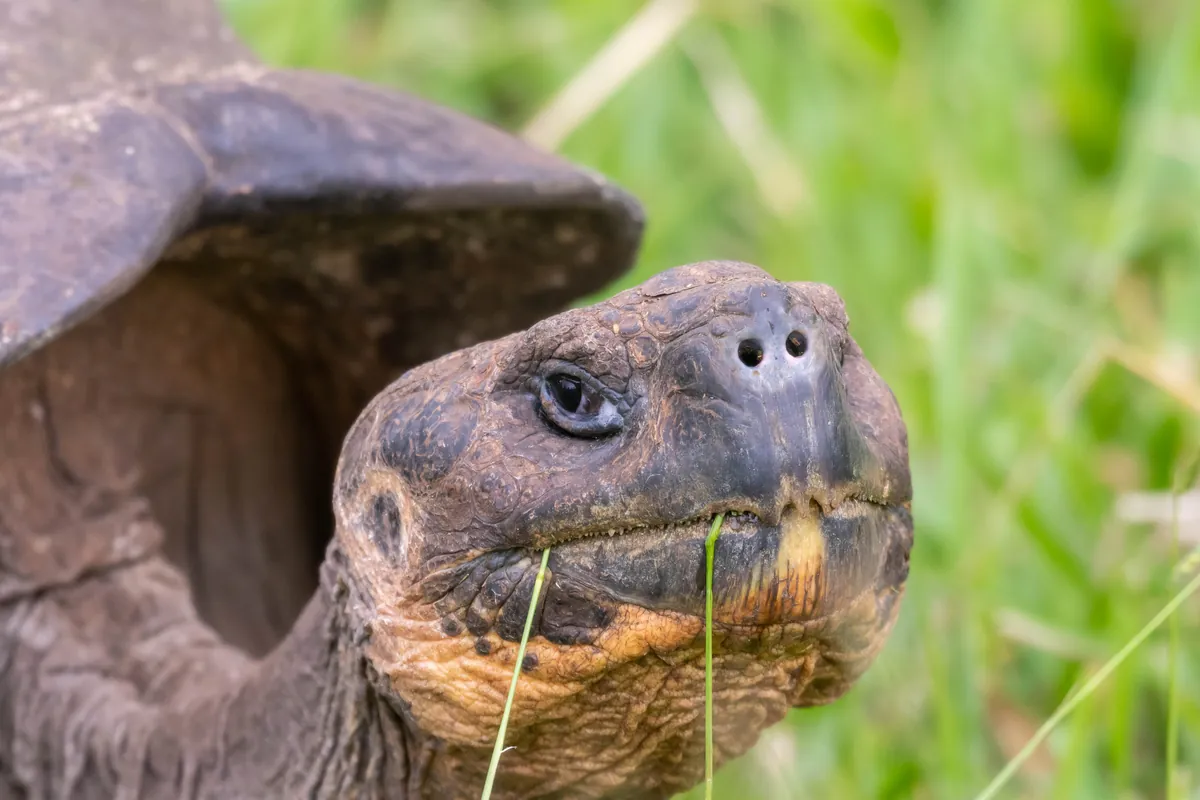
The island itself is a shield volcano of about 60 square kilometers with young lava flows and fissures, sparse vegetation, and, remarkably, a wide range of wildlife for its size. Feral goats introduced around 1950 shredded what vegetation remained, eliminating the tortoises’ food; the goat eradication that followed was one of the success stories that informed later campaigns. Pinta is not open to tourist visits, and its subspecies remains one of the two giant tortoise lineages considered extinct (with Santa Fe’s).
The other closed islands
The pattern repeats across the map:
- Daphne Major: closed to protect the finch study and nesting seabirds; famous anyway, seen from the deck.
- Wolf and Darwin: no landings at all, dive-only waters in the far north.
- North Plaza: reserved for science, while its twin South Plaza takes the visitors.
- Islets without landing sites, many smaller rocks are panga-viewing only, such as Isla Eden.
The logic is the park’s: every open visitor site carries foot traffic, erosion and invasive-species risk. Keeping a large share of the archipelago closed is how the open islands stay worth visiting. The national park rules guide explains the access system, and getting your bearings shows which islands actually appear on itineraries.
If you want to get close anyway
Some options exist at the margins. Marchena’s dive sites are reachable on certain liveaboard dive itineraries in the far north, a real trip for certified divers rather than a day tour. Panga rides give close views of closed islets’ coastlines, which is how most travelers “see” the inaccessible islands at all. For everyone else, the nearest substitutes are the open islands: Genovesa for the seabird spectacle, Santiago for the geology, Santa Fe for the endemics. Our diving guide covers which northern waters are actually reachable, and the cruise vs land guide frames what itinerary styles can include.
Standard fixed costs apply to any Galápagos trip ($200 park entry for foreign adults, $20 transit card), detailed in the entry fee guide.
Frequently asked questions
Why are some Galápagos islands closed to visitors?
To protect science and restoration work and to limit erosion and invasive species. Keeping a large part of the archipelago closed is what keeps the open sites worth visiting.
Can I dive at Marchena?
Yes, on certain liveaboard itineraries that include its northern dive sites, Punta Mejía and Playa Negra. There are no land visits.
Where is Lonesome George now?
His preserved body is displayed at the Charles Darwin Research Station in Puerto Ayora. He was the last tortoise of Pinta and died in 2012 without offspring.
Sources
- The islands, Galápagos Conservancy
- Visitor sites of the Galápagos National Park, Galápagos National Park Directorate
- Giant Tortoise Restoration Initiative, Galápagos Conservancy
Last verified: October 2026