
Travel guide · Islands
Bartolomé Island: the most photographed view in Galápagos
Bartolomé guide: the Pinnacle Rock viewpoint, snorkeling with Galápagos penguins off the beach, what the trail allows, and how day tours and cruises visit.
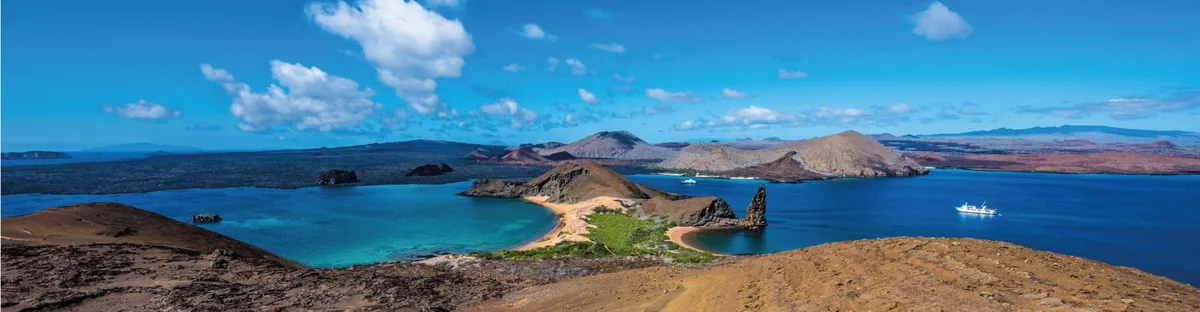
Bartolomé is the smallest island with the biggest postcard: Pinnacle Rock, the tapered tuff spike that has come to stand for Galápagos itself, and it even stars in the film Master and Commander. The island is tiny, uninhabited and trail-managed, and its cold, food-rich waters hold a small colony of Galápagos penguins, which makes it one of the best places in the archipelago to swim with them. Nearly every central-islands cruise and a large share of Santa Cruz day tours include it.
Key facts
- Area: 1.2 km² — one of the smallest islands in the archipelago, with a maximum altitude of 114 m.
- Named for Bartolomé James Sulivan, lieutenant aboard HMS Beagle; an old friend of Darwin’s voyage.
- Pinnacle Rock formed when molten lava from an undersea eruption hit seawater and cooled in stacked basalt layers.
- Access: by boat only. No town, no ferry. Standard visits come from Santa Cruz day tours (about two hours’ navigation each way) or as a fixed stop on central-island cruises. Small boats only: the park restricts which vessels may call to limit erosion.
The visitor sites, and what you can do at each
The summit trail
A 600 m wooden walkway climbs about 114 m to the island’s viewpoint: 360 degrees over Santiago, the lava fields of Sullivan Bay across the narrow channel, and, on clear days, as many as ten other islands. No shade anywhere on the trail; hats and real water matter. This short climb produces the photo on half the Galápagos marketing ever printed, and it earns it.
The northern beach and snorkeling
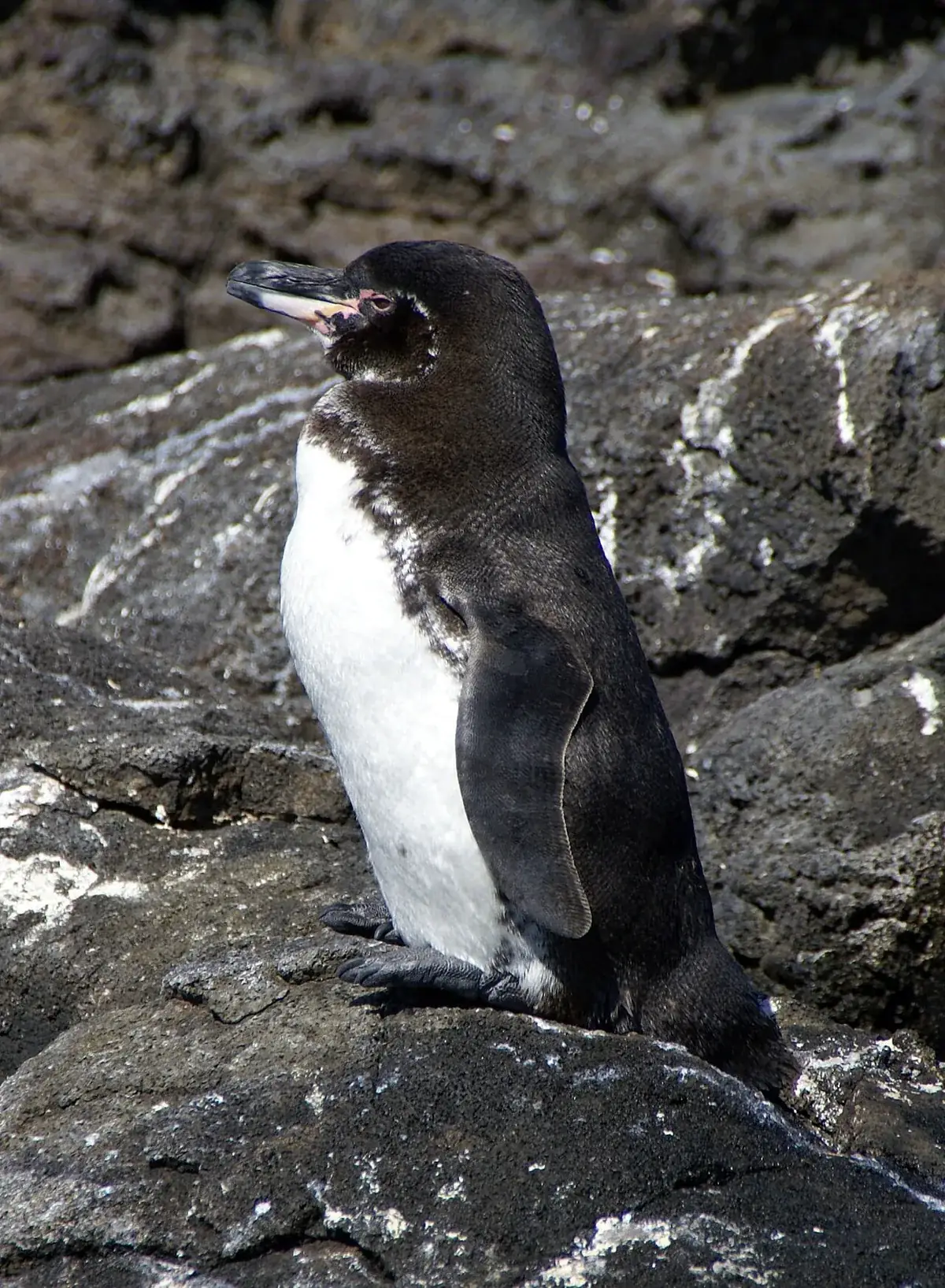
A wet landing on the beach below Pinnacle Rock, where swimming and snorkeling are allowed. The water here is cold and nutrient-rich from upwelling, which is exactly why the penguins are here: a small colony of Galápagos penguins lives around the base of the rock, and this is one of the two best sites in the islands to snorkel near them (Isabela is the other). Green turtles nest on this golden-sand beach from January to March. Whitetip reef sharks, sea lions and rays pass through the shallows; the site also works as a snorkel stop for divers heading back from deeper sites.
What you cannot do
No hiking beyond the marked trail, no climbing Pinnacle Rock itself, and kayaking is prohibited at Bartolomé, a park rule worth knowing. The visit is structured: viewpoint walk, beach time, snorkel. That is the whole island, and it is enough.
Wildlife highlights
The Galápagos penguin is the reason to come: the archipelago’s most famous small colony, with courtship peaking September to December in the cold season (penguins pair and nest from May to December). Around them: sea lions on the beach, whitetip reef sharks in the shallows, green turtles (nesting January to March), and the lava lizards and herons working the shoreline. The island is young and bare (volcanic rubble and tuff cones), so the land list is short and the view does the work. Snorkeling quality spikes in the cool season (July to December), when upwelling feeds the fish life; penguin sightings from the beach happen year-round.
How Bartolomé is visited
Two ways, both from the water. Day tours from Santa Cruz run most days in season: early departure from Puerto Ayora or the Itabaca canal, the viewpoint walk, lunch on board, and a snorkel stop, often at Bartolomé itself, sometimes paired with Sullivan Bay or Sombrero Chino nearby. Cruises on central itineraries slot it in as a morning or afternoon. If you are land-based in Puerto Ayora, this is one of the two essential day tours (with South Plaza or North Seymour depending on season).
Fixed costs apply as everywhere: the $200 park entry for foreign adults paid on arrival at the airport, plus the $20 transit card before your flight; full detail in the entry fee guide. Day tours are priced separately on top; our cruise vs land guide explains how the two styles combine, and the best time to visit calendar shows when penguin courtship and turtle nesting fall.
Who Bartolomé is for
- First-time visitors: the view is the one everyone wants, and it fits any itinerary length.
- Snorkelers who want penguins: this and Isabela are the two reliable addresses.
- Photographers: Pinnacle Rock from the summit, penguins at the base, Sullivan’s lava across the channel.
- Short trips: a single day tour from Santa Cruz covers it without committing to a cruise.
- Not for: wilderness seekers (the site is popular and managed for it) or hikers wanting distance (the trail is 600 m).
Frequently asked questions
Can I visit Bartolomé on a day trip?
Yes. Day tours from Santa Cruz run most days in season, about two hours of navigation each way, with the summit walk, lunch on board and a snorkel at the beach below Pinnacle Rock.
Will I see penguins at Bartolomé?
Often, not always. A small resident colony lives at the base of Pinnacle Rock and courts from September to December; sightings happen year-round but are never guaranteed.
How hard is the Bartolomé climb?
Easy but hot: a 600 m wooden walkway with stairs climbs about 114 m to the viewpoint. There is no shade, so bring a hat and water.
Sources
- The islands, Galápagos Conservancy
- Visitor sites of the Galápagos National Park, Galápagos National Park Directorate
- Sea birds of Galápagos, Galápagos Conservancy
Last verified: October 2026