
Travel guide · Month by Month
Galápagos in October
Galápagos in October: cool and windy with the last of the rough seas, fur seal courtship, blue-footed booby chicks, penguins courting and low-season prices.…
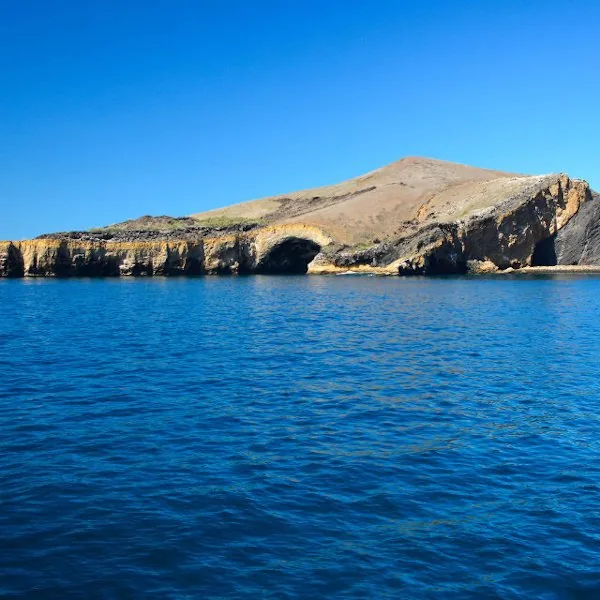
October is the last of the rough-sea months. The Humboldt is still working, the water stays cold, and then the season quietly begins to turn. Air creeps up, demand stays low, and the wildlife calendar hits one of its most interesting stretches: fur seals start their breeding season while blue-footed booby chicks are everywhere and the sea lion pups born since August are getting bold.
For travellers who can handle a wetsuit and a bit of swell, October is the sleeper month: dry-season wildlife at shoulder-season prices.
October at a glance
| October | |
|---|---|
| Air | 25 °C by day, 20 °C at night |
| Water | 21–21.5 °C (operators’ average), 23.3 °C at the surface (satellite), the coolest satellite month |
| Rain | among the driest months; essentially rainless on the coast |
| Sea | still choppy; the last month of the rough stretch |
| Wildlife | fur seals breeding, booby chicks, penguins courting, lava herons nesting, sea lion pups |
| Crowds | low to moderate; shoulder season |
| Cruises sailing | 323 departures on 26 yachts, from US$1,822 per person |
Weather in October
Days average around 25 °C, nights about 20 °C. The garúa still hangs over the highlands, and October is among the driest months of the year, essentially rainless on the coasts. Sunrise comes late by tropical standards; mornings feel like early spring, not the tropics. By the end of the month the air has turned a corner. It is subtle, but the trend reverses here.
The sea in October
The stretch from August through October is the year’s roughest, and October still belongs to it. Currents remain strong, and swells keep hitting west- and south-facing coasts. Water temperature begins its slow climb, around 21–21.5 °C by operator averages, while satellite surface readings at Puerto Ayora run about 23.3 °C, the coolest satellite month of the year. Keep the wetsuit. The sea will be the last thing to warm up, well after the air does.
For divers this is prime time: cold water, big fish and the thinnest crowds at the dive sites. The diving guide covers the day-trip sites and the liveaboards.
Wildlife in October
October’s programme splits between the tail of one season and the start of another:
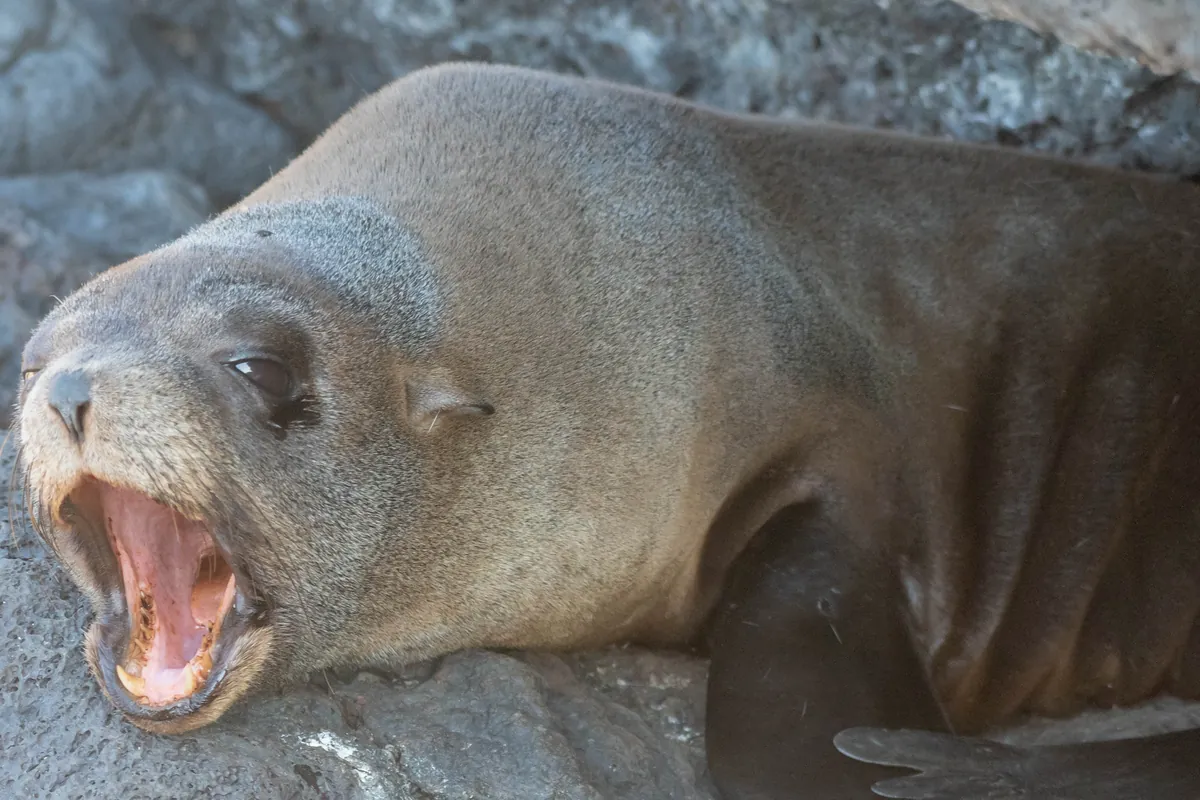
- Fur seals begin their breeding season. They prefer the shade and rockier coastlines of the western islands; Santiago’s grottos at Puerto Egas are a classic place to find them, and October is the best month for their pups.
- Blue-footed boobies are raising chicks on Española and Isabela, the tail end of the season that began with courtship in May and June.
- Galápagos penguins continue courting on Bartolomé, in the September to December window.
- Giant tortoises are still laying eggs in the drier zones.
- Lava herons begin nesting, a season that runs through March.
- Sea lion pups, born since August, are now everywhere and getting bolder.
The result is a month where you can watch a booby chick test its wings in the morning and a bull fur seal stake out territory in the afternoon.
Where to go in October
Santiago for the fur seals, Española and Isabela for the booby chicks, Bartolomé for the penguins, and the west for the cold-water specialists while the water is still rich. A central route with Santiago and Bartolomé covers the fur seals and the penguins in one go; the Santiago guide has the sites. Land-based travellers find the towns quiet and the day tours easy to book.
Crowds, prices and departures in October
Demand stays low, so October rewards flexible travellers: there are usually places available, some yachts offer deals, and a few others are finishing their dry-dock period, so check which boat you are actually getting.
In our inventory, 323 departures on 26 yachts sail in October, from US$1,822 per person, with a median fare of US$5,945. The full list is on our October departures page; the reduced fares are on the last-minute page.
The fixed costs do not move: US$200 park entrance for foreign adults and the US$20 transit card; our entry fee guide has the details. Flights are at the low end of their range.
What to pack for October
The dry-season kit still applies: windbreaker, fleece, a 3–5 mm wetsuit or a rental plan, closed shoes, motion-sickness remedy for the crossings, hat and reef-safe mineral sunscreen. Light layers for the afternoons, which are warming. The full list is in our packing guide.
Who October suits, and who should wait
October suits travellers who want the dry season’s cold-water wildlife, are comfortable with cool water and some swell, and would rather not pay high-season prices. It shares September’s low visitor numbers, and the fleet often has space.
It does not suit travellers chasing warm-water snorkelling or calm crossings, for whom November or the warm season is the better call. September sets the low point October climbs out of, November is when the sea finally calms, and best time to visit Galápagos compares the whole year.
Frequently asked questions
Is October a good month to visit Galápagos?
Yes, if you accept cool water and some swell. You get fur seal and sea lion pups, booby chicks, penguins courting, excellent diving and low-season prices with few other visitors.
Is the sea still rough in October?
Yes, October is the last month of the rough stretch that runs from August. Swell hits the west- and south-facing coasts and currents stay strong. It calms noticeably in November.
Can I snorkel in October?
Yes, with a wetsuit. Water is around 21 °C by operator averages, and the plankton-rich upwelling means more animals and less visibility than in the warm season. Sea lion pups make October snorkels memorable.
When does the water warm up again?
From November. The sea calms first, then the temperature climbs through December and January, reaching its warmest from February to April.
Sources
- Galápagos weather and seasons, International Galápagos Tour Operators Association (IGTOA)
- Monthly sea surface temperature at Puerto Ayora (NOAA satellite data)
- Sea birds of Galápagos, Galápagos Conservancy
- How to get to Galápagos, Ecuador Travel (Ministry of Tourism)
Last verified: October 2026