
Travel guide · Month by Month
Galápagos in September
Galápagos in September: the coldest, roughest month of the year, penguins courting on Bartolomé, sea lion harems in chaos, the lowest visitor numbers and…
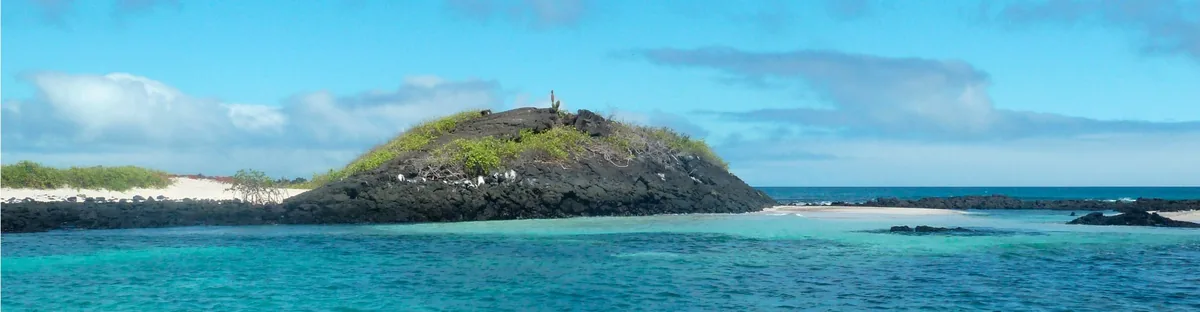
September is the extreme end of the dry season: the coldest air, the roughest sea, the quietest visitor calendar. Official arrival figures going back years show it as the low point of the tourism year. If your mental image of Galápagos is a crowded wildlife circus, September is the month that contradicts it.
It is also the month with the most honest trade in the calendar: comfort for solitude, and some travellers think it is the best trade there is.
September at a glance
| September | |
|---|---|
| Air | 24 °C by day, 19 °C at night; the coolest average of the year |
| Water | about 20 °C (operators’ average), 23.4 °C at the surface (satellite) |
| Rain | the year’s lowest, about 5 mm at Puerto Ayora |
| Sea | the roughest of the year; Humboldt at its peak |
| Wildlife | penguins courting at Bartolomé, sea lion harems, whale sharks at Darwin and Wolf, shorebirds |
| Crowds | the lowest of the year; part of the fleet in dry dock |
| Cruises sailing | 139 departures on 15 yachts, from US$2,450 per person |
Weather in September
Days average around 24 °C and nights about 19 °C, making this the coolest month of the year; Puerto Ayora’s average temperature bottoms out here too. Skies stay grey longer into the morning as the garúa thickens over the highlands. Rainfall is the year’s lowest, around 5 mm in a normal month in Puerto Ayora. Dress for it: windbreaker on deck, fleece in the evenings. Nobody comes to Galápagos in September for beach weather, and the islands do not pretend otherwise.
The sea in September
This is the roughest sea of the year. The Humboldt current peaks, the surface gets agitated, and long navigations in August and September can feel uncomfortable. Crossings that take two hours in March take the same time but move you around more. Boats compensate by planning overnight runs and lee-side landings.
Water sits near 20 °C by operator averages; satellite surface readings at Puerto Ayora average about 23.4 °C. The cold, nutrient-rich upwelling that makes it cold is also why the marine life is at its densest. A 5–7 mm wetsuit is standard for divers now; snorkellers should rent one without negotiating with themselves.
Wildlife in September
September delivers the dry season’s best behavioural drama, and fewer people to share it with:
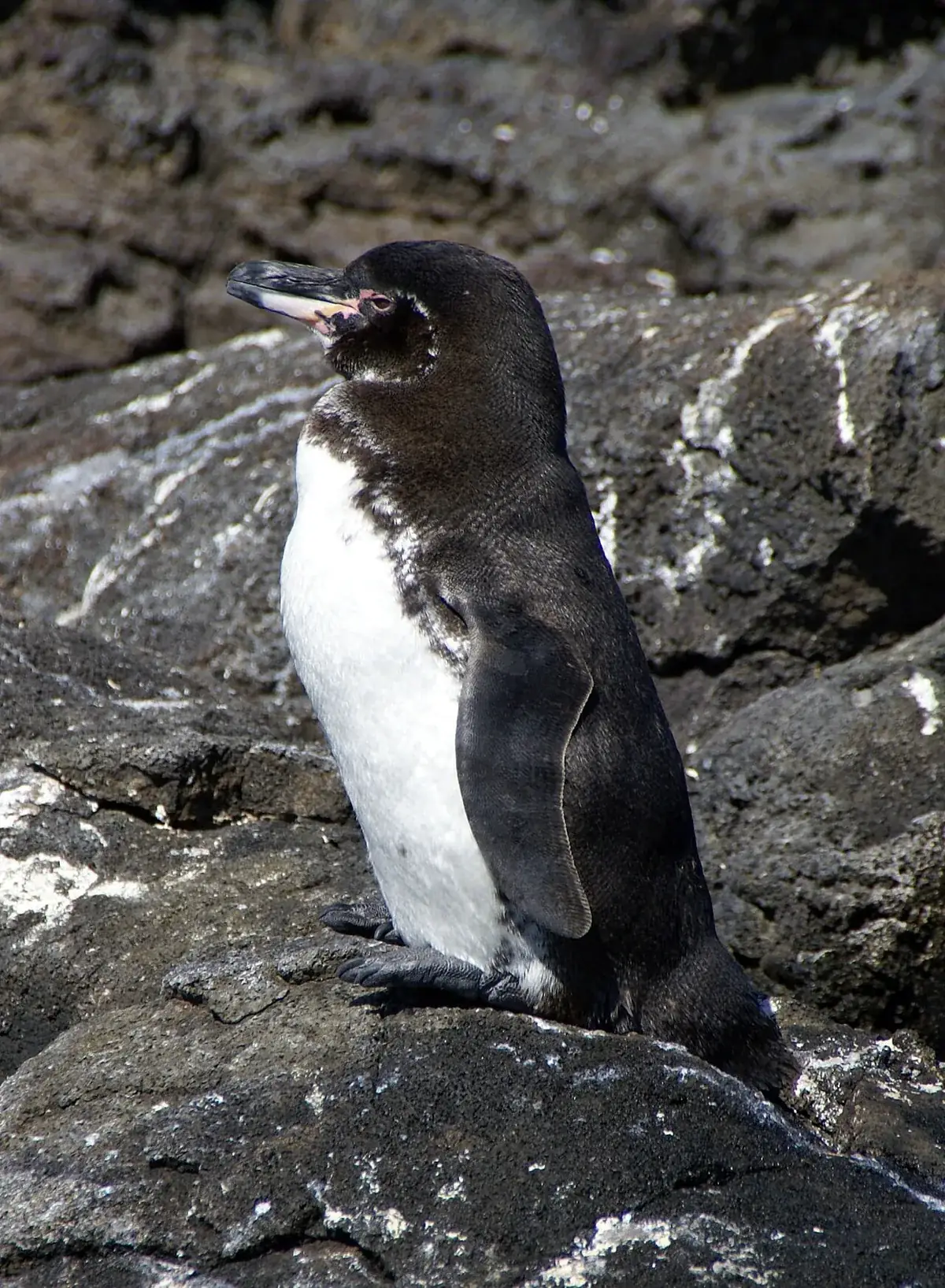
- Galápagos penguins court on Bartolomé, a season that runs September through December. It is the best stretch of the year to watch them.
- Sea lions are in full breeding mood: harems form, bulls fight, and the beaches are loud. Pup births continue into November.
- Whale sharks are still passing Darwin and Wolf on liveaboard dive trips.
- Humpbacks wrap up their stay in the Bolívar Channel by the end of the month.
- Migratory shorebirds, in since August, feed along every exposed shoreline.
One honest caveat: some yachts take their annual maintenance this month. Dry dock season thins the fleet, which is exactly why the boats that do sail run at a discount.
Where to go in September
Bartolomé for the penguins, which a central route or a Santa Cruz day tour reaches; the western islands for the last whales and the densest cold-water life; Darwin and Wolf for divers who want whale sharks with the fewest other boats. Land-based travellers get the towns almost to themselves, and Tortuga Bay and Concha de Perla are quiet. The Bartolomé guide has the penguin details.
Crowds, prices and departures in September
This is the one dry-season month where last-minute deals genuinely exist, because the fleet sails below capacity. Even so, the good boats’ best cabins still go early, and several yachts sit in dry dock. Confirm your boat’s maintenance schedule before booking; a yacht fresh out of dry dock is a fine thing to end up on.
In our inventory, 139 departures on 15 yachts sail in September, from US$2,450 per person, with a median fare of US$5,795. The full list is on our September departures page, and the reduced fares are on the last-minute page.
Fixed arrival costs apply as always: the US$200 park entry for foreign adults and the US$20 transit card, both explained in our entry fee guide. Flights are at the low end of their range.
What to pack for September
Windbreaker, fleece, beanie, long trousers, a 5 mm wetsuit or a rental plan, closed shoes with grip, motion-sickness medication, hat and reef-safe mineral sunscreen, and a dry bag. Think of it as the full dry-season kit with the warmest layer on top. Our packing guide has the list.
Who September suits, and who should wait
September suits travellers who put wildlife value and quiet ahead of comfort. You get the year’s coldest air and water, some genuinely rough crossings, and in exchange: the fewest fellow visitors, the year’s best penguin watching, and prices that dip with demand.
Avoid it if seasickness is a real problem for you, or if a cold ocean would ruin the snorkelling you came for. Families tied to school holidays rarely have the choice anyway. August sets the conditions September inherits, October keeps the cool water but begins the turn back toward calm, and best time to visit Galápagos lines up the whole year.
Frequently asked questions
Is September the worst month to visit Galápagos?
It is the coldest and roughest, and the quietest. Whether that is “worst” depends on you: divers, penguin watchers and travellers who want empty trails and lower prices often call it the best month. Warm-water snorkellers and seasick-prone travellers should pick another.
Are there cruise discounts in September?
Yes, more than in any other dry-season month. Demand is at its annual low and part of the fleet is in dry dock, so several yachts release reduced fares. Our last-minute page lists them live.
How rough is the sea in September?
The roughest of the year. The Humboldt current peaks and long crossings move you around. Choose a catamaran or a larger vessel, a midship cabin, and take motion-sickness medication before navigations.
What wildlife is best in September?
Penguin courtship at Bartolomé, sea lion harems and births, whale sharks at Darwin and Wolf for divers, the last humpbacks and the arriving shorebirds.
Sources
- Galápagos weather and seasons, International Galápagos Tour Operators Association (IGTOA)
- Monthly sea surface temperature at Puerto Ayora (NOAA satellite data)
- Sea birds of Galápagos, Galápagos Conservancy
- Annual visitor report 2017, Galápagos National Park Directorate (PDF)
Last verified: October 2026