
Travel guide · Islands
Genovesa Island: the bird island
Genovesa, Galápagos: the red-footed booby capital, Darwin Bay and Prince Philip's Steps, the nocturnal gull, the owls that hunt by day, the best months…
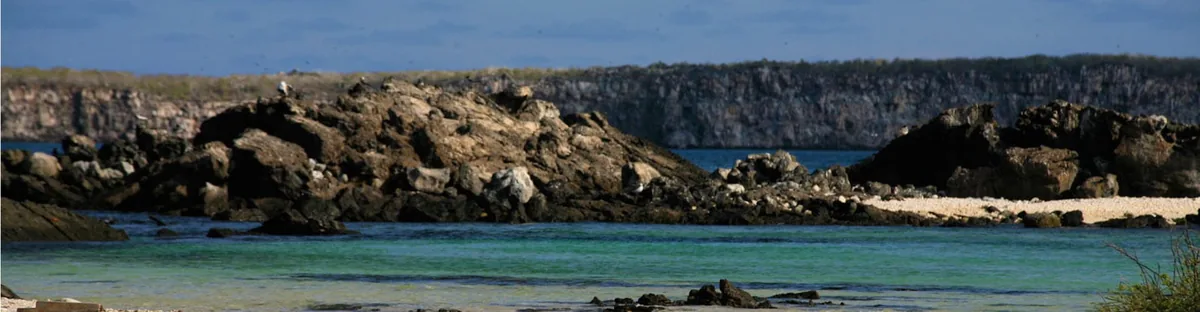
Ask a naturalist guide for their favourite island and Genovesa comes up more than any other. It is a collapsed caldera in the far north-east, a horseshoe of cliffs around a flooded bay, packed so densely with seabirds that everyone calls it the bird island. Red-footed boobies nest in its trees by the tens of thousands, great frigatebirds inflate their pouches over its trails, short-eared owls hunt storm petrels in daylight, and the world’s only nocturnal gull breeds on its cliffs. No ferry, no town, no day tour reaches it: Genovesa is cruise-only, and it anchors the northern itineraries.
Key facts
| Where | The far north-east of the archipelago, a long overnight sail from the central islands |
| Size | 14 km², low and flat; highest point 64 m. The horseshoe shape is the rim of a collapsed caldera, flooded by the sea to form Darwin Bay |
| English name | Tower |
| People | None, and no infrastructure; the island has never been settled |
| Only here | The largest red-footed booby colony in the world; dense storm petrel colonies; the Genovesa form of the marine iguana, the smallest in the islands |
| Visitor sites | Darwin Bay (the beach and the mangroves) and El Barranco, also called Prince Philip’s Steps (the cliff and the plateau) |
| How to get there | Cruise only, on northern itineraries: 983 departures on 26 yachts in our live schedule, from US$1,822 per person |
The visitor sites and what you do at each
| Site | Landing | What you do | Cruises in our schedule |
|---|---|---|---|
| Darwin Bay | Wet, onto coral sand | A trail through mangroves and saltbush among nesting boobies, frigatebirds and gulls; snorkel inside the bay | 983 departures, 26 yachts |
| El Barranco (Prince Philip’s Steps) | Dry, up a cliff stairway | A trail across the plateau to the storm petrel colony, with Nazca boobies and owls; snorkel below the cliffs | 612 + 371 departures |
Darwin Bay
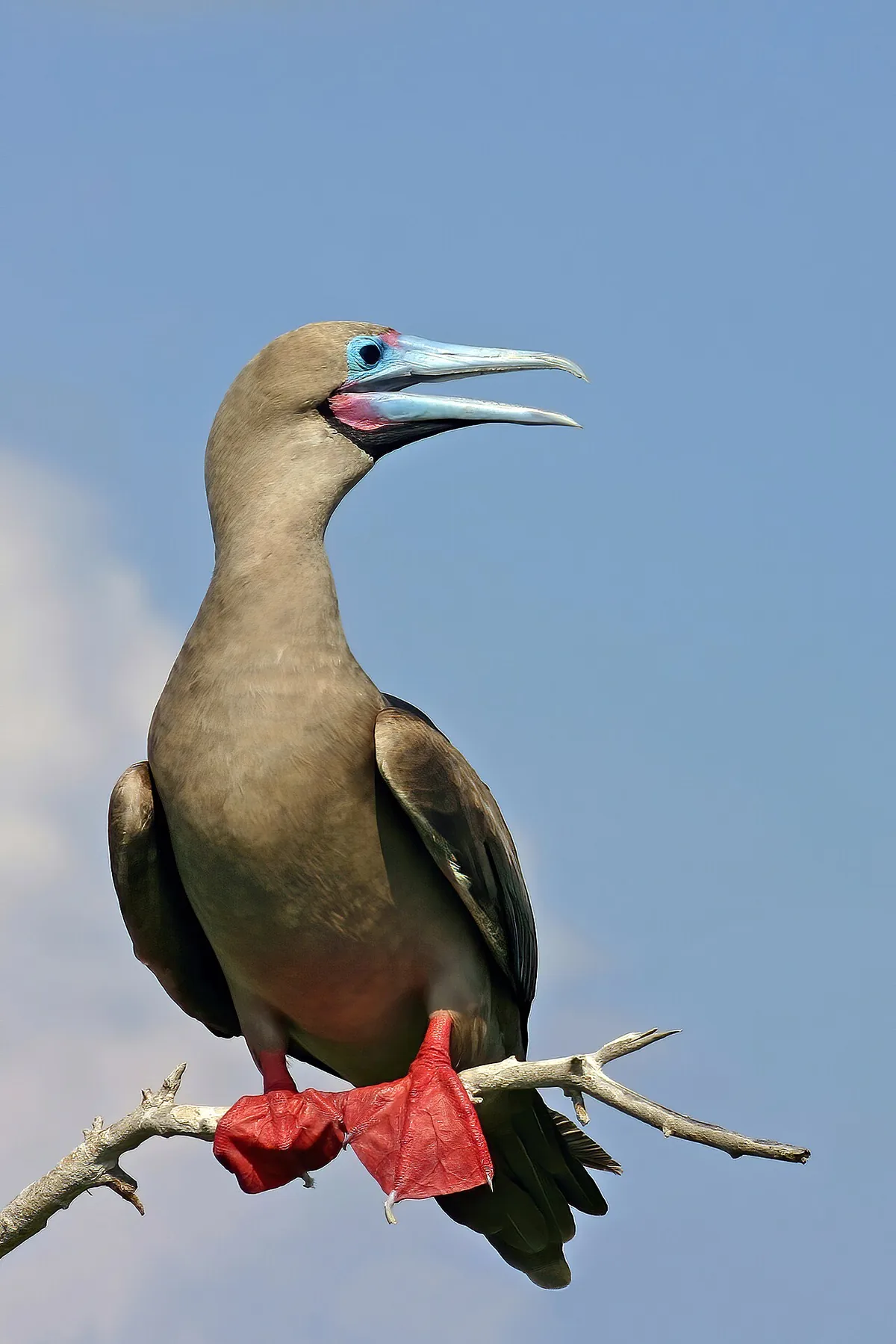
The caldera’s flooded interior. A wet landing onto a small coral-sand beach, then a short trail through mangroves and saltbush where red-footed boobies nest in the branches at eye level, the only booby that nests in trees, in the largest colony of the species on the planet. Great frigatebirds nest alongside them, swallow-tailed gulls on the rocks, yellow-crowned night herons in the shade and sea lions on the beach itself. Beyond the mangroves the trail reaches tidal pools and a cliff edge where the gulls and tropicbirds come and go. Snorkelling is inside the bay, which is sheltered and usually calm; hammerheads and manta rays occasionally pass through the submerged mouth of the crater.
El Barranco (Prince Philip’s Steps)
On the bay’s eastern side, a steep stairway cut into the cliff, named after Prince Philip’s visits in the 1960s, climbs 25 metres to the plateau. A trail crosses a palo santo forest where Nazca boobies nest along the path and red-footed boobies in the trees, then opens onto a lava field riddled with cracks where two species of storm petrel nest in extraordinary numbers, thousands of them wheeling over the rock at once. Short-eared owls hunt them here in daylight, a Genovesa speciality: with no hawks on the island, the owls took the daytime shift. At the cliff edge, red-billed tropicbirds pass below eye level. The snorkel below the cliffs, in the colder water outside the caldera, is where the hammerheads and mantas are most likely.
What you cannot do
Both sites are trail walks plus beach and snorkel. There is no free roaming, the cliffs are closed beyond the marked paths, and the park does not allow kayaking at Genovesa. The island rewards patience on foot more than activities.
Wildlife highlights
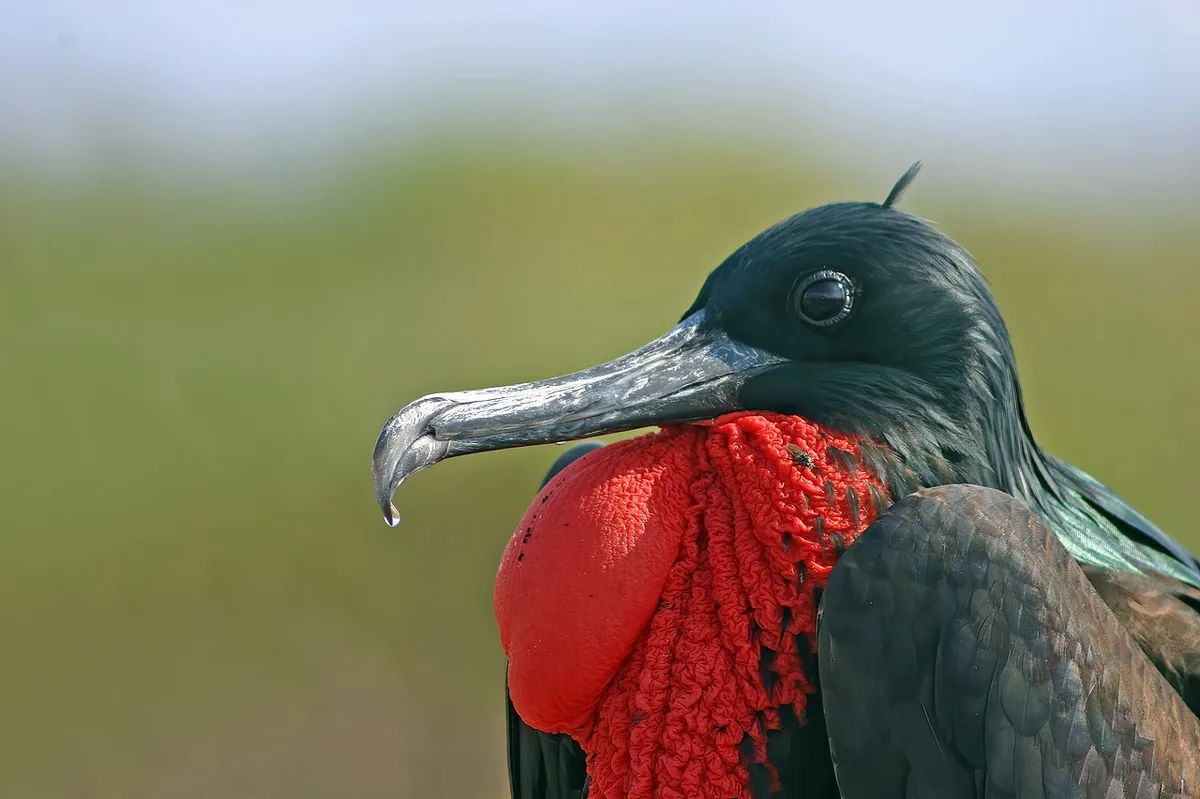
The red-footed booby is the star, with the world’s largest colony of the species. The swallow-tailed gull, the world’s only nocturnal gull, which feeds on squid far out at sea and navigates by its oversized eye, breeds here all year. Great frigatebirds, with males displaying from March to June, and magnificent frigatebirds in smaller numbers. Nazca boobies on the plateau. Galápagos doves pollinating the soft-spined Opuntia: with no bees on the island, the cactus evolved to use the doves and lost its spines. Short-eared owls, storm petrels, lava gulls, the tiny Genovesa marine iguana and, in the water, fur seals, sea lions, rays and the occasional hammerhead. If it nests in trees, cliffs or lava cracks in Galápagos, it probably nests here.
When to visit
| Months | What is happening on Genovesa |
|---|---|
| March to June | Peak great frigatebird courtship: the most red pouches on show; red-footed boobies nesting |
| June | Short-eared owls courting on the plateau |
| July to October | Nazca boobies and swallow-tailed gulls nesting; cooler, livelier water outside the caldera with more chance of hammerheads and mantas |
| December to March | Warm, calm, clear water for the Darwin Bay snorkel; booby chicks in the trees |
| All year | Red-footed boobies, swallow-tailed gulls, storm petrels and owls are resident |
There is no bad month for Genovesa; the frigatebird months are the showiest. The archipelago-wide calendar is in best time to visit.
How Genovesa is visited
Northern cruises give it a full day, typically Darwin Bay in the morning and El Barranco in the afternoon, with snorkelling between. Because of the distance, it appears on 8-day itineraries and on 5- and 6-day northern routes, and many 4-day trips skip it; the yachts sail there overnight and back the following night, which is also the longest crossing of most itineraries (our seasickness guide has advice for it). There is no land-based way to visit and there never will be: the island is uninhabited and far from any port. Choosing a boat that includes it is a question of itinerary, not of yacht; our how many days guide shows which lengths reach the north, and the cruise itineraries explained page decodes the route names.
Standard entry costs apply: the US$200 park fee for foreign adults at the airport, plus the US$20 TCT card before your flight, both in the entry fee guide.
Who Genovesa is for
- Birders, full stop. This is the best island in Galápagos for seabirds and one of the best anywhere.
- Photographers: boobies at eye level, frigatebird displays, petrels swirling at the cliffs, owls in daylight.
- Snorkellers who like the cold side: the water outside the caldera is where the big animals pass.
- Not for: land-based travellers, short itineraries, or anyone who needs a beach day over a walking day. If Genovesa is the priority, say so when booking: itineraries, not yachts, decide.
Frequently asked questions
Can you visit Genovesa without a cruise?
No. Genovesa has no port, no ferry and no day tours; it is reached only by cruise yachts on northern itineraries, usually of five days or more.
What is Genovesa Island famous for?
Its seabirds: the largest red-footed booby colony in the world, dense storm petrel colonies hunted by short-eared owls in daylight, great frigatebirds in display, Nazca boobies and the world’s only nocturnal gull.
What are Prince Philip’s Steps?
A stairway cut into the cliff on the eastern side of Darwin Bay, named after Prince Philip’s visits, that climbs to the plateau where the storm petrel colony and the owls are. The site’s Spanish name is El Barranco.
When is the best time to visit Genovesa?
Any month for the resident boobies, gulls and petrels; March to June for the frigatebird displays; the cooler months for hammerheads and mantas in the water outside the caldera.
How many days do you need on a cruise to reach Genovesa?
Usually five or more. The island is a long overnight sail from the centre, so it features on 5-, 6- and 8-day northern itineraries and on most 10- to 15-day routes; 4-day cruises rarely include it.
Related reading
The three birds that define the island are in the red-footed booby, frigatebird and Nazca booby guides; the bird family as a whole is in the Galápagos birds guide; and the island’s place on the map is in getting your bearings.
Sources
- Genovesa Island, Galápagos Conservancy
- Sea birds of Galápagos, Galápagos Conservancy
- Visitor sites, Galápagos National Park Directorate
Last verified: October 2026