
Travel guide · Wildlife
Frigatebirds
Great and magnificent frigatebirds in Galápagos, the red pouch display, 56-day nonstop flight, kleptoparasitism and which colonies to visit.
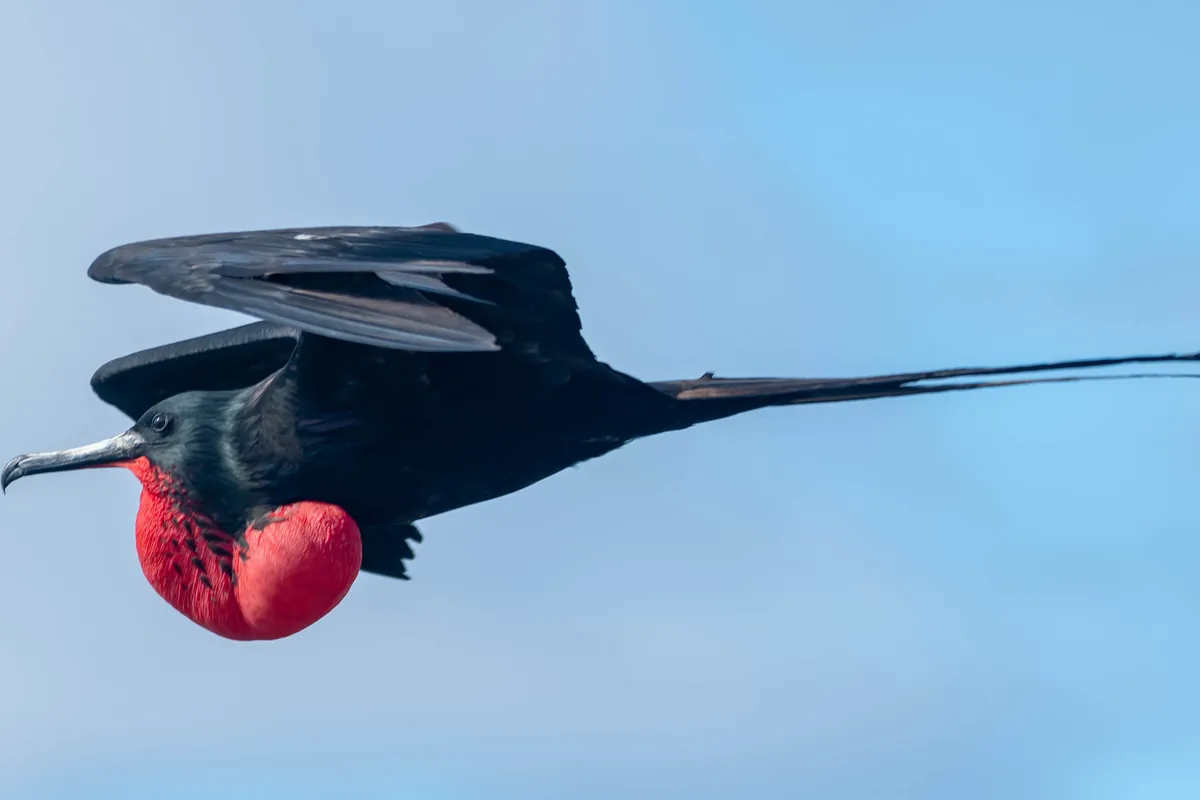 Photo: David Brito
Two frigatebird species nest in Galápagos, the great and the magnificent, and they are the sky’s tyrants: huge wings, forked tails, and a habit of robbing other birds mid-flight. On the ground they look disheveled and walk badly, they cannot swim, and the males inflate a red balloon to win a mate. Here is how to read a colony.
The two species, and how to tell them apart
The magnificent frigatebird (Fregata magnificens) reaches a 114 cm wingspan and the great frigatebird (Fregata minor) 105 cm. In the field the reliable tells are behavior and voice. Great frigatebirds travel much farther out to sea, so the ones you see wheeling close over the islands are usually magnificents. Their calls differ too: great frigatebirds gobble like turkeys, magnificents make a drumming sound.
Both species nest in Galápagos, and a few sites host both in the same colony. Cerro Tijeretas on San Cristóbal is one of the few places where the two species share a colony, and North Seymour holds one of the archipelago’s largest populations. Genovesa and Floreana also host colonies.
The red pouch display
The male’s throat pouch inflates into a red balloon each breeding season and he drums on it with his beak, wings spread, until a female lands beside him. The display peaks from March to May on Genovesa and San Cristóbal and gets going from June on North Seymour. It is the single most photographed behavior on those islands, and in person the drumming sounds like a soft heartbeat.
The flight record
Frigatebirds have been tracked staying airborne for 56 days without landing, averaging around 260 miles (420 km) a day, and they sleep in the air with half a brain at a time. They can cover up to 30 miles (50 km) without flapping. The catch is that their feathers are not waterproof, so they cannot rest on the sea like every other seabird, which is where the piracy comes in.
The pirate life
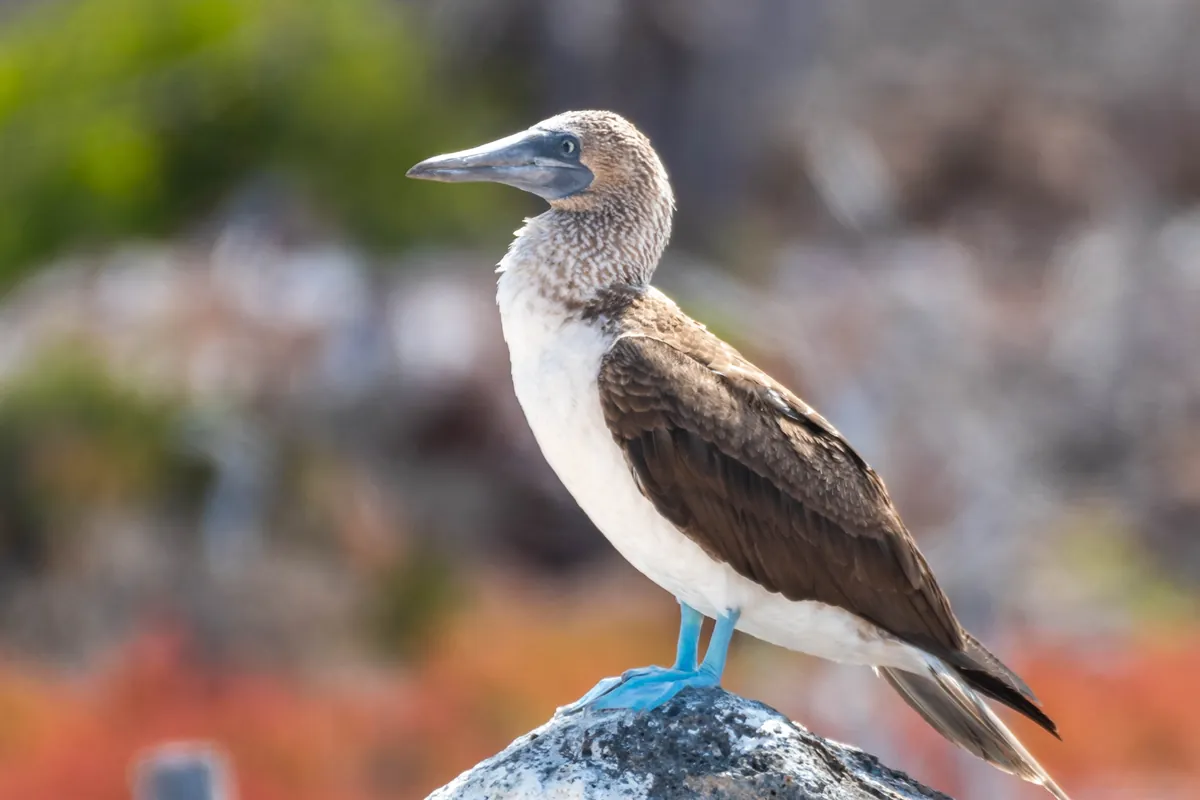
Because they cannot land on water, frigatebirds chase boobies and terns until the victim disgorges its catch, then snatch it in mid-air. Guides call it kleptoparasitism and the colony sites explain why: frigatebirds nest next to boobies on North Seymour precisely because the boobies are reliable food couriers.
Parenting that lasts a year
A frigatebird pair raises a single egg, and the care split is a world record. The male tends the nest for about three months, the female for around nine. Incubation runs about 56 days, the chick leaves the nest at roughly 167 days, and the mother keeps feeding it up to a year. That is why colonies show every stage at once: eggs, naked chicks, gangly juveniles and displaying males.
Where and when
- North Seymour: largest colonies, easy trail, pouch display from June.
- Genovesa: Darwin Bay and Prince Philip Steps, display peaks March to May.
- Cerro Tijeretas, San Cristóbal: both species in one colony, walkable from town.
- Floreana: additional nesting sites.
The species are listed as of Least Concern (IUCN, both species) and are protected inside the marine reserve. For the neighbors they rob, see our blue-footed booby page, and for the full bird list our Galápagos birds guide links every species. The wildlife calendar shows which colonies are displaying in your month.
Why the pouch, and why the males cannot swim
The red pouch is a flap of bare throat skin that the male inflates with air over about twenty minutes until it is the size of a balloon, and he keeps it inflated for hours while females fly overhead choosing among the displaying males. It is a pure advertisement: a big, bright pouch and a loud drumming signal a healthy bird with a good nest site, and once a female lands beside him, the pouch deflates and the serious work of building the nest begins. Males display in groups, so a single tree on North Seymour can hold five or six red balloons at once, which is the photograph everyone takes.
The pouch is also why the frigatebird’s whole life is built around not getting wet. Its feathers lack the waterproof oils other seabirds have, its legs are tiny and its wings are enormous, so a frigatebird on the water cannot take off again and drowns. Everything else follows: the snatching of fish from the surface in flight, the robbing of boobies, the weeks spent aloft without landing, and the nesting on bushes beside the booby colonies that feed them.
Frequently asked questions
Where can I see frigatebirds with the red pouch?
North Seymour from June, Genovesa and Cerro Tijeretas on San Cristóbal from March to May. Males inflate the pouch in groups, often several to a tree.
How do I tell the two frigatebird species apart?
Great frigatebirds travel far out to sea and gobble like turkeys; magnificent frigatebirds wheel close over the islands and drum. The ones overhead near the coast are usually magnificents.
Why do frigatebirds steal food?
Their feathers are not waterproof, so they cannot land on the sea to fish. They snatch fish from the surface in flight and chase boobies and terns until they drop their catch.
Sources
Last verified: October 2026