
Travel guide · Wildlife
Galápagos marine iguana
The only ocean-going lizard on Earth. Where marine iguanas gather in the biggest colonies, when they breed and turn red-green, and what threatens them.
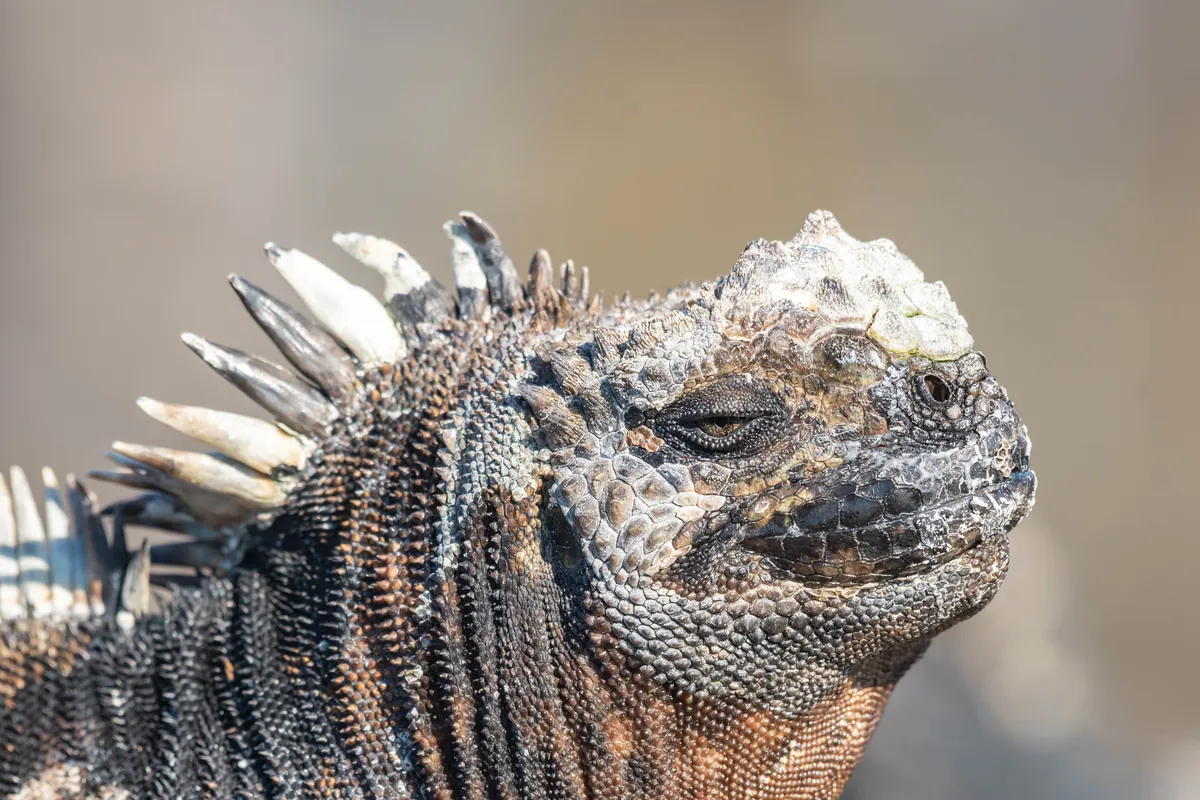 Photo: David Brito
The only lizard in the world that swims and feeds in the sea, and the animal you will bump into most often here: on lava rocks, on trails, asleep on the dock. Darwin called them “imps of darkness” in 1835, which was rude but fair. They are also the flagship of a bigger fact: 97% of Galápagos reptiles are endemic (galapagos.org), and this one exists nowhere else on Earth.
Where to see them
- Fernandina, Punta Espinosa. The largest colony in the archipelago, with the animals stacked in piles on the lava. Landing is timed to high tide.
- Isabela. Punta Albemarle holds some of the biggest individuals anywhere; Tortuga Bay on the land-based side of Santa Cruz and the beaches around Puerto Villamil both have large, easy groups.
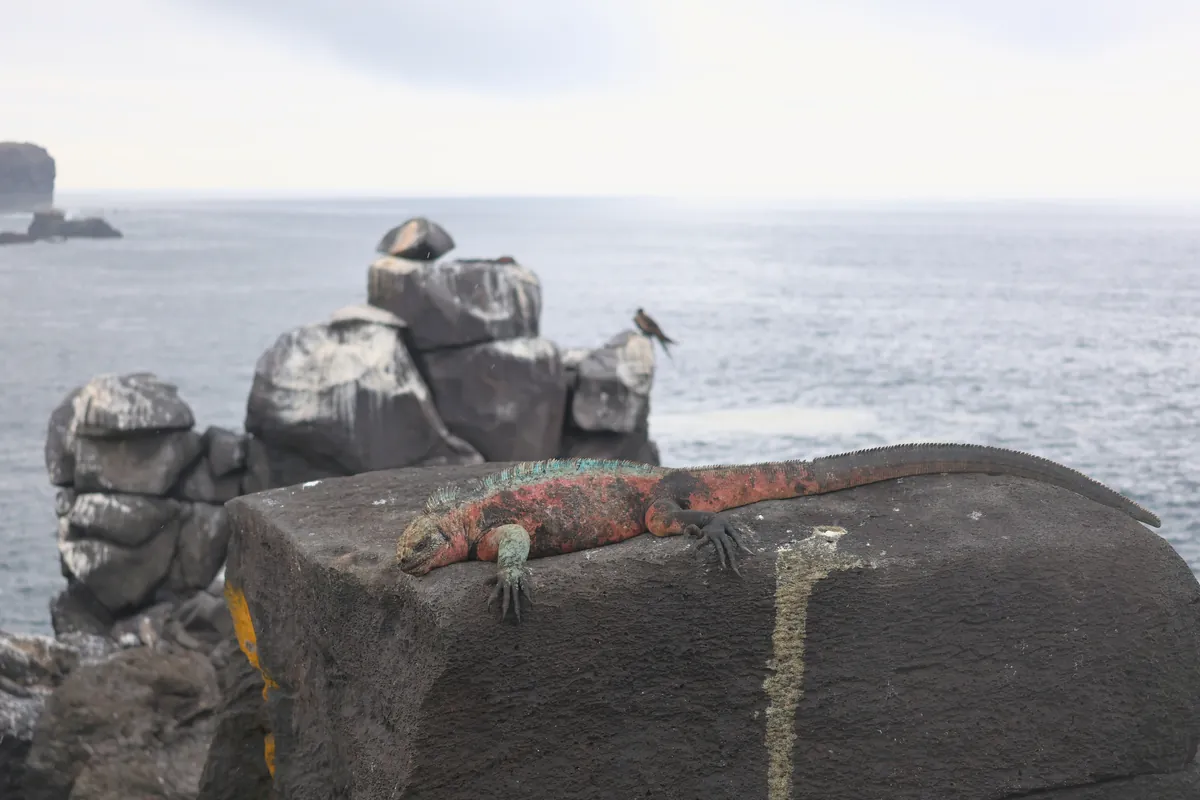
- Española, Punta Suárez. During the breeding season the iguanas here flush red-and-green.
- Genovesa. Its iguanas are the smallest subspecies in the islands.
When to see them
They are visible year-round, but the calendar matters if you want color or babies. Mating runs January to March, and breeding males change color to impress females, shifting to red, green and yellow tones. Locals call Española’s December-shifted males “Christmas iguanas”. Nesting follows: females dig burrows close to the visitor trails on Santa Cruz around February–March, and on Fernandina around May. Hatchlings emerge 3–4 months later. On Fernandina in May and June, racer snakes hunt those newborn iguanas at Punta Espinosa, which is the single most reliable snake-watching window in the islands.
How they work
Adult males reach 4–5 feet (including tail) and about 1.5 kg; females are half that. Average life is around 12 years, with records near 60. The flat snout and sharp teeth are built for one food: green algae scraped off underwater rock. Females and juveniles feed in the intertidal zone at low tide; big males dive for it, regularly to 10–15 m and down to about 30 m, clinging to rock with long claws in the surge.
Cold water is the constraint. A swim can cost an iguana up to 18°F of body heat, so they dive with their heart rate slowed by about half to stretch their oxygen, then spend hours flat on dark lava recharging. In starvation years they do something almost no other lizard can: they shrink, absorbing up to 20% of their skeleton and soft tissue, and regrow when algae return. They sneeze excess salt through nasal glands, which is why every close-up photo shows a white crust on the head.
Conservation
The species is listed as Vulnerable (IUCN 2020 assessment), and the population is huge but fragile: estimates run from about 33,000 individuals after a strong El Niño famine to as many as 350,000 after consecutive La Niña years, with fewer than 210,000 mature individuals. Eleven subspecies are recognized, varying by island; El Niño events can kill 10–90% of the iguanas in affected colonies. The core problem is concentration: every marine iguana on Earth lives on these islands, dependent on cold-water algae that El Niño years can wipe out. Keep the park’s 2-metre distance rule anyway (the full rules here); these animals will nap in your walking line without help.
Practical notes
- Best snorkeling with them: Punta Espinosa on Fernandina, where they feed in the shallows, and Tortuga Bay on the land-based side of Santa Cruz.
- Photography: early morning, when they are still too cold to move and the lava light is soft.
- Odd behavior worth knowing: on North Seymour, marine iguanas have been seen eating land plants, which is unusual for the species.
Frequently asked questions
Where are the biggest marine iguana colonies?
Punta Espinosa on Fernandina, where the animals pile up by the hundred on the lava. Isabela, Española and the beaches around Puerto Villamil and Tortuga Bay on Santa Cruz also hold large, easy groups.
When do marine iguanas change colour?
In the breeding season, January to March, when the males turn red, green and yellow to impress females. On Española the change begins in December, which is why locals call them Christmas iguanas.
Are marine iguanas dangerous?
No. They are herbivores that graze algae and ignore people. Keep the park’s two-metre rule, mostly for their sake: they will nap in your path without help.
Sources
Last verified: October 2026