
Travel guide · Islands
Rabida Island: red sand, salt lagoons and one crowded shoreline
Rabida guide: why the sand is red, the flamingo lagoon behind the beach, pelican nesting in the saltbush, and how this small island is visited.
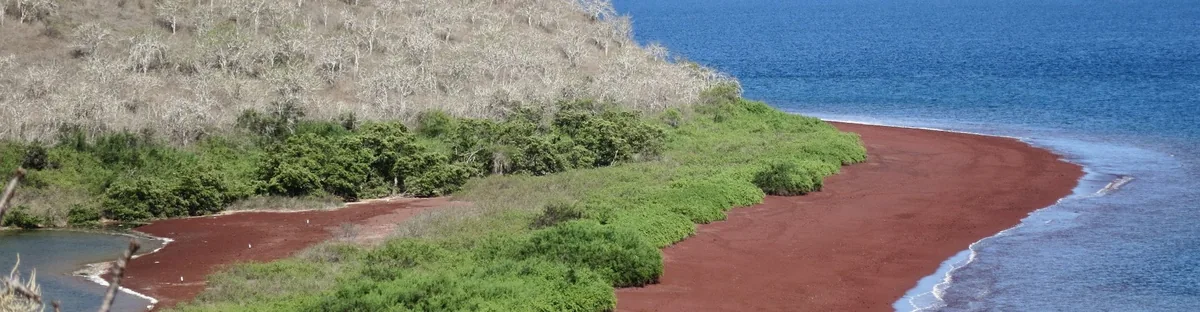
Rabida’s sand is a deep garnet red, and it is the first thing you notice from the boat. The color comes from iron-rich volcanic lava that has oxidized over time; it colors the soil and the beach alike. The island is small, under five square kilometers, with a single land visitor site, yet it consistently delivers: flamingos in the lagoon behind the beach, brown pelicans nesting in the saltbush, and one of the friendliest sea lion colonies for snorkeling in the central islands.
Key facts
- Area of 4.9 square kilometers, uninhabited, in the central islands near Santiago (cruises visit it alongside Santiago and Chinese Hat).
- A single terrestrial visitor site, landing on the red beach.
- Named after the convent where Columbus left his son during his voyage to the New World.
- The iron content of its lava gives the island its red soils: there is no other explanation needed.
- Behind the beach sit saltwater lagoons where flamingos feed and breed.
The red beach and its residents
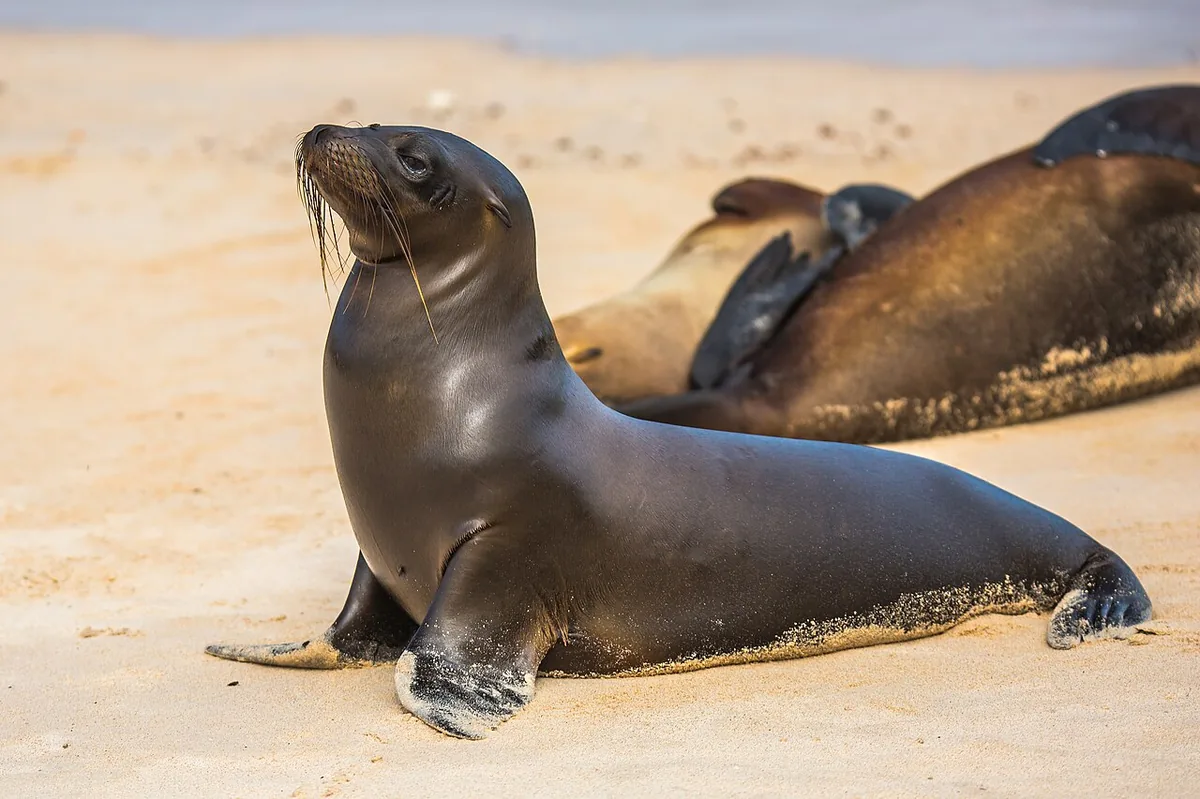
The landing puts you directly onto the red sand, where sea lions dominate the shoreline. Brown pelicans nest just behind the beach among the saltbush, and Rabida is one of the best places in Galápagos to observe them: during breeding season the adults trade their plain tones for a dark maroon neck and a wash of gold on the head.
A short walk behind the beach leads to the lagoons. Along the way: marine iguanas, lava lizards and a surprising density of finch species for such a small island, where nine varieties have been counted alongside Galápagos hawks.
Flamingos in the lagoon
The saltwater lagoons behind the beach are one of the archipelago’s more reliable flamingo sites. These are American flamingos, feeding with their heads inverted, their pink coming from carotenoids in their diet. They are shy birds: keep your distance and your voice down, and treat any sighting as a bonus rather than a promise. Flamingos here feed and breed in the lagoons, and they are the reason many central-island cruises schedule the stop.
A cautionary tale about rats
Black rats arrived on Rabida only decades ago, and the damage was fast: one plant species, Galvezia leucantha pubescens, has since become critically endangered, and the rats are the suspected cause. It is a compact lesson in how quickly an invasive species can rewrite an island’s ecology, and why every airport inspection in Galápagos matters. If you are curious about the rules behind that inspection, our national park rules guide covers them.
Snorkeling
The water off Rabida is calm and beginner-friendly, with sea lions the main event: Rabida appears on the short list of islands with the archipelago’s best sea lion colonies, and swimming with them is a realistic outcome here. Reef fish and rays round out the session. Our snorkeling guide has the full site-by-site rundown.
How to visit
Rabida is reached by boat only: cruise itineraries through the central islands include it regularly, and some Santa Cruz day tours combine it with nearby Chinese Hat (Sombrero Chino). A typical cruise day pairs Rabida’s walk with an afternoon snorkel, sometimes with Chinese Hat as the second landing. Entry costs are the standard fixed set ($200 park fee for foreign adults, $20 transit card), detailed in the entry fee guide. If you are deciding between cruise and day tours, start with cruise vs land, and for its place among the central islands, see getting your bearings.
Frequently asked questions
Why is Rábida’s sand red?
Iron-rich volcanic lava that has oxidised over time colours both the soil and the beach a deep garnet red.
Will I see flamingos at Rábida?
Possibly. The saltwater lagoon behind the beach is one of the more reliable flamingo sites, but the birds move between islands and the population is small, so treat a sighting as a bonus.
How do I get to Rábida?
By cruise on central itineraries, often paired with Santiago or Chinese Hat, or on some Santa Cruz day tours that combine it with Chinese Hat. There is no ferry or town.
Sources
- The islands, Galápagos Conservancy
- Visitor sites of the Galápagos National Park, Galápagos National Park Directorate
Last verified: October 2026