
Travel guide · Islands
South Plaza Island: the red carpet, the hybrid iguanas, and one very good cliff
South Plaza guide: the only island where land and marine iguanas hybridize, a Sesuvium carpet that turns red in the dry season, and a bachelor sea lion…
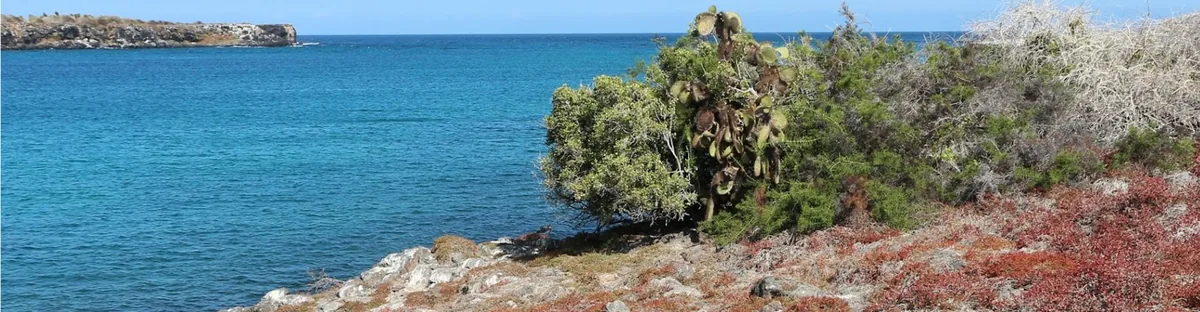
South Plaza is one of the smallest islands you will walk in Galápagos, and one of the best. It packs a land iguana population, a sea lion colony, cliff-nesting seabirds and a plant that repaints the island season by season into a single loop trail of about a kilometer. It sits just off the east coast of Santa Cruz, which makes it a standard day tour from Puerto Ayora as well as a regular cruise stop.
Key facts
- One of a pair: the two Plaza islands lie off Santa Cruz’s east coast, and only South Plaza receives visitors. North Plaza is reserved for science and conservation.
- Tiny by island standards: about 0.13 square kilometers (0.05 square miles), rising to 23 meters (70 feet) above sea level. It formed when lava welled up from the seafloor, not from a volcano’s cone.
- Uninhabited, with a single visitor site reached by dry landing.
- The trail is 0.8 miles (1.2 km) of moderate walking, about two hours with stops.
- South Plaza is often called one of the best visitor sites in Galápagos for the sheer number of species packed into its small area.
The hybrid iguanas: the only place it happens
South Plaza is the only place in the world known where marine and land iguanas live in overlapping territory, and occasionally interbreed. The result is the hybrid iguana: gray and sterile, and rare enough that seeing one is a genuine event. The land iguanas here are numerous but smaller than their mainland-island cousins, and they share the trail with marine iguanas heading to and from the water.
The Sesuvium carpet
The ground cover here is Sesuvium, a succulent that locals call carpetweed, and it runs the island’s color calendar. In the rainy season, roughly February to May, it is bright green. From June through January, as the dry season bites, it shifts to red, orange and purple, spreading over the lava like a slow tide of paint. If your dates are flexible and you want South Plaza at full color, the dry season wins.
Cactus grows here too, and the land iguanas depend on it: its pads and fruit are their main food in the dry months.
Wildlife along the trail
Beyond the iguanas, expect:
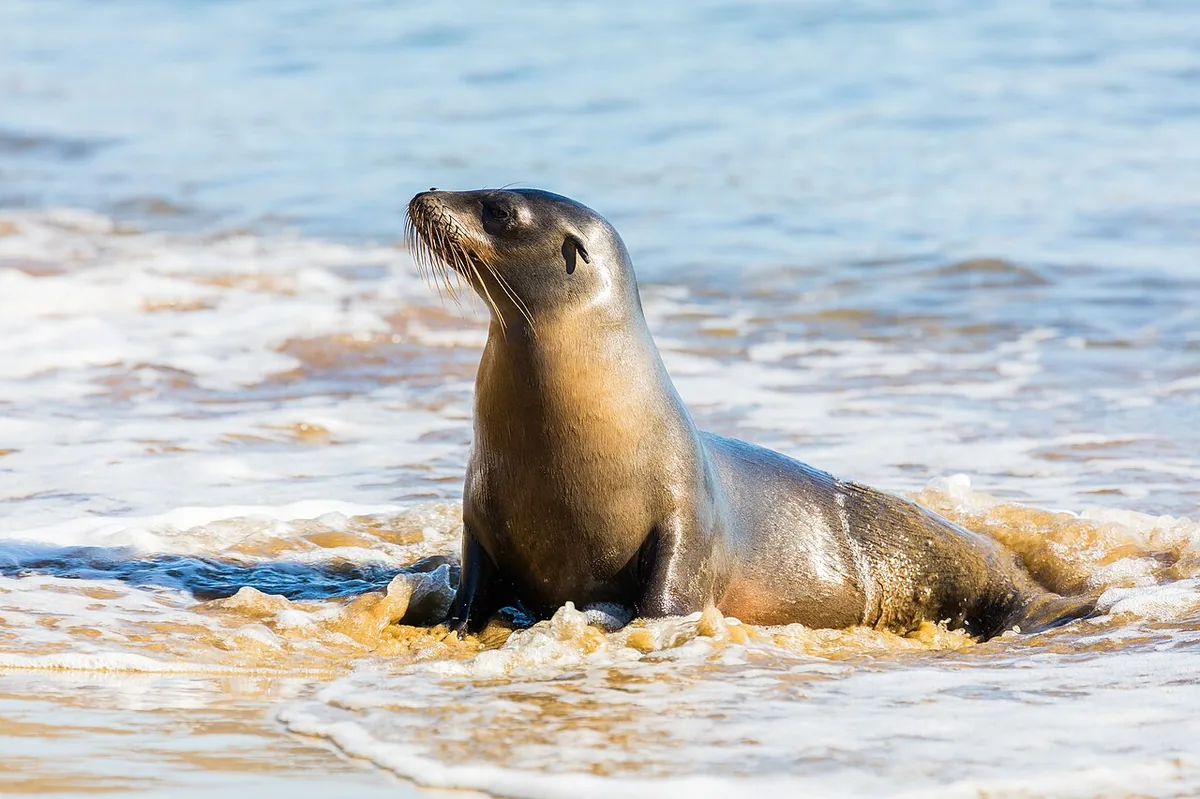
- A bachelor colony of sea lions at the end of the trail — males without a harem, loafing on the rocks below the cliffs and sometimes bearing the scars of lost fights.
- Swallow-tailed gulls, the world’s only nocturnal gull, which finds South Plaza among its best islands.
- Red-billed tropicbirds gliding past the cliff edges, where they nest in crevices.
- Opuntia cactus, lava lizards and a resident population of Darwin’s finches.
The cliff edge at the trail’s end is real and unguarded in the way Galápagos viewpoints are; the marked path is there for a reason.
Snorkeling
The channel between South Plaza and North Plaza is a sheltered snorkel with reef sharks, manta rays and sea lions. It is not a guaranteed stop on every trip, since many day tours treat it as optional depending on conditions, but when it runs it is a calm, easy session. More on what the water offers across the archipelago in our snorkeling guide.
How to visit
Day tours from Santa Cruz take about two hours of navigation each way and combine well with a morning site; cruises on eastern and central itineraries also call here. Either way you get the standard set of fixed costs: the $200 park entry for foreign adults and the $20 transit card, both explained in the entry fee guide. If you are weighing a day tour against sleeping on a boat, our cruise vs land guide lays out the trade.
South Plaza pairs naturally with North Seymour and Bartolomé on central itineraries; how the islands cluster geographically is in getting your bearings.
Frequently asked questions
When does South Plaza turn red?
From June through January, when the dry season turns the Sesuvium ground cover red, orange and purple. In the rainy months, February to May, it is bright green.
Can I see the hybrid iguanas?
Rarely. South Plaza is the only place land and marine iguanas share territory and occasionally interbreed, but the grey, sterile hybrids are few. Seeing one is luck, not a schedule.
How do I visit South Plaza?
By day tour from Puerto Ayora, about two hours of navigation each way, often combined with Santa Fe, or as a stop on eastern and central cruise itineraries. The trail is a 1.2 km loop.
Sources
- The islands, Galápagos Conservancy
- Visitor sites of the Galápagos National Park, Galápagos National Park Directorate
- Genetics and conservation of Galápagos land iguanas, PLOS ONE 2019 (PubMed Central)
Last verified: October 2026