
Travel guide · Islands
Mosquera Islet: a sandbar with a sea lion problem (the good kind)
Mosquera guide: a sandbar of sea lions between Baltra and North Seymour, lava gulls, orcas offshore, and the dive site with garden eels at 15 to 18 meters.
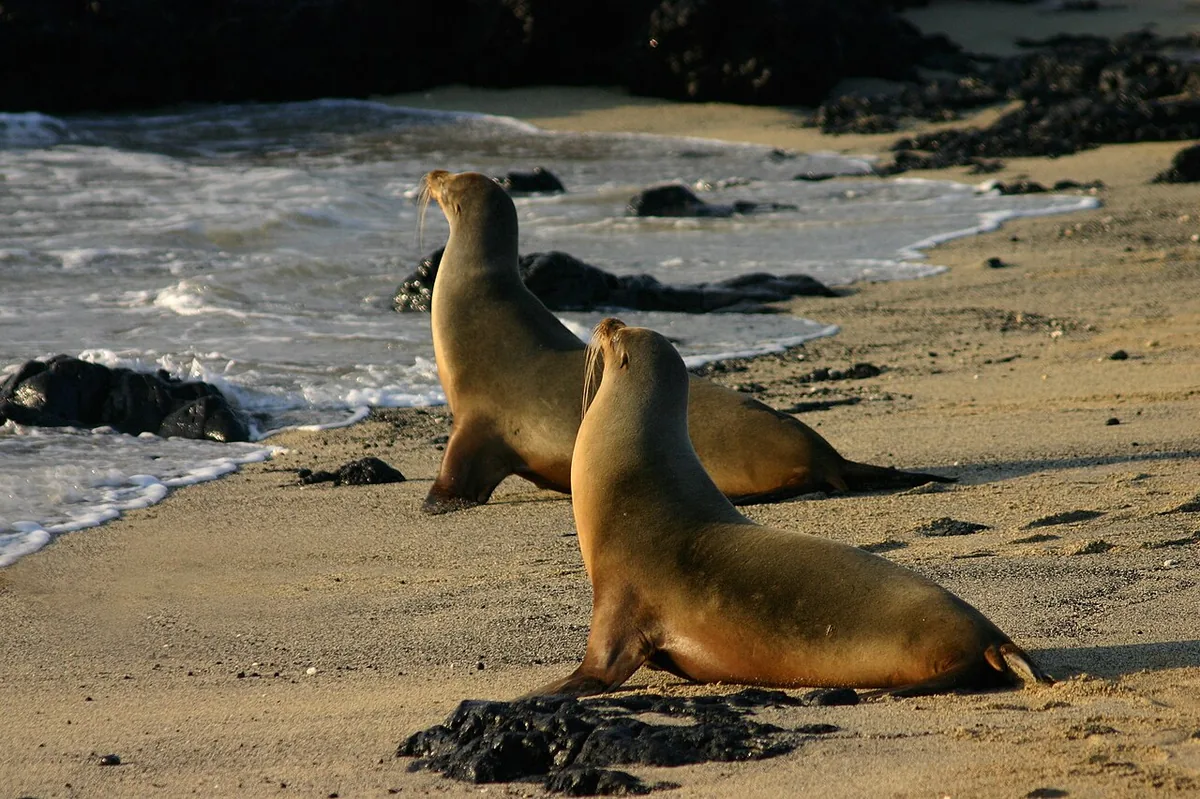
Mosquera is one of the smallest landfalls in Galápagos: a flat white sandbar between Baltra and North Seymour, barely a meter above the sea. What it lacks in size it repays in sea lions (its colony is among the largest in the archipelago) and in convenience: it sits minutes from the airport channel, so boats stop here at the start or end of itineraries when the schedule has an hour to spare. No trails exist on Mosquera. You land, you walk the sand, and the island is small enough that free exploration is the visit.
Key facts
- A strip of sand roughly 600 by 160 meters (about 0.06 square kilometers), with a maximum altitude under 2 meters.
- Origin: like North Seymour, an uplifted sand and coral formation rather than a volcanic cone; over centuries, corals and the islet’s rocks trapped sand carried by the currents running between Baltra and North Seymour.
- Uninhabited, with no marked trails and a wet landing. It is the only visitor site in Galápagos without defined paths.
- Often visited at the beginning or end of a cruise, precisely because it is so close to Baltra.
Sea lions first, everything else second
The colony here is one of the archipelago’s biggest, and the animals use the whole beach: pups in the shallows, juveniles sparring, bulls patrolling. Keep the two-meter rule and let them come to you, because on Mosquera they often do. The islet is also a nesting site for the lava gull, the rarest gull on the planet, with a global population of only around 400 pairs concentrated in this part of Galápagos. Sally Lightfoot crabs work the shoreline, and the islet holds almost no vegetation.
The offshore wildcard: orcas have been seen here hunting sea lions along the beach. Sightings are occasional, not scheduled, but Mosquera is one of the few places where visitors have watched it happen from the sand.
Diving Mosquera
Mosquera’s dive site is a quiet favorite out of Puerto Ayora, often combined with Gordon Rocks or the Seymour channel:
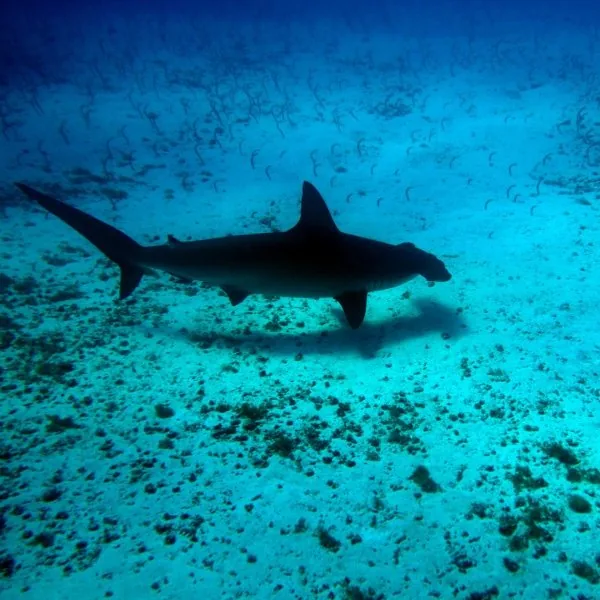
- Depth range of 6 to 27 meters (20 to 90 feet), with a sandy bottom at 15 to 18 meters scattered with curious garden eels.
- An underwater wall drops from the shallows into the deep; pelagic species pass over it.
- Visibility averages 12 to 15 meters (40 to 50 feet).
- Surge and current run moderate to strong, so it is a drift dive, not a beginner’s first one.
- Hammerhead sharks are the reason experienced divers book it.
The full picture of diving out of Santa Cruz, including day-boat logistics, is in our diving guide.
When to visit
Year-round, and usually by opportunity rather than design: boats slot Mosquera in when they transit the Baltra channel. Sea lions are present in every month; lava gulls nest here; the diving is best in the cooler season when the big visitors arrive. If seeing orcas is on your list, no month offers a guarantee. That is wildlife.
How to visit
By cruise or by dive day boat out of Puerto Ayora. The islet’s position makes it the easiest “wild” island to reach from the airport: you pass it on the transfer from Baltra before you have even checked into a hotel. Standard fixed costs apply ($200 park entry for foreign adults, $20 transit card), detailed in the entry fee guide. For how Mosquera, Baltra, the channel and Santa Cruz fit together spatially, see getting your bearings; for whether your trip type reaches it at all, the cruise vs land guide and our how many days guide are the right next reads.
Frequently asked questions
What is there to do on Mosquera?
Walk the sandbar among one of the largest sea lion colonies in the archipelago, watch lava gulls and Sally Lightfoot crabs, and, for certified divers, dive the wall and the garden-eel sand at 15 to 18 m.
When do boats stop at Mosquera?
Usually at the start or end of a cruise, because the islet sits minutes from the Baltra channel. Dive day boats from Puerto Ayora also visit it, often with Gordon Rocks or the Seymour channel.
Can I see orcas at Mosquera?
Occasionally. Orcas have been seen hunting sea lions along the beach, but sightings are rare and never scheduled.
Sources
- The islands, Galápagos Conservancy
- Visitor sites of the Galápagos National Park, Galápagos National Park Directorate
- Galápagos sea lion assessment (2015), IUCN Red List (PDF)
Last verified: October 2026